Get Full Government Meeting Transcripts, Videos, & Alerts Forever!
Get email alerts on the Municipal Budget topic
No spam. Unsubscribe anytime.
City releases FY 2025–26 budget proposal: general fund ~ $159M, $3M returned to CIP; council to review before June adoption
Summary
Finance staff presented the proposed FY 2025–26 budget to the Santa Cruz City Council, describing a $159 million operating general fund, an $108 million citywide CIP and the reinstatement of limited general‑fund transfers to capital totaling about $3 million.
City finance staff on May 27 presented the proposed fiscal year 2025–26 budget, describing a cautious approach that restores limited capital investments while maintaining operating reserves. The presentation focused on the operating general fund (about $159 million), planned transfers to capital programs, and steps the city is taking to improve transparency and budgeting tools.
Top‑line figures and revenue context
Finance Director Elizabeth Cavill and Budget Manager Emily Burton told the council the proposed operating general fund is roughly $159 million. Citywide capital investment program (CIP) spending for the period is shown at about $108 million. Staff proposed reinstating limited transfers to ongoing capital needs — a roughly $3 million general‑fund transfer to the CIP plus smaller transfers to the Economic Development Trust Fund and the streets fund — after two years of pulling back because of uncertain revenue.
Staff emphasized the budget remains conservative on revenue assumptions. It includes new, voter‑approved and local revenue items that were assumed during development: Measure L (0.5% sales‑tax increase, passed March 2024), the Measure Z sugar‑sweetened beverage tax and the city’s updated fee schedule. Staff said sales‑tax receipts have softened in recent months and the budget uses conservative projections for FY 2026.
Reserves and one‑time funds
The presentation noted the city retains a multi‑part reserve strategy: an operating reserve (set at 5% of operating expenditures), an unassigned fund balance and a pension/emergency stabilization fund. The staff said federal one‑time funds received in 2022 allowed the city to build reserves and temporarily restore transfers to capital. The proposed reinstatement of transfers uses a portion of that one‑time money to seed critical capital projects this year; staff said the intent is to avoid structural reliance on one‑time funds in future years.
Capital priorities and examples
Using the strategic plan as a filter, staff described capital investments prioritized for FY 2026. A partial list of projects receiving general‑fund CIP support includes steps and repairs at Westcliff stairs, a fire‑engine lease/purchase program, traffic‑calming pilot funds, upgrades at city facilities and initial predevelopment funding for the Progenitor/Progonip clubhouse project. Staff said the city’s CIP program targets projects that reduce asset‑failure risk or are ready to proceed.
Grant‑related action taken the same day
Separately on the consent agenda the council approved a grant‑anticipation notice (item 16) that allows the city to preserve cash flow while awaiting $22,000,000 in anticipated Federal Highway Administration emergency‑opening reimbursements for Westcliff damage repairs. Public works director Nathan Nguyen explained the city is confident of the reimbursements but that the federal reimbursement timeline has been slow; the grant anticipation will be used to maintain cash flow for construction.
Budget transparency and process
Staff said the FY 2026 budget adds public‑facing features: an interactive OpenGov budget portal, a shorter “popular annual financial report,” enhanced public webinars and a recommendation tracker for programs and capital projects. The budget calls for continued modernization (ERP implementation), negotiated employee compensation steps and sustained funding for homelessness response programs, which the budget documents show at approximately $9.7–10.4 million depending on funding sources.
Public comment on services
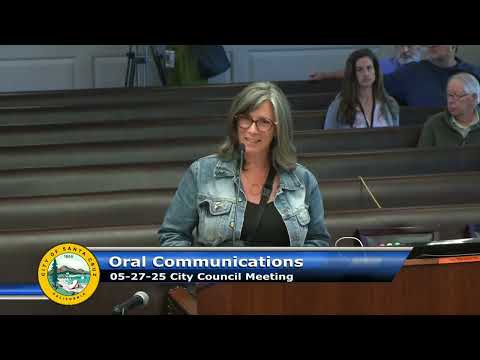
Representatives of Monarch Services urged the council to consider direct city funding for survivor‑support therapy and motel‑voucher assistance, noting Santa Cruz residents comprise about 25% of Monarch’s clients and that several therapeutic and housing supports are at risk without local support. Monarch staff asked the council to restore local funding for trauma therapy and safety‑net services.
Next steps
Staff requested direction and said adoption of the FY 2026 budget is scheduled for the June 10 council meeting. The council can request revisions or provide direction before final adoption; staff also noted the city will monitor revenues and report updates at midyear if material changes occur.
Ending
Council heard the presentation, asked questions about reserves, revenue assumptions and homelessness funding, and signaled areas for follow‑up during budget hearings and negotiations. Staff will return with a final budget for adoption on June 10.