Get Full Government Meeting Transcripts, Videos, & Alerts Forever!
Get email alerts on the Forest Management topic
No spam. Unsubscribe anytime.
Commissioners ask for more data before weighing Forest Trust Lands harvest scenarios
Summary
Clatsop County commissioners discussed new harvest-modeling scenarios for Forest Trust Lands and requested a full review and a possible work session before the county takes a formal position; models ranged from roughly 165–183 million board feet to higher-debt upfront options.
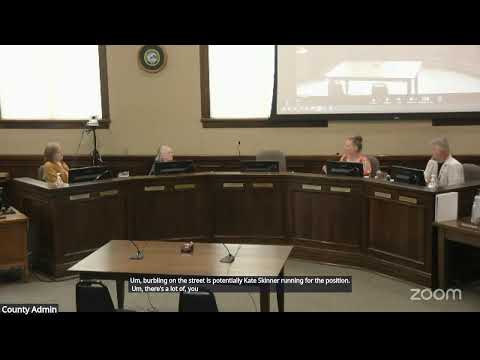
Clatsop County commissioners spent a significant portion of their meeting discussing Forest Trust Lands harvest modeling and the county’s next steps on how to respond.
Commissioner remarks described modeling presented to the Forest Trust Lands Advisory Committee and the Board of Forestry showing a reduction from previous harvest levels. Commissioners said models range from the recent reduction to roughly 165–183 million board feet per year (the figure presented to the county), and that additional scenarios were requested, including models at about 205 million and 195 million board feet, a “departure” model that harvests more up front and then declines, and a long-rotation model.
Commissioner comments noted the county has shouldered significant environmental commitments in recent years and that any change to harvest levels could affect county revenue and the local economy. “There is one model, which is the departure model, which shows a heavier harvest upfront, which would provide us a potential runway for our county to pivot financially,” a commissioner said during the discussion, noting that the model could ultimately reduce harvest volumes decades later. Commissioners repeatedly said they want all members of the board to review the full modeling document before Clatsop County takes an official position; a 77-page modeling report was circulated to the board by staff.
Commissioners also discussed the governor's office proposal to change how the state forester is appointed and said there were concerns that further politicizing the appointment could reduce the likelihood that the position is filled by someone with forestry expertise. A staff member’s account, attributed to Jeff Huntington, said the governor's office argued changing the appointment process could increase the pool of applicants by reducing the public nature of the hiring process; commissioners said local trust-land counties had expressed strong concerns about that approach.
Commissioners asked staff and the chair to schedule follow-up briefings and suggested a dedicated work session so the full board can review the 77‑page modeling package and discuss options together. No formal county position or binding vote on the models was taken at the meeting; commissioners said they will try to reach consensus after additional review and discussion.
The discussion also touched on related topics raised during commissioner reports: the county’s participation in regional housing and workforce initiatives, federal grant funding uncertainty for agencies such as Bonneville Power Administration, and the larger context of coastal infrastructure and estuary conservation work. Several commissioners proposed field trips to view estuary and forestry projects firsthand to better understand on-the-ground results of the modeling and conservation work.
Because the modeling and any future recommendations could affect county revenues and timber-dependent businesses over multiple decades, commissioners emphasized the need for full access to the underlying data and for a coordinated county response prior to any formal comment to state bodies.