Get Full Government Meeting Transcripts, Videos, & Alerts Forever!
Get email alerts on the Cycle Track Safety topic
No spam. Unsubscribe anytime.
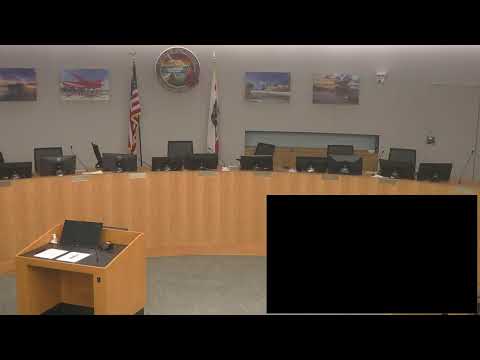
Encinitas commissioners debate safety of Phase 1 cycle track after series of crashes and one fatality
Summary
Commissioner Ron Medock and members of the public presented crash counts and videos alleging design-related bicycle collisions on the Coast Highway 101 cycle track south of Chesterfield; city traffic staff and the sheriff—s traffic sergeant cited official crash-reporting limits and called for further analysis and enforcement.
Commissioner Ron Medock presented a compilation of crash reports and videos saying the Phase 1 two-way cycle track on Coast Highway 101, south of Chesterfield Drive, has produced numerous bicycle collisions since installation in 2020, including one fatality at the Solana Beach border. He told the Mobility and Traffic Safety Commission that an independent crash list now counts more than 31 incidents and that 19 of those are well-documented cases he says were directly caused by wheel stops, flex posts or forcing riders into traffic.
The claim drew a data-based reply from Abe Bandigan, the city—s traffic engineer, who said the official California Crash Reporting System (CCRS) database and the city—s EMS dispatch logs show fewer incidents at the specific Phase 1 segment. Bandigan said CCRS records list eight collisions on the segment, two of which occurred during construction, and that many reported incidents on neighborhood social media could not be validated as formal collision reports because the sheriff—s office is the record keeper and the city does not retain original police reports beyond its retention period.
Why it matters: Commissioners and residents said the issue affects recreational and commuter cyclists, schoolchildren and other users of the 101 and could influence whether the city keeps, modifies or removes physical separation elements such as wheel stops and bollards. Commissioners pressed staff for comparative, before-and-after data and asked for a broader evaluation of crash types, contributing factors and possible non-vertical alternatives.
Medock said CCRS and EMS together undercount solo bicycle crashes because single-rider falls often do not generate police reports. He presented a before-and-after comparison he said showed 18 bicycle-involved collisions on the Phase 1 segment before the cycle track and 27 afterward in CCRS+EMS data, a 50 percent increase; he also cited a supplemental crash list maintained by a community member, which his presentation said includes 21 additional incidents not in official databases.
Bandigan confirmed the city—s CCRS extract shows eight recorded collisions in the south-of-Chesterfield cycle-track area. He told the commission two collisions happened while contractors were still finishing pavement markings and bollards and that several solo-bike crashes were recorded as collisions with a fixed object (wheel stops or bollards). He said Caltrans guidance and the Manual on Uniform Traffic Control Devices provide standard dimensions for vertical elements and that the city has followed those standards.
Public speakers supplied competing views. Attorney Marco Gonzales, whose firm represents accident plaintiffs statewide, urged a deeper technical review and noted that crash counts alone do not prove a design defect: "When we assess liability, we look at signage, lane continuity, sight lines, speeds and usage patterns, not just whether people fell," he said. Advocate Judy Burlfine and multiple other speakers argued for retaining separated space for riders and pedestrians, recommending design tweaks so both fast and slow riders can be accommodated.
Several cyclists recounted specific injuries in the record Medock presented: an experienced rider in October 2024 who broke a clavicle and ribs after striking a flex post; one rider in April 2025 who suffered a concussion after hitting a wheel stop; and the March 17, 2024 fatality at the Solana Beach border, which Medock described as the most serious outcome on the list. Medock also described an incident he personally encountered in which an e-bike rider was injured and transported by ambulance after hitting a wheel stop and striking her head.
Commissioners sought more granular breakdowns of collision types and times, including how many crashes involved motor vehicles, how many were solo bicycle incidents and whether speed or distraction were primary factors. Bandigan said staff can supply comparisons to pre-construction periods and will return with more detailed CCRS queries and collision-by-collision summaries.
On remedies, staff and commissioners discussed options beyond vertical separation, including improved signage, more reflective elements at entry points, audible edge lines (flush tactile discs) and changes to bollard color or reflectivity. Bandigan said Caltrans permits experimentation under limited conditions and agreed to research whether audible edge-line treatments could qualify as a —protected— countermeasure for grant purposes.
What happened next: Commissioners did not take action to remove or change the cycle track during the meeting. Several commissioners asked staff to bring back: (1) a full before-and-after CCRS/EMS comparison covering the same time windows; (2) the sheriff—s finalized collision reports or summaries for the January and April fatalities; and (3) options for nonvertical treatments such as audible edge lines and better entry reflectivity.
Looking ahead: Commissioners and public speakers also called for stepped-up enforcement and clearer incident-tracking so staff and the public can see whether changes reduce injuries.