Get Full Government Meeting Transcripts, Videos, & Alerts Forever!
Get email alerts on the Library Policy Meeting Rooms topic
No spam. Unsubscribe anytime.
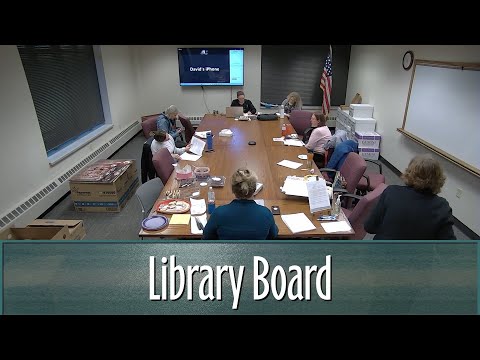
Muskego Library Board updates meeting-room policy to broaden nonprofit access and limit study-room use
Summary
The board approved revisions clarifying who pays to use meeting rooms, broadening the nonprofit/community group exemption beyond only 501(c)(3) organizations, adding limits on study-room reservations and noting an incoming ‘‘job pod’’ funded by a grant.
The Muskego Library Board on May 20 approved revised meeting-room rules that broaden who qualifies for no-charge community use, set limits on study-room and pod reservations, and spell out responsibilities for users of the amphitheater.
The policy change was presented by library staff and aims to keep meeting spaces accessible to local community groups while preserving rental revenue from private or commercial users. "If someone just wanted to have a room to sit and think, we would charge them," Sam, a library staff member, said while explaining the updated fee categories. The revision clarifies that nonprofit, civic and community organizations (not only 501(c)(3) entities) qualify for no-charge use.
Key changes: - Residency and access: The policy removes a strict Muskego-only restriction for paid rentals to allow neighboring municipal patrons (for example, Town of Norway and Town of Vernon residents who choose Muskego as their library) to reserve space. Staff told the board that most existing paid reservations come from Muskego, with a few from nearby New Berlin. - Study rooms and pods: The update continues a pilot that allows individuals to reserve study rooms and pods with limits to prevent commercial tutoring operations from occupying rooms full-time. The policy sets a limit (pilot) of up to two reservations per individual per month for up to four hours each; staff said the limit prevents a single person from repeatedly reserving space. Sam said the policy was revised after a pilot showed demand for small, short-term spaces for court appearances, proctored exams and social-service appointments. - Job pod grant: The board heard that a grant secured by Alderman Delvie will provide an additional job pod; staff expects delivery around June. The policy notes capacity will increase to four study rooms and five pods once the grant-funded pod is installed. - Amphitheater use: Users who reserve the amphitheater must remove their own trash; staff explained there is not a permanent garbage receptacle emptied daily because of labor and cost implications.
Why it matters: The changes are intended to keep library meeting space available for grassroots community groups while allowing the library to earn modest revenue from private or commercial users. Staff emphasized first-come, first-served booking and a new online reservation system that has made recurring bookings simpler.
Board action: The board approved the updated meeting-room policy. The vote was voice-approved after discussion; staff said they will update online reservation materials and clarify the fee schedule and room hierarchy (first-come, first-served).
Ending: Staff will post the revised policy online, add clarifying language to reservation pages, and proceed with installing the grant-funded job pod when it arrives in June.