Get Full Government Meeting Transcripts, Videos, & Alerts Forever!
Get email alerts on the Housing topic
No spam. Unsubscribe anytime.
Carbondale trustees, planning commission align on parking study, ADU reforms and housing priorities
Summary
Town trustees and the Planning & Zoning Commission met in a work session to synchronize priorities on a parking RFQ, accessory dwelling unit (ADU) rule changes and broader housing goals; trustees signaled support for staff-led ADU code amendments and a phased consultant-led parking study to inform possible UDC changes.
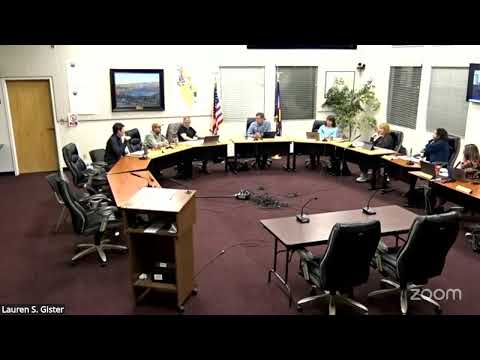
The Town of Carbondale Board of Trustees and members of the Planning and Zoning Commission met in a work session to review the commission’s 2025 work plan and to align on housing-related priorities, including an outside consultant to study parking and staff-led changes to the accessory dwelling unit (ADU) rules.
The Planning and Zoning Commission outlined two near-term priorities: drafting a parking request for qualifications (RFQ) to engage an outside consultant familiar with small mountain-town parking dynamics, and supporting staff-led ADU code updates. Jared, a town planning staff member, said the commission provided a memo and a 10-year summary of residential building permits to help frame the conversation. Nick, a Planning and Zoning Commission member, told trustees the commission had “outlined…the need for an outside consultant” for the parking RFQ and recommended a two-phase approach: a 2026 inventory/analysis then a larger follow-on study.
That phased approach won broad support from trustees, who emphasized speed for targeted, actionable changes while acknowledging staff bandwidth and budget constraints. Trustee Chris said ADU rule changes are higher personal priority and welcomed staff leadership on that topic. Several trustees and commission members said a small, focused RFQ for a consultant—one that includes an initial inventory and code comparison—could be advertised this year and start phase 1 in early 2026. Trustees and commissioners discussed ways to involve other commissions (for example, Bike/Ped) in the consultant’s outreach and noted seasonal data (winter/snow impacts) would be useful to include.
Trustees pressed for concrete outcomes. Trustee Ben said the town should “say yes to housing” in general and asked that applicants receive consistent direction from planning staff, the commission and the board. Trustees and commissioners discussed whether immediate Unified Development Code (UDC) amendments could be made, with some trustees arguing that prior studies show the town is already over-parked and could justify near-term UDC tweaks that reduce parking minimums for specific housing types. Nick and Jared said staff would continue the RFP development for an affordable-housing code analysis (including parking for deed-restricted housing) and expected to issue that RFP in the next 60 days.
On ADUs, trustees and commission members agreed the goal is “making it easier to do ADUs” with a more straightforward permitting and review process. Nick noted co-text amendments and public discussions could begin in July; trustees encouraged outreach to recent ADU applicants to capture process friction points. Several trustees recommended considering incentives to encourage property owners to remove antiquated PUD (planned unit development) restrictions that currently block ADUs in some parts of town.
Commissioners and trustees discussed trade-offs: density, neighborhood character, rezoning needs and whether more housing should be directed to Highway 133 or to upzoning existing residential areas. Commissioner Kim noted that high-density residential zoning (dark brown on the town map) is scarce and that achieving 20–25 units per acre typically requires rezoning. Trustee Ross asked the commission to use the town’s future land-use map and comprehensive plan as the baseline guide when advising applicants.
Trustees and the commission agreed to keep the work collaborative and staged: staff-led ADU amendments soon, an RFQ for a parking consultant advertised before year-end, and a longer consultant engagement if phase 1 indicates a need. No formal board action or vote was taken during the check-in; trustees asked staff and the commission to return with draft code language and consultant budget ranges to inform the 2026 budget process.
For now, trustees emphasized two front-line objectives: remove barriers to deed-restricted affordable housing where feasible, and ensure applicants receive consistent guidance across staff, commission and the board as projects move through review.