Get Full Government Meeting Transcripts, Videos, & Alerts Forever!
Get email alerts on the Capital Punishment Methods topic
No spam. Unsubscribe anytime.
Idaho committee votes to send bill making firing squad the primary execution method to the Senate floor
Summary
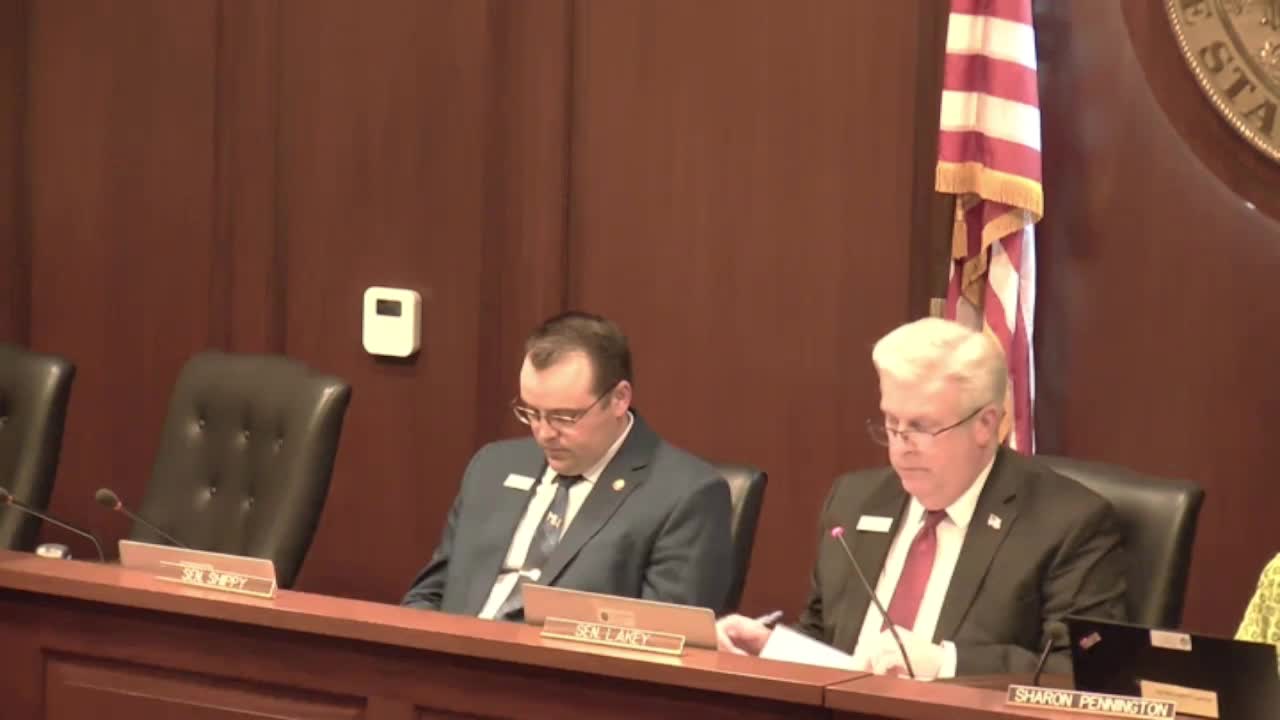
The Senate Judiciary and Rules Committee voted to send House Bill 37 to the full Senate with a "do pass" recommendation after hearing testimony that the bill would reverse Idaho law so a firing squad would be the first available method of execution and lethal injection the second.
Boise — The Senate Judiciary and Rules Committee voted to send House Bill 37 to the full Senate with a "do pass" recommendation after hearing testimony that the bill would reverse Idaho law so a firing squad would be the first available method of execution and lethal injection the second.
The measure, presented by Sen. Doug Ricks, R-Idaho Falls, would change the statutory order of methods of execution. "This just provides an option that we can carry that out," Ricks said, describing the change as a response to recent problems locating veins for lethal injection and to ensure the state can carry out capital sentences on the books.
The bill drew extended questioning and public testimony about humaneness, litigation risk and logistics. Lamont Anderson, deputy attorney general in the Capital Litigation Unit, told the committee that 144 inmates have been executed by firing squad in U.S. history and that there have been three such executions since 1976. "There has not been a botched execution by firing squad in the modern era of the death penalty," Anderson said, and cited U.S. Supreme Court precedent, including Wilkerson v. Utah, and later opinions referencing the relative reliability of shooting compared with other methods.
Survivor Diana David, Idaho chapter lead for Survivors Empowered, testified against the bill, saying the firing squad is more likely to cause visible gore that will linger in the memories of witnesses, staff and victims' families. "I ask you to spare the living and vote no on H 37," she said.
Daniel Murphy, who testified in support, invoked U.S. case law and media accounts and said the firing squad can produce a rapid death in some circumstances. Several senators questioned whether changing the statutory order would reduce litigation; Anderson said that the firing squad could reduce some types of litigation tied to lethal-injection protocol, drug procurement and medical procedures, but acknowledged courts will still be engaged in method-of-execution litigation.
Committee members also noted existing state expenditures and operational planning. Ricks said the Legislature previously allocated up to $750,000 for the Idaho Department of Correction to add or build a facility for carrying out executions; one public witness estimated a specialized chamber could cost "almost a million dollars." The committee heard that the Department of Correction would develop the operational protocol if the law changes.
Senators debated the humaneness and dignity considerations. Sen. Curt Foreman said he considers shooting someone to effect an execution "cruel and inhumane" and opposed moving the firing squad to the primary position. Sen. Chris Keiser and others said victims and deterrence were considerations supporting the change. Sen. Melissa Wintrow, who voted no and asked to be recorded against the motion, said she was not comfortable voting for the bill without clearer details about procedures, equipment and contingency planning.
A roll-call request produced three recorded no votes: Senators Ruckdy, Foreman and Wintrow. The motion otherwise carried and House Bill 37 was sent to the Senate floor with the committee's recommendation that it pass.
The next step for H 37 is debate on the Senate floor, where members will decide whether to adopt the committee's recommendation.