Get Full Government Meeting Transcripts, Videos, & Alerts Forever!
Get email alerts on the Criminal Justice Dui topic
No spam. Unsubscribe anytime.
Judiciary committee advances bill imposing mandatory minimums for DUI deaths
Summary
The Idaho Senate Judiciary and Rules Committee voted to send Senate Bill 1099 to the floor with a “do pass” recommendation. The bill would require judges to give specific warnings after an initial DUI conviction and impose graduated mandatory minimum prison terms if a later DUI results in vehicular manslaughter.
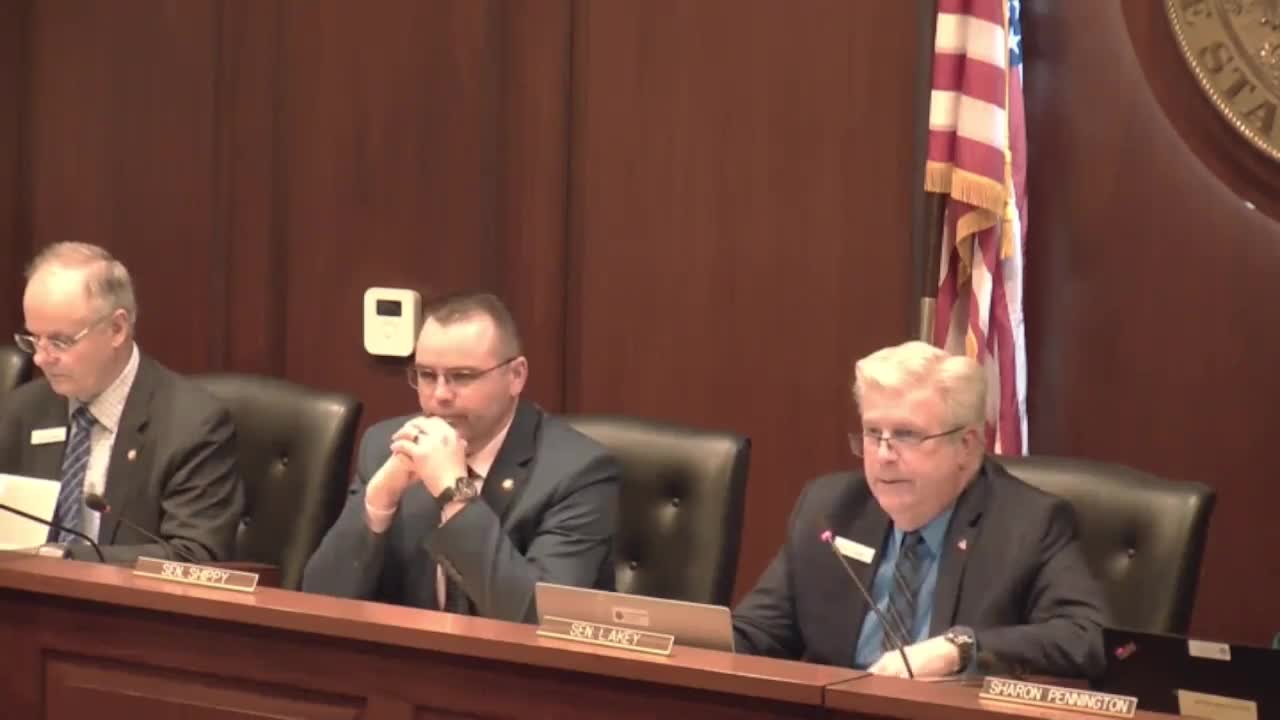
The Senate Judiciary and Rules Committee on March 4 voted to send Senate Bill 1099 to the Senate floor with a “do pass” recommendation after a daylong hearing and public testimony.
Senator Craig Burtt, a state senator from District 21 (Ada County), introduced S.B. 1099 as a mandatory-minimum scheme for drivers convicted of DUI who later cause a death. "When someone is sentenced for their first DUI conviction...the judge will now have to issue a warning stating that future DUI convictions along with vehicular manslaughter convictions may, or will result in a mandatory minimum of 5 to 10 years depending on how many DUIs they have on the record," Burtt said.
The bill would require a judge to warn a person convicted of a first DUI that a future conviction combined with a vehicular-manslaughter charge could trigger a mandatory minimum. Under the bill’s sliding scale, a second DUI that results in vehicular manslaughter would carry a five-year mandatory minimum; a third or subsequent DUI resulting in vehicular manslaughter would carry a 10-year mandatory minimum. Burtt told the committee the bill preserves judicial discretion on top of the mandatory minimums; for example, current law allows sentences up to 15 years in some manslaughter cases.
Why it matters: Supporters said the bill strengthens accountability for repeat impaired drivers who kill while driving under the influence and provides victims’ families with clearer expectations about sentencing. "This bill gives zero ambiguity about the consequences someone will face if they do not learn from what may have been a mistake," said Tracy Bascarachea, testifying for the Idaho Chiefs of Police Association and identifying herself with the Meridian Police Department.
Testimony and debate: The committee heard emotional testimony from family members and from law-enforcement and prosecuting-officials. Burtt read an email from Shandy Lam, a family member of a victim who described losing relatives to a repeat impaired driver; Lam’s remarks were entered into the record by Burtt. Debbie Carney, who identified herself as a volunteer and family member of someone convicted in a drunken-driving death, also urged the bill’s passage.
Robbie Blassard, representing the Idaho Prosecuting Attorneys Association and identifying himself as a deputy prosecutor with the Giddey County Prosecutor’s Office, said these cases are "some of the most difficult cases to work on" and that the bill would provide victims "some guarantee of an outcome." Bascarachea told the committee that in 2023 Idaho saw 1,708 crashes she attributed to impaired drivers, with 246 critical injuries and 105 deaths.
Opponents and concerns: Several senators said they were sympathetic to victims but expressed constitutional and policy concerns about mandatory minimum sentences. Senator Rekke (recorded as a no vote) and others warned that mandatory minimums remove judicial flexibility, shift negotiating power toward prosecutors, and can increase prison costs. Senator Rekke argued the constitution generally constrains government action and cautioned lawmakers about empowering the state to set floors on punishment.
Sponsor’s adjustments: Burtt and other supporters said the bill was revised after previous consideration to add the warning requirement after a first DUI and to graduate the mandatory minimums (5 and 10 years) rather than imposing a single 10-year minimum, to address some concerns raised in prior debates.
Committee action and vote: Senator Foreman moved to send S.B. 1099 to the floor with a due-pass recommendation; Senator Keiser seconded. The committee voted by voice; members called “aye,” and the motion carried. At least one senator, Rekke, asked to be recorded as voting “no.” The committee did not record a roll-call tally in the hearing.
Next step: With the committee’s “do pass” recommendation, S.B. 1099 will go to the full Senate for further consideration.