Lifetime Citizen Portal Access — AI Briefings, Alerts & Unlimited Follows
Committee hears bill to let late-night entertainment venues refuse cash; industry urges expansion to all food service
Loading...
Summary
The Committee on Public Works and Operations on Monday considered Bill B26-64, the Entertainment Establishment Employee Safety Amendment Act of 2025, which would permit certain late-night or alcohol‑serving establishments and some 24‑hour restaurants in the District of Columbia to refuse cash payments if they post conspicuous notice on their doors or menus.
The Committee on Public Works and Operations on Monday considered Bill B26-64, the Entertainment Establishment Employee Safety Amendment Act of 2025, which would permit certain late-night or alcohol‑serving establishments and some 24‑hour restaurants in the District of Columbia to refuse cash payments if they post conspicuous notice on their doors or menus.
The bill, introduced Jan. 17, 2025, by Council member Henderson with co‑sponsors Pinto and Fruman, would create an exception to the District’s Cashless Retailers Prohibition law for on‑premises retail establishments that hold Class C or D retailer licenses from the Alcoholic Beverage and Cannabis Administration (ABCA) and for restaurants open 24 hours or until 3 a.m. at least twice a week.
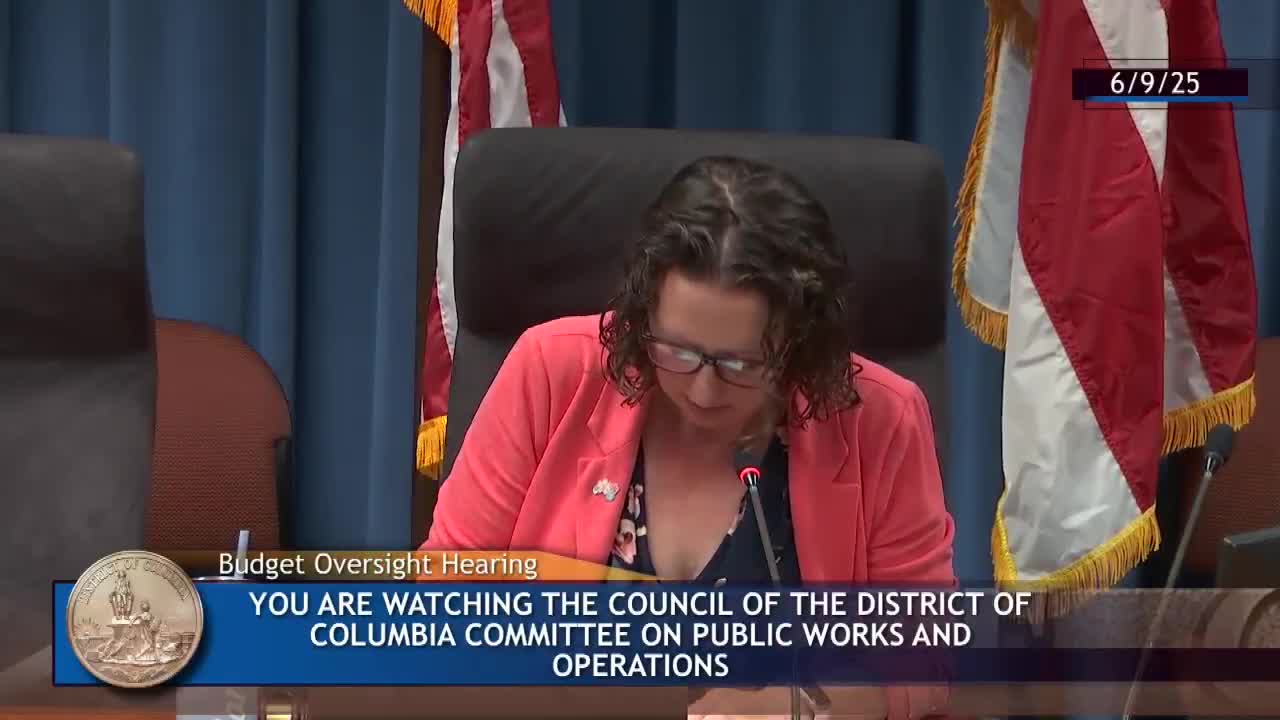
Chairperson Brianne Nadeau opened the hearing and invited business and government witnesses to testify. Industry groups and venue operators told the committee that the emergency and temporary exemption passed in December 2024 improved safety for employees working late hours and in isolated areas, and they urged the Council both to make that exemption permanent and to expand it to cover additional food‑service workers who do not meet the bill’s current criteria.
Sean Townsend, president and CEO of the Restaurant Association of Metropolitan Washington, said his organization “strongly support[s] making this act permanent as it addresses critical safety concerns for our industry.” He and other witnesses said those safety concerns extend beyond bars and nightclubs to fast‑casual restaurants, cafes and family entertainment venues that handle cash but may lack on‑site security. Townsend said the association also favors amending the bill to “extend these critical protections to include all restaurant and food service workers.”
Marissa Casey, chief executive officer of Georgetown Events, described specific security risks at 24‑hour and late‑night sites and said removing cash “has lowered the incentive for criminal activity and just as importantly, it gives our employees peace of mind.” Anna Valero, president and cofounder of Pirate Ventures, said safety concerns are contributing to workforce turnover and cited incidents including threats and break‑ins that staff experience traveling to and from work or while on site.
Tiffany Crow, Director of the Department of Licensing and Consumer Protection (DLCP), told the committee the agency supports the bill’s intent and is prepared to implement it. Crow reviewed the law’s recent history: the Council passed the Cashless Retailers Prohibition Act of 2020 (D.C. Law L23‑187), implementation was delayed through 2023 and 2024, and an emergency and temporary exemption for entertainment establishments was enacted in December 2024. DLCP staff said implementation resumed in January 2025.
Crow also outlined operational items for the committee to consider. She said the bill, as drafted, could be read to permit establishments to charge a higher price to customers who pay cash and recommended clarifying that is not the Council’s intent. Crow noted DLCP does not issue Class C or D ABCA licenses and that the Alcoholic Beverage and Cannabis Administration holds that licensing data; DLCP said it routinely coordinates with ABCA but that verifying eligibility for a complaint may require interagency checks. On enforcement practice, Crow said DLCP began with public education, issued warnings in most early cases and escalated to notices of infraction only when businesses failed to comply. She said, shortly before a March 15, 2024 pause in implementation, DLCP had received 61 complaints that resulted in 60 warnings and 1 notice of infraction; since resumption in 2025 DLCP received one complaint and issued one warning.
Council members asked operational questions about verifying hours of operation and license status. Crow said DLCP can investigate hours and management statements as part of complaint investigations; she noted basic business licenses need not list hours and that hours can change, which complicates automated verification. On personnel, Crow said DLCP has about 25 investigators available to enforce matters under the Consumer Protection Procedures Act.
No formal vote or final action on the bill was recorded at the hearing; the session was a legislative hearing to receive testimony and questions from committee members. Chairperson Nadeau closed the hearing and reminded witnesses and the public that the written record for the hearing would remain open until 5:30 p.m. on June 23, 2025.
The hearing brought into relief the trade‑offs at the heart of the measure: industry witnesses emphasized worker safety and the operational benefits of going cashless, while DLCP highlighted implementation questions and a drafting ambiguity about whether the bill could permit higher prices for cash payers. The committee will consider those issues as it works toward any amendment or markup.
The record for the hearing closes at 5:30 p.m. on June 23, 2025; the Committee on Public Works and Operations accepted additional written testimony through the Council’s hearing management system.