Get Full Government Meeting Transcripts, Videos, & Alerts Forever!
Get email alerts on the Airport Infrastructure topic
No spam. Unsubscribe anytime.
Winchester Regional Airport officials report $40 million-plus in recent investment, highlight terminal, workforce studies
Summary
Winchester Regional Airport Authority leaders told the City Finance Committee the airport has attracted more than $40 million in public and private capital in recent years, opened a new terminal, secured a state/FAA taxiway grant and is pursuing workforce and economic development studies.
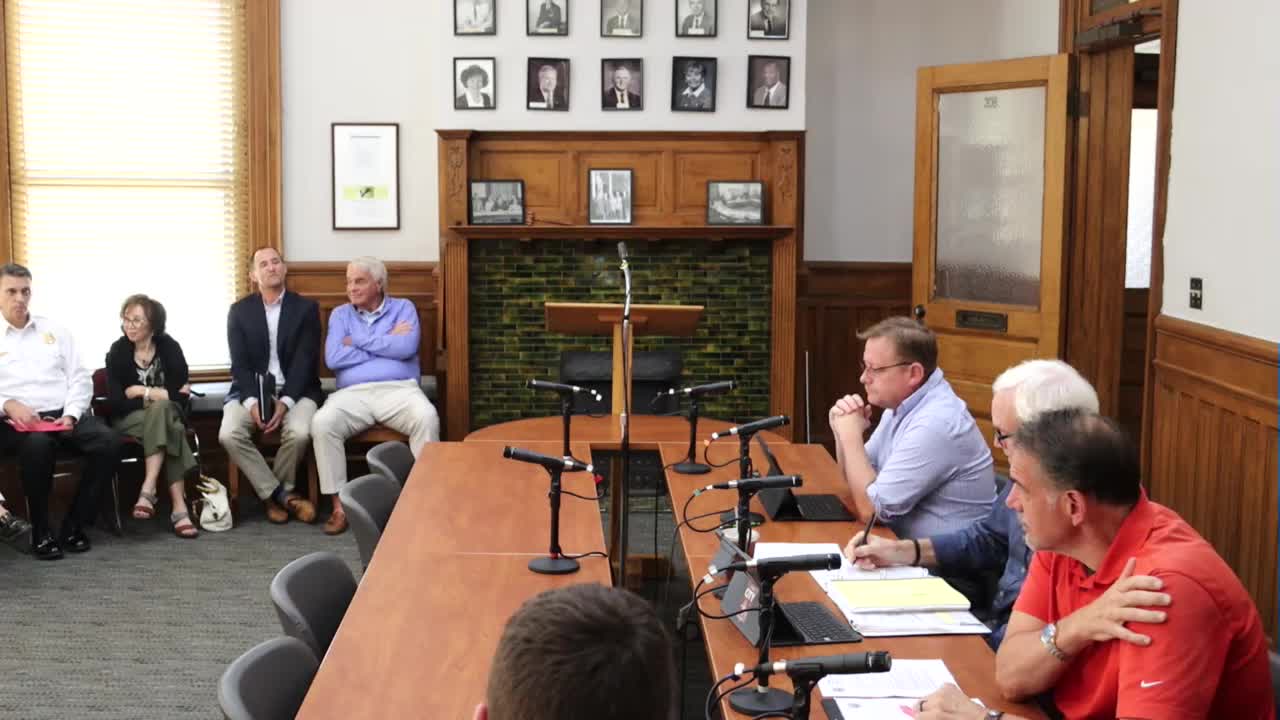
Winchester City Finance Committee members heard an update from Winchester Regional Airport Authority Chairman Bill Pfeiffer and airport representative Nick Sabo on capital projects, recent grants and economic development plans.
The airport has attracted what airport staff described as more than $40 million in public and private investment over roughly six years. "It's a pretty staggering amount there, about $24,000,000 actually," Sabo said, adding that a recently completed $6,700,000 project and a recent $7,200,000 state and FAA grant for a taxiway relocation raise the total to "over $40,000,000 worth of capital investment at the airport in about 6 years." Pfeiffer said the authority's requests to the city for operating support have fallen dramatically over the last five to six years.
Why it matters: Airport leaders and the committee framed the investments as leveraging relatively small city contributions into much larger state, federal and private funding packages. Sabo told the committee the airport's capital grants derive from aviation activity fees and that aviation revenues “pay for itself,” and Pfeiffer emphasized the authority's apolitical governance and regional partnerships as reasons for the airport's success.
Details and supporting facts: Sabo said the city’s direct capital investment during that period was "just north of about $200,000," which airport staff contrasted with the millions in external grants and private hangar development. Sabo also highlighted a new terminal the authority opened in January and said the terminal includes revenue-generating space that has "already exceeded our earliest pro forma projections for revenue." He said the terminal was intentionally designed as a community connection point and that the authority has hosted regular "story time at the airport," which draws roughly 100 people monthly.
On economic development, Sabo summarized two recent Go Virginia-funded studies: a site analysis of airport-owned land intended to inform marketing for aviation‑related development and a Northern Shenandoah Valley workforce-pipeline study that will conclude in the coming weeks. He said the site analysis included work with Frederick County zoning staff to confirm what development types could be allowed. The authority also launched the Winchester Regional Aviation Foundation, a 501(c)(3) set to support outreach, events and scholarships; the foundation will award its first local scholarship later this year.
Sabo and Pfeiffer described the authority's approach to new development as constrained by FAA and state grant rules: land acquired or improved with federal/state aviation dollars generally requires that airport land be used for aeronautical purposes, and the authority said proposed projects must satisfy state and FAA review. "Aeronautical use is a bar that we're going to have to achieve for all that," Sabo said when asked about the North Side development concept.
Community programming and events: The authority invited the public to an Oct. 18 Wings and Wheels event organized with the Chamber of Commerce, noting the Berlin Airlift Historical Foundation will bring a C-54 cargo aircraft and that prior large events have drawn about 3,300 attendees. Sabo described other community outreach—Civil Air Patrol, Starbase, Young Eagles—and workforce partners including Shenandoah University and Laurel Ridge that the authority says will support advanced air mobility workforce needs.
Questions from committee members focused on post‑construction terminal performance, traffic impacts of North Side development and the types of tenants the airport attracts. Sabo said early terminal performance has been “excellent,” cited conservative environmental and airspace impacts in recent studies, and said the authority expects some increase in ground traffic depending on the tenant mix. Pfeiffer and Sabo cited FlyAdvanced as an example of a tenant that moved to Winchester from another regional airport.
The presentation was informational; no action was required or taken by the finance committee during the update.