Get Full Government Meeting Transcripts, Videos, & Alerts Forever!
Get email alerts on the Animal Shelter topic
No spam. Unsubscribe anytime.
Residents urge Ashe County to fund shelter repairs or new facility after Department of Agriculture violations
Summary
Multiple residents and volunteers told the Ashe County Board of Commissioners that the county animal shelter is in poor condition, cited repeatedly by the North Carolina Department of Agriculture, and urged the board to budget for design work and near-term fixes.
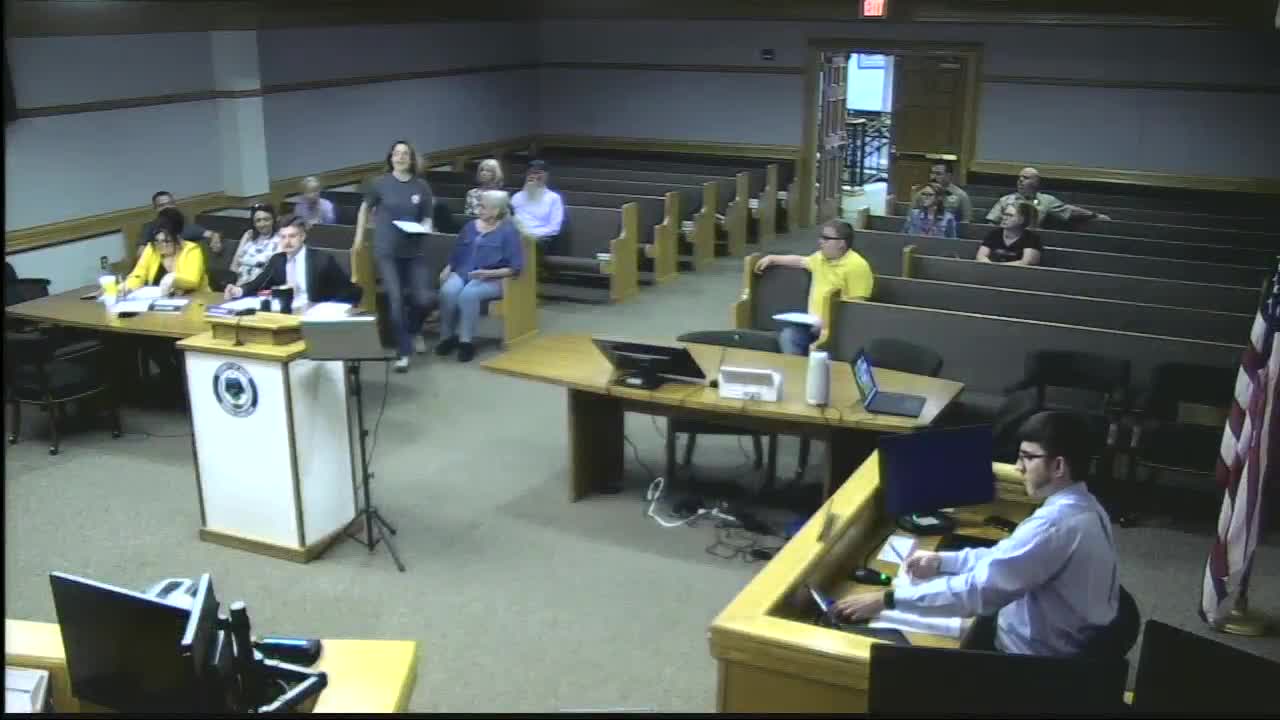
Speakers at an Ashe County Board of Commissioners meeting urged the board to budget for design work this fiscal year for a new county animal shelter and to approve near-term repairs after repeated Department of Agriculture inspection violations.
Tammy Tenori, founder of Friends of Ashe County Animal Shelter, told commissioners the shelter “is in serious jeopardy of being shut down due to multiple Department of Agriculture violations” and listed maintenance problems she said persist at the facility, including broken windows, rusted enclosures with sharp edges, failing weather stripping and inadequate heating and cooling for animals and staff. Tenori said the outdoor exercise areas cited by inspectors are “inadequate” and that, as a result, dogs are being kenneled “24/7.” She asked the board to “approve and budget for architectural design plans to be drawn up to begin this fiscal year for a new shelter.”
Dar Joseph Tonori, cofounder of Friends of Ashe County Animal Shelter, said the current facility is “very poorly located” and “extremely cramped,” which he said harms staff morale and the county’s ability to quarantine and provide veterinary care. Tonori suggested reserving space in current plans for the county’s new agriculture building to accommodate a future shelter footprint rather than funding a full build immediately.
Volunteer Deborah Spies described recent inspections and suggested one immediate policy change that would not require county spending: converting the shelter from “open admission” to “managed admission,” so owners planning to surrender animals would call ahead and be given an intake date based on space availability. Spies said that change would allow staff to better manage incoming animals while still responding to emergencies and stray pickups. She also listed facility maintenance needs, including sealing doors, addressing water intrusion in heavy rains, repairing crumbling concrete and chipped paint, installing a small backup generator, and providing refrigeration for rabies samples and vaccines.
Peggy Stargell, a West Jefferson resident and longtime volunteer, said she had spoken with several commissioners and family members and called for better communication on how department requests are routed and decided. "If he's getting everything he's asking for, why are we still having all these violations?" Stargell asked, urging the board to place the shelter on upcoming agendas and budgets so work can begin.
Amanda Horton, a resident who identified herself as a rescue dog owner, said she had learned that “27 cats were put down in one day,” and urged commissioners to consider the human effect of the facility’s limitations on the county’s ability to socialize animals and make them adoptable.
Several commissioners responded during the meeting that they are aware of the problem and that the shelter issue is on their list. One speaker asked county manager Adam Stum to consult with shelter staff (named in the meeting as Joe Tesman) to identify short-term fixes. Commissioners also said they would consider whether to reserve space in new building plans and to pursue funding options, while noting budget constraints.
Friends of Ashe County Animal Shelter and other volunteers offered to donate labor and to act as liaisons with the county. Volunteers and residents repeatedly asked commissioners to tour the shelter and to put design and budget steps on this year’s or next year’s budgets.
The public comments on the shelter occurred during the meeting’s public comment period. No formal budget appropriation or ordinance for a new shelter was adopted during the meeting; speakers asked the board to take design- and budgeting-level steps going forward.