Get Full Government Meeting Transcripts, Videos, & Alerts Forever!
Get email alerts on the Housing Home Bond topic
No spam. Unsubscribe anytime.
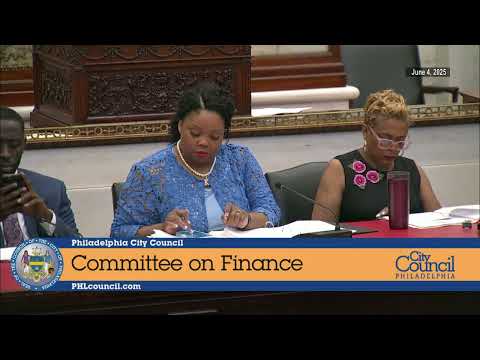
Council finance hearing presses administration on $800 million HOME housing bond plan
Summary
City finance and housing officials defended an $800 million bond authorization for the mayor’s HOME housing plan at a June finance committee hearing while council members sought clearer program budgets, staged borrowing and stronger public reporting.
City finance officials and housing department leaders presented details of the administration’s proposed $800 million bond authorization for the Housing Opportunities Made Easy (HOME) plan at a June public hearing, while several council members pressed for more precise spending breakdowns and asked that borrowing be staged.
The administration said the ordinance (bill 250568) would authorize up to $800 million in bonds to finance preservation and production of housing, homeowner and renter assistance, blight removal, neighborhood infrastructure, contractor training and related programs. Deputy City Treasurer Matt Bowman told the committee the city intends to issue the bonds in two tranches of roughly $400 million each “as proceeds are needed.” He said estimated combined principal-and-interest costs over the financing period would be about $1.3 billion, with roughly $500 million in interest depending on market rates.
Supporters argue the money will scale existing programs and speed delivery. Mark Dodds of the Division of Housing and Community Development said the administration intends to deploy funds quickly because many of the initiatives already exist; he described the package as a mix of preservation, production, stabilization and incentives. Administration witnesses said roughly 39% of the proposed allocation is dedicated to preservation and 26% to production; the plan names program priorities including basic systems repair, acquisition-to-preserve, small landlord repair, and an accelerator fund for community-based developers.
Council members probed the fiscal and programmatic details. Councilmember Thomas and others asked why the council should authorize the full $800 million now instead of approving a smaller initial tranche and returning once programs are operating and spending rates are proven. Finance Director Rob Dubow and Deputy Treasurer Bowman responded that the authorization does not require immediate borrowing and that debt service projections in the five-year plan assume issuance timed to spending, but that approving the full authorization now would allow the administration to move quickly if projects are ready. Bowman said if money is not spent, the city would not borrow unnecessarily.
Several council members also requested a clearer program-level budget for public review. Councilmember Young asked for a transparent breakdown showing the portion of proceeds going to affordable preservation versus market-rate development and the AMI (area median income) levels served by each program; administration witnesses said they would provide current allocations and AMI breakdowns to the committee. Councilmember Gauthier, who sponsored related housing legislation and advocated for the HOME plan on several occasions, said neighborhood-based community development organizations will be primary implementers and argued the scale of investment is necessary to address displacement and housing loss.
Administration officials described controls and outside partners. Bowman said in-house teams with outside consultants (Guidehouse and Reinvestment Fund) would support implementation and consumer protections. The administration also described plans to issue bonds in ways consistent with the city’s debt policies, to limit long-term risk and to preserve a declining overall debt structure in coming years because of scheduled retirements of older obligations.
Where the plan stands: the ordinance authorizes the financing; committee members asked for additional written detail about program budgets, the mix of taxable and tax-exempt financings, and the pace of expected spending. No final vote on the ordinance was recorded at the hearing.
The hearing underscored both the urgency elected officials feel about housing and the council’s appetite for sharper fiscal guardrails before authorizing large-scale borrowing.