Get Full Government Meeting Transcripts, Videos, & Alerts Forever!
Get email alerts on the School Budget Compensation Vatre topic
No spam. Unsubscribe anytime.
Schertz‑Cibolo‑Universal City ISD reviews budget shortfall, teacher pay rules and a proposed voter tax election
Summary
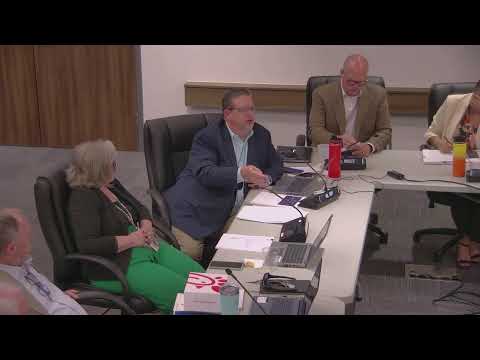
Schertz‑Cibolo‑Universal City Independent School District held a budget workshop at which staff outlined a multi‑million dollar projected deficit, new state‑mandated teacher pay rules and a proposal to seek voter approval of up to 12 pennies in additional property tax rate to fund deferred maintenance, one‑time capital items and local compensation needs.
Schertz‑Cibolo‑Universal City Independent School District held a budget workshop in which district leaders outlined a multi‑million dollar projected deficit, explained how new state teacher pay rules will affect local compensation, and described a proposed voter‑approval tax rate election (VATRE) to raise up to 12 pennies for capital and operations.
Superintendent Maloney told the board the district is facing a structural shortfall even after known revenue and planned staffing assumptions. ‘‘If we were to just roll over the known items going from the current year to the next year, we would have a deficit of about 6,400,000,’’ said Brian Mosley, a district finance staff member who walked the board through the budget forecast. Mosley and other staff added that, after building in deferred maintenance items and other operating costs the district has postponed, the deficit in staff presentations rose toward $13,700,000 before accounting for new legislation and compensation options.
Why it matters: the state’s school finance changes provide targeted increases for classroom teachers but leave local districts responsible for other costs the district says are required to operate safely and maintain programs. That gap is driving discussion of both how to distribute the mandated teacher raises locally and whether to seek voter approval to restore local revenue.
What the state bills do and how the district interpreted them District staff summarized the immediate effect of the recent school funding bills. Mosley said the legislation that funds the mandated teacher raises will add roughly $8.8 million in new state money to the district’s formula, including a safety allotment increase of about $433,000 and other targeted allotments. At the same time, other formula changes and local taxable value declines complicate how much net revenue the district receives and how the district’s interest and sinking (I&S) rate is affected.
On pay, staff described two central elements in the new law: a mandated flat dollar increase for classroom teachers and a separate, smaller allotment intended for non‑classroom employee raises. Mosley summarized staff estimates: teachers who have completed 3–4 years of service will receive a $2,500 increase and those with 5 or more years will receive $5,000 under the state mandate; the district currently estimates roughly 93 teachers fall into the 3–4 year band and about 750 in the 5+ year band. Because the state statutory definition applies only to ‘‘classroom teacher’’ (defined in the Texas Education Code as someone who teaches not less than four hours per day), staff noted many employees paid on a teacher salary schedule—librarians, nurses, instructional coaches—may not qualify automatically for the mandated dollars unless the district elects to treat them as if they qualify.
Compensation options for non‑classroom staff Staff presented two compensation frameworks for board consideration: Option 1 would treat employees on the teacher/librarian/nurse scale as if they qualified for the state‑mandated raises (an estimated additional local cost of about $320,000 above Option 2) and provide a 2% increase for employees not on that scale. Option 2 would instead give only a 2% raise to employees who do not meet the statutory classroom‑teacher definition, creating a separate pay scale for those staff. Mosley estimated the district cost for the most fully funded scenario (Option 1 with the larger non‑teacher increases) at roughly $5.8 million total for compensation beyond base funding and that the state funding would cover roughly $4.5 million of that amount, leaving an approximate $1.3 million net local increase in the model shown to the board.
Board members pressed on morale and retention concerns: several members said limiting larger increases to classroom teachers could create morale problems across staff groups who also perform essential school operations. One board member argued for Option 1 plus a modest increase to non‑teacher staff (for example 3% rather than 2%) so staff outside the classroom also see a meaningful adjustment.
Health benefits and employee perks Paige Ward, a district benefits staff member, described an employer‑funded partnership called Next Level Prime that the district offers to employees and families. Ward said the district’s investment has produced a reported utilization rate of about 57 percent among those eligible and cited an internal estimate of reduced ER visits and an overall ‘‘net promoter’’ satisfaction score above 97 percent. Ward said the program is not part of the insurance plan but is a district‑purchased primary care/telehealth option intended to reduce insurance claims and out‑of‑pocket costs.
Capital needs, deferred maintenance and a proposed VATRE District planning staff presented a list of prioritized one‑time capital and deferred maintenance items—band tower work, replacement steel light poles, HVAC/heating in certain agricultural facilities, playground replacements and replacement of underground fuel storage—totaling several million dollars. Staff said the district has identified roughly $6.1 million in one‑time capital priorities that could be funded if voters approved the full 12‑penny VATRE, which staff estimated would yield about $16.8 million in additional local revenue (marketed to voters as a roughly $216 annual increase for the average homeowner on a $320,000 home, or about $18 per month).
Board guidance and next steps Board members and staff agreed on several near‑term steps: staff will deliver a draft compensation plan for board review prior to the June 24 meeting and will continue to model budget scenarios under different VATRE and I&S rate choices. Several trustees expressed support for calling a VATRE and for using any VATRE proceeds to address deferred capital needs and to stabilize long‑term compensation plans, but no board vote to call an election was recorded in the workshop transcript.
Quotation highlights (verbatim and attributed): "This is a very exciting summer for the school district," Superintendent Maloney said as the workshop opened. "If we were to just roll over the known items going from the current year to the next year, we would have a deficit of about 6,400,000," said Brian Mosley, a finance staff member, during the budget forecast presentation. "We have out of the people who have been signed up, we have 57% utilization rate...it has saved us nearly...122 ER visits avoided," Paige Ward said describing the Next Level Prime partnership.
What the board did and did not decide Discussion at the workshop generated direction for staff (compile a draft compensation manual, continue voter‑rate planning and model VATRE scenarios) but did not include a formal vote to call a VATRE or adopt a final compensation plan. The only recorded procedural vote in the transcript was a motion to adjourn at the end of the meeting; no roll‑call tally for the adjournment was provided in the transcript excerpt.
Ending: Staff will present a draft compensation booklet for board review and will return to the board with updated revenue projections and options in subsequent budget workshops; the district also plans to form a committee to study major cost drivers and to continue outreach for any potential VATRE campaign.