Get Full Government Meeting Transcripts, Videos, & Alerts Forever!
Get email alerts on the Mutual Aid Fire topic
No spam. Unsubscribe anytime.
Council deadlocks on mutual-assistance agreement with Idaho Department of Lands after debate over training, insurance and staffing
Summary
A 3-3 tie left the proposed cooperative mutual-assistance agreement with the Idaho Department of Lands unapproved after councilors and the fire chief debated firefighter training levels, insurance risk ratings, and operational autonomy for deployments.
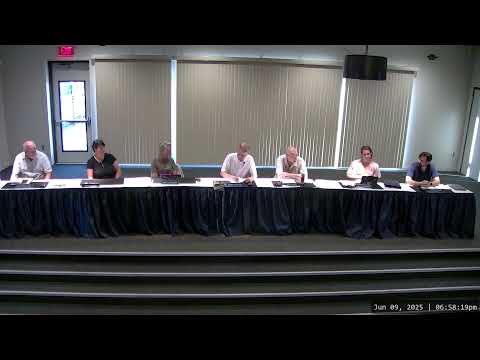
At its June 9, 2025 meeting, the Lewiston City Council considered a proposed cooperative mutual-assistance agreement with the Idaho Department of Lands (IDL) that would formalize when and how the city can send firefighting resources to state-managed wildland incidents. The measure failed on a 3-3 roll call; the mayor did not cast a tie-breaking vote.
The issue: Resolution 2025-25 would have authorized the mayor to sign an IDL mutual-assistance agreement intended to streamline requests for wildland resources and clarify reimbursement for deployed personnel and apparatus. Proponents described the agreement as an underpinning contract that enables reimbursement and mutual aid; opponents and some councilors expressed concerns about training levels, insurance treatment of wildland assignments and the potential impacts on local staffing and fatigue.
Fire training and capability
Fire Chief (name not specified) told the council that Lewiston firefighters meet entry-level wildland standards but noted limits for certain roles. "Yes, currently our firefighters, it depends on which standard, the NWCG is the national standard for that. Our firefighters are all certified as firefighter 2, sorry firefighter 1, that's the lowest," the chief said, adding that the department currently does not have crew bosses or engine bosses certified for some national wildland command roles and that the city could primarily provide ambulances and available engine resources.
Insurance and risk
Councilors asked about insurance and liability when personnel are deployed for wildland fires. The fire chief said insurers group wildland firefighting exposures differently than structural firefighting and that the "stop loss or the out of pocket, if you will, is twice what it is if they're fighting a house fire." He described statewide insurance providers as cautious following large Western wildfires and said some carriers have reduced capacity or withdrawn from certain markets.
Operational autonomy, reimbursement and staffing
The chief emphasized the agreement preserves the city's ability to decline requests if local resources are needed: "We always maintain that autonomy to say we don't have the resources, we don't have the people, maybe our staffing is down or we feel our own risk factor." He also explained reimbursement under the IDL arrangement: "They're gonna pay us whatever our true costs are plus our backfill plus administrative costs to process the paperwork."
Councilors debated whether the city should participate in reciprocal regional aid. Councilor Forsman framed it as a reciprocity issue: "If we decided to say no to this then we're saying we're not willing to help those other entities. Right?" Councilor Wright voiced concerns about local firefighter workload and rest: "I feel that we have a responsibility to the Lewiston taxpayers that are paying for our fire department, and I would hate to see us sending our our crews and everything that that they're paying for, away." Council President Klieberg urged focus on the specific agreement under consideration: "This is talking about a mutual assistance agreement between the City of Lewiston and the Idaho Department of Lands. So that's what we should be discussing and that's what we should be voting on."
Vote and outcome
Councilor Schroeder moved to approve Resolution 2025-25; Council President Klieberg seconded. The roll-call votes were: Klieberg — Aye; Wright — No; Forsman — Aye; Schroeder — Aye; Klein — No; Stickelmeyer — No. The tally was three ayes and three nays; the mayor did not vote. The motion therefore failed.
What the council said about next steps
Council members and the chief characterized the contract as an operational tool that would provide mechanisms for reimbursement and mutual coordination but emphasized that the city retains decision-making authority about whether to deploy resources in any given incident. Several councilors indicated they wanted operational clarifications or additional information about training/certification levels and insurance implications before reconsidering the agreement.
Why it matters
Mutual-assistance contracts affect how and when municipal firefighting resources can be lawfully and financially deployed to large wildland incidents. Approval would have created a standing pathway for coordinated responses and reimbursement; rejection leaves deployment decisions to case-by-case judgment without the IDL contract framework in place.
Speakers who took part in this discussion included the Fire Chief (name not specified), Mayor Dan Johnson, Council President Klieberg, Councilors Schroeder, Wright, Forsman, Klein and Stickelmeyer.