
Commissioners approve industrial rezones for development authority parcels with 200-foot vegetative buffer after public opposition
Get AI-powered insights, summaries, and transcripts
Sign Up Free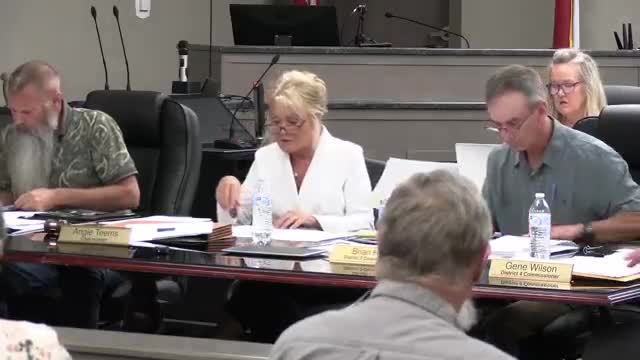
Summary
The board approved two adjoining rezones from agriculture to industrial for Walker County Development Authority parcels after removing the items from the table; the approval includes a 200-foot vegetative buffer on edges adjoining private property and prompted multiple residents to raise environmental, traffic and process concerns.
Walker County commissioners voted to approve rezoning two adjoining parcels owned by the Walker County Development Authority from agriculture to industrial, adding a condition that any industrial buyer must provide a 200-foot vegetated buffer where the industrial property abuts privately owned parcels.
Chair Angie Teems said the rezones had been tabled at the May 1 meeting and returned as unfinished business. Commissioner Blake Moore moved to approve the rezones with the 200-foot vegetative buffer; the board moved the items off the table, voted to take them up, and then approved the rezones with the buffer condition.
The parcels are described in public materials as located on Glass Road near Lafayette (tax parcels referenced in planning materials). The planning commission had recommended denial of the rezones; commissioners amended the request with the buffer and voted to approve.
The decision prompted extended public comment. Stacy White, who lives on Lynn Trail off Glass Road, said she and neighbors chose their homes for the rural character and said the industrial conversion would damage views and quality of life. “We love that property because it’s beautiful and peaceful,” White said. “I’m very, very disappointed in this decision.”
David Boyle, chair of the Noble Community Association, asked who would pay for cleanup if industrial uses later cause contamination and urged the county to consider bonding or cleanup assurances from future users. Diane Criswell Hudson, who described herself as one of nearly 50 neighbors who share a fence line with authority-owned property, asked how the development authority and county will follow up with adjoining residents and requested an ongoing liaison process.
Stephanie Watkins, executive director of the Walker County Development Authority (and county economic development director), said the authority is a public corporation with a mandate to promote industry and that real-estate discussions often require confidentiality in early phases; she told the audience that when decisions are ready for public action they are taken publicly.
Several commissioners acknowledged the residents’ concerns and said the 200-foot vegetated buffer — about an acre of planted buffer measured from the county right-of-way — was intended to protect adjoining landowners. Commissioner Blake Moore and others said the agreement may restrict some marketing of the authority’s property but saw the buffer as a reasonable compromise.
The board also discussed improving liaison and communications between the development authority and neighboring residents so county officials can provide clearer notice and receive input earlier in the process.
The rezones now move to recording and permit steps subject to the vegetated-buffer condition; commissioners said staff and the county attorney would craft specific language for the condition and ensure it is included in sale or development agreements.