Get Full Government Meeting Transcripts, Videos, & Alerts Forever!
Get email alerts on the Domestic Violence topic
No spam. Unsubscribe anytime.
Milwaukee homicide review team reports progress on domestic violence recommendations, but housing and legal gaps remain
Summary
The Homicide Review Commission and city agencies reported steps taken on recommendations from an intimate-partner violence sentinel event review, including expanded high-risk team funding, a co-response pilot and follow-up efforts by MPD, but commissioners and advocates said housing shortages and statutory definitions limit responses.
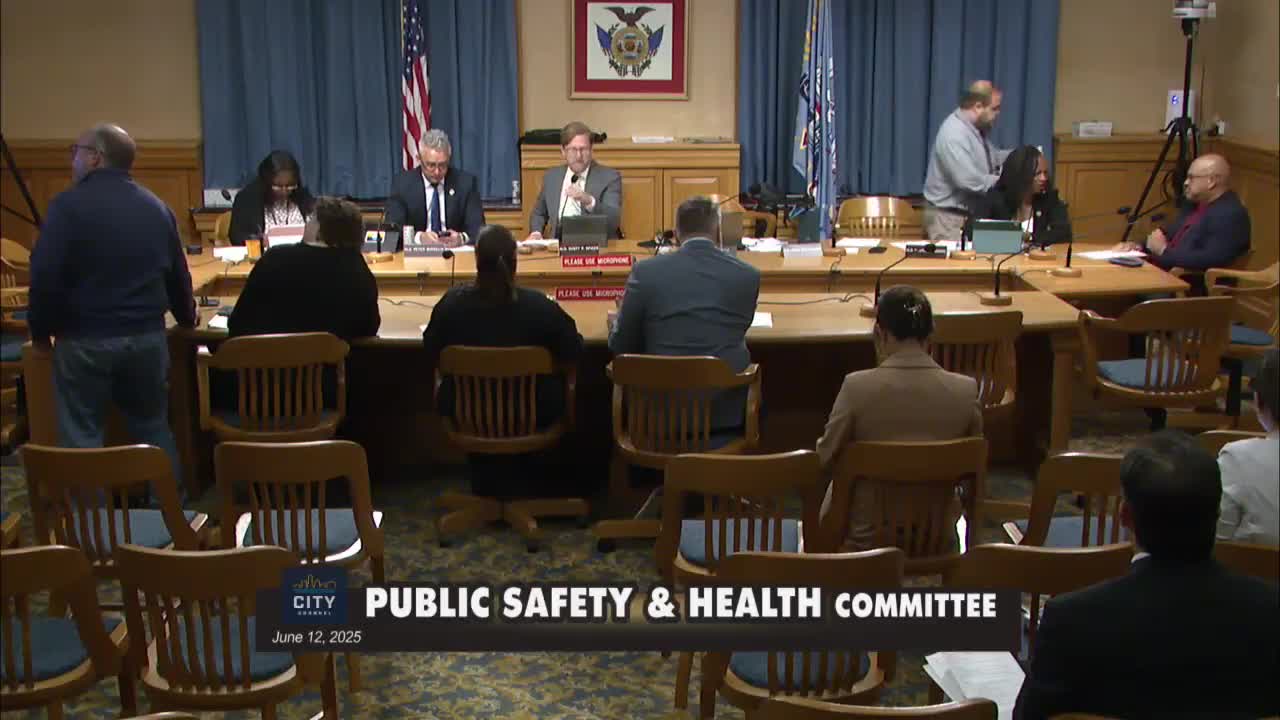
The Homicide Review Commission and city agencies reported progress June 12 on implementing recommendations from a sentinel event review of a fatal intimate-partner violence case, while warning that housing availability and state law may limit how fully the city can respond.
Commission presenter Dr. Connie Kostelec, who led the update, said the domestic violence high-risk team (DVHRT) received funding extensions to staff up to 30 case reviews per week and to continue a position that works with people who cause harm. Kostelec told the Public Safety and Health Committee the governor's office extended grant support through December 2026 and that the DVHRT has reviewed “only two” fatal cases in the team's lifetime, a statistic she said would be summarized in a forthcoming report by Sojourner.
Kostelec said a District 4 co‑response pilot — pairing advocates and multiple system stakeholders at incident scenes — has preliminary positive results but is resource intensive. She also reported that Milwaukee Police Department follow-up calls to victims who initially declined services convert roughly one in four people to accept resources.
Why it matters: Committee members pressed for follow‑up because recommendations touch multiple systems — law enforcement, prosecutors, corrections, and housing — and because changes to state law or resource allocations could be required to reach more people at risk.
What agencies said and next steps MPD representatives, including Captain Erin Mejia and Inspector Paul Lau, confirmed district-level domestic violence liaison officers, on-scene advocates and work with the Department of Corrections (DOC) to improve notifications for people on supervision. Mejia said officers now ask victims whether firearms are present “in every single case” and that soft rooms for interviews are available across districts. She described efforts to follow up within 48–72 hours after an incident and to escalate to in-person visits when phones are unavailable.
Kostelec and MPD officials described progress at DOC: agents and victim advocates now coordinate after DVHRT or prosecutor referrals so supervision conditions can account for recent incidents. The Alma Center, which provides intervention work with people who cause harm, has taken more than 700 cases since January 2024, Kostelec said, and reported contacts, group sessions and class enrollments among people who caused harm.
Persistent gaps and debate Committee members focused repeatedly on two limits: housing and Wisconsin's statutory definition of domestic abuse. Kostelec and others pointed to a Sojourner report documenting that shelter and housing capacity for survivors is well below demand. She said housing needs tied to domestic violence were not yet matched by “specific funding” and that this remained a critical constraint.
Kostelec also highlighted that Wisconsin’s statutory definition of domestic abuse excludes many dating relationships that other Midwestern states cover. Expanding the statutory definition would enlarge the set of incidents that trigger some court-based processes, she said, but the committee heard concerns from multiple officials that a legislative change could create a large workload increase for police, prosecutors and courts. Kostelec recommended forming a smaller working group — with criminal-justice agencies and service providers — to estimate workload and fiscal impact before recommending a statutory change.
Marcy’s Law effect and proposed opt‑out outreach Speakers discussed Marcy’s Law, the state constitutional victims’ rights amendment, which some agencies say has led to fewer immediate referrals to advocacy services because victims sometimes decline contact up front. MPD representatives said they were exploring revised procedures to make outreach less opt‑in and more “opt‑out” (e.g., arranging for advocates to contact victims unless they decline). Captain Mejia said the department is coordinating legal review before implementing changes.
Public and committee reaction Alderman Michael Murphy and others asked that the forthcoming DVHRT summary be circulated to the committee and that the city explore institutionalizing DOC–MPD coordination through memoranda of understanding. Committee President José Perez asked for periodic updates on the opt‑out approach, the Sojourner report on housing, and the pilot co‑response results. The item was held for further committee follow-up.
Ending note Kostelec said more research projects are planned, including studies on the link between prior firearm-related charges and intimate‑partner violence and on intersections between domestic and community violence; the commission and agencies will return with additional data and working-group proposals.