Get Full Government Meeting Transcripts, Videos, & Alerts Forever!
Get email alerts on the Labor And Employment topic
No spam. Unsubscribe anytime.
Harris County delays contractor living-wage start date to Oct. 1, 2025 after months of debate
Summary
After months of advocacy from labor and contractors, Harris County Commissioners voted to delay full implementation of the county's contractor living-wage policy until Oct. 1, 2025, while keeping the adopted policy intact and directing further coordination among county departments and industry groups.
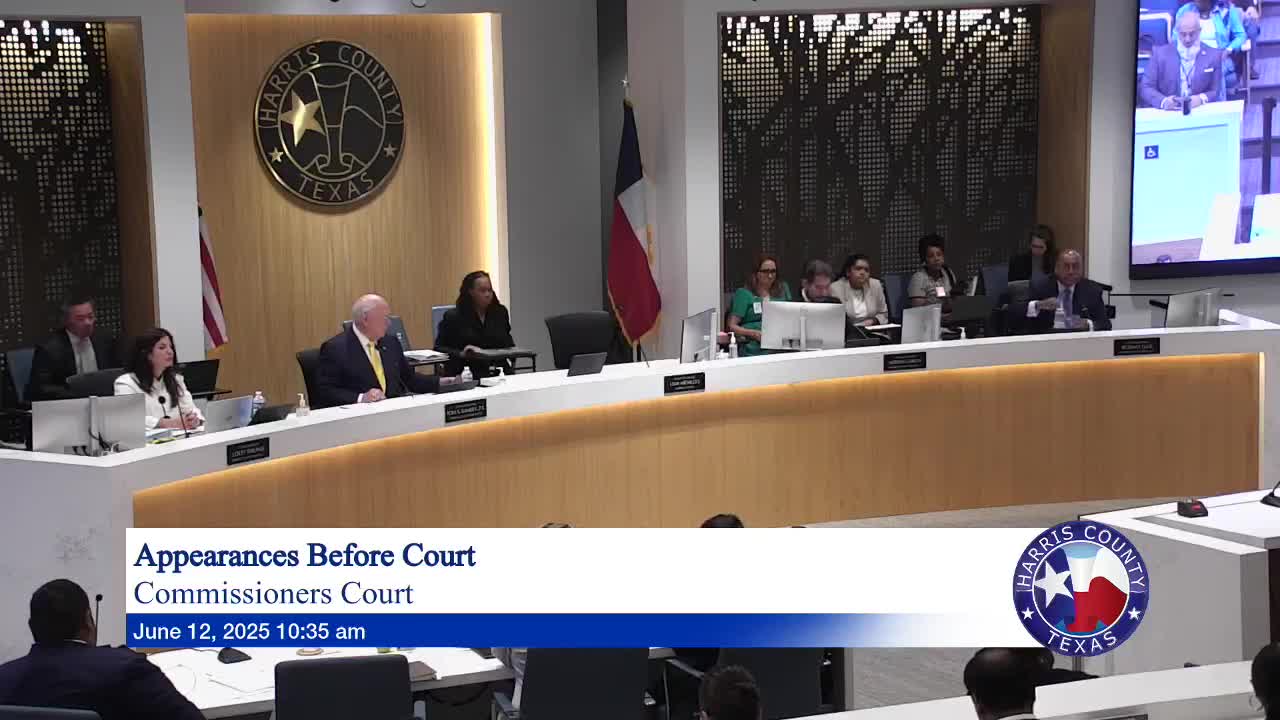
Harris County Commissioners on Tuesday voted to delay implementation of the county's contractor living-wage policy to Oct. 1, 2025, while reaffirming that the policy adopted earlier this year will not be rolled back or watered down.
Supporters said the policy will bring pay and dignity to workers on county projects, while some contractors and county officials asked for more time to address implementation details. Commissioner Briones, who sponsored the original policy and the delay motion, said the postponement will give county departments and the contracting community time to coordinate on operational details.
The policy sets a minimum hourly rate for contracted workers on county projects; the enacted pay levels include $20 for county employees and $21.65 for contracted workers on county projects as described during the meeting. Labor leaders told the court that the policy is vital for recruitment, retention and worker safety. Chateau Woodard, speaking on behalf of Plumbers Local Union 68 and the Houston Gulf Coast Building and Construction Trades Council, said, “We strongly support the $21.65 minimum wage policy for Harris County contract workers.” Andy Martinez, president of Plumbers Local 68, told commissioners: “We support this policy fully because it sets a standard of fairness for everyone performing work on behalf of the public.”
Contractor groups also urged caution. The Houston Contractors Association had sent a letter asking the county to move the effective date to Oct. 1, 2025, to align with the fiscal year and to continue discussions about exemptions for large civil infrastructure projects and projects run by specific county entities. County staff and the county attorney said they saw no legal barrier to a short implementation delay and recommended additional outreach and training so purchasing and project teams are ready on day one.
Commissioners said they did not intend to carve exemptions from the policy, but several expressed a desire to avoid unintended consequences: potential cost increases for public works projects, confusion for purchasing staff, and impacts on small subcontractors. The court's final motion directed county staff to continue collaboration with labor groups and contractors and to return with implementation details ahead of the Oct. 1, 2025 start date.
What the vote means: Commissioners set the policy's new start date and authorized county offices to use the four-month runway to complete training, procurement adjustments and outreach to project managers and vendors. The vote record shows the court approved the postponement; commissioners said they would revisit any concerns during the implementation window.
Why it matters: The policy affects thousands of blue-collar workers on county-funded projects and the companies that hire them. Supporters framed it as a way to keep workers from having to work multiple jobs and to improve safety and quality; opponents warned of higher public-construction costs and strain on small subcontractors. The Oct. 1 effective date gives the county time to test procurement language and clarify coverages before enforcement.
Looking ahead: County staff will bring back implementation materials and a timeline to the court before Oct. 1. Commissioners said they would monitor contractor feedback and compliance and could revisit specific rules if problems arise.