Lifetime Citizen Portal Access — AI Briefings, Alerts & Unlimited Follows
Nonprofit security grants surge in public testimony after Capitol Jewish Museum murders
Loading...
Summary
Speakers representing Jewish congregations and interfaith groups urged the District CouncilCommittee on Judiciary and Public Safety on June 10 to expand a city nonprofit security grant after a May 21 antisemitic attack outside the Capitol Jewish Museum, saying the program did not meet demand in FY25.
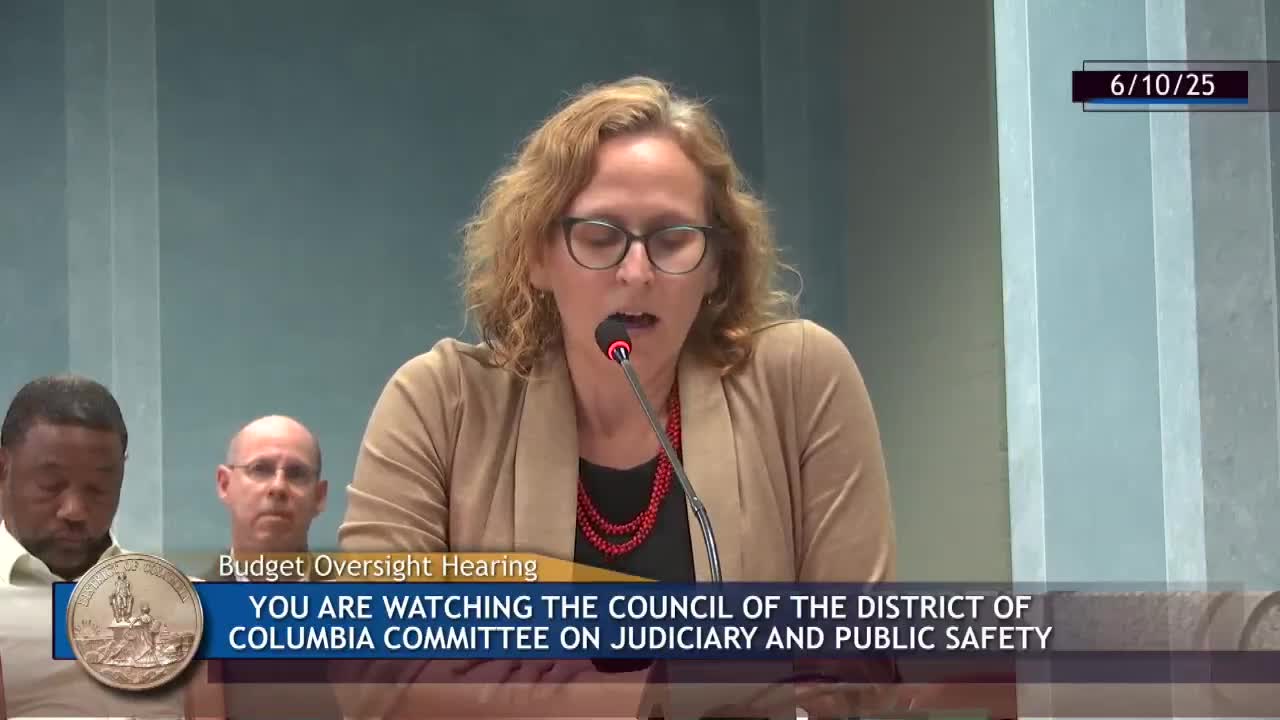
Speakers representing Jewish congregations, community service organizations and interfaith groups told the Committee on the Judiciary and Public Safety on June 10 that nonprofits across the District face rising threats and need more municipal help for security work. Witnesses asked the Council to renew and increase the Safe and Secure DC grant program, originally funded at $500,000 for FY25 and now asked to be raised to $750,000 for FY26.
Witnesses described a sharp increase in antisemitic incidents, including the May 21 murders of Sarah Milgram and Yaron Leshinski outside the Capitol Jewish Museum. Beatrice Gerwitz, executive director of the Lillian and Albert Small Capital Jewish Museum, told the committee the museum spent about $330,000 on security before the shooting and now expects costs to “more than double,” requesting an additional $500,000 to defray the increased burden. Rachel Feinstein of the Jewish Community Relations Council and representatives from the Jewish Federations, Jewish Community Center, Interfaith Council of Metropolitan Washington, Anti-Defamation League and others urged at least $750,000 in FY26 to meet demand they say reached $1.5 million in requests in FY25.
Deputy Mayor Lindsay Appiah told the committee DMPSJ currently manages multiple public-safety grant lines and that the FY26 DMPSJ budget includes roughly $12 million in grant funding that will be apportioned across programs. She said about $9 million is budgeted for Safe Passage, $2 million for the Safe Commercial Corridors grant program, and roughly $1 million available for other small programs including nonprofit security grants; DMPSJ officials said the DMPSJ line is structured in a way that does not show a separate line item labelled “Safe and Secure DC” in the draft budget documents. Appiah said the FY25 Safe and Secure DC program had a total awarded amount of about $470,755 and that demand exceeded available funding.
Community witnesses described the ways the grant money is used: paying for contract security and off-duty officers; installing cameras and keyless or Shabbat‑compatible security doors; security training (CPR, stop‑the‑bleed, situational awareness); and physical upgrades such as bullet‑resistant film. Multiple witnesses said federal nonprofit security grants do not reliably fund personnel costs and that the local program fills a critical gap. Several organizations said they had already budgeted hundreds of thousands for security in FY26 and that smaller congregations and culturally important venues needed help to keep doors open safely.
Deputy Mayor Appiah and DMPSJ staff said the office has added grant management capacity over the last year and planned to distribute funds through a combination of DMPSJ and partner agency processes in FY26; Appiah said the office had hired additional grants staff and expected to administer the programs internally going forward. Appiah told the committee she and her staff were open to working with Councilmembers to adjust allocations if the body chose to increase the nonprofit security line.
The testimony came amid heightened federal and state warnings about threats to Jewish communities. Many speakers framed the grant request as an issue of life safety — and of equity for smaller faith or nonprofit organizations that lack capacity to finance security upgrades. Committee Chair Brooke Pinto thanked witnesses and said the committee would continue to work to restore and expand the program.
Ending: The committee did not vote on program funding during the hearing. DMPSJ did not commit to a specific additional appropriation for Safe and Secure DC at the hearing; Councilmembers present continued to discuss FY26 budget tradeoffs and said they would consider the testimony as they finalized funding levels in the weeks ahead.