Get Full Government Meeting Transcripts, Videos, & Alerts Forever!
Get email alerts on the Transportation topic
No spam. Unsubscribe anytime.
Johnson County commissioners brief Olathe council on World Cup planning, transit and housing updates
Summary
Johnson County Commissioners Michael Ashcraft and Shirley Allen Brand updated the Olathe City Council on regional World Cup planning, proposed transit pilot funding, broadband efforts in unincorporated areas, airport and economic-development projects, and early-stage housing initiatives.
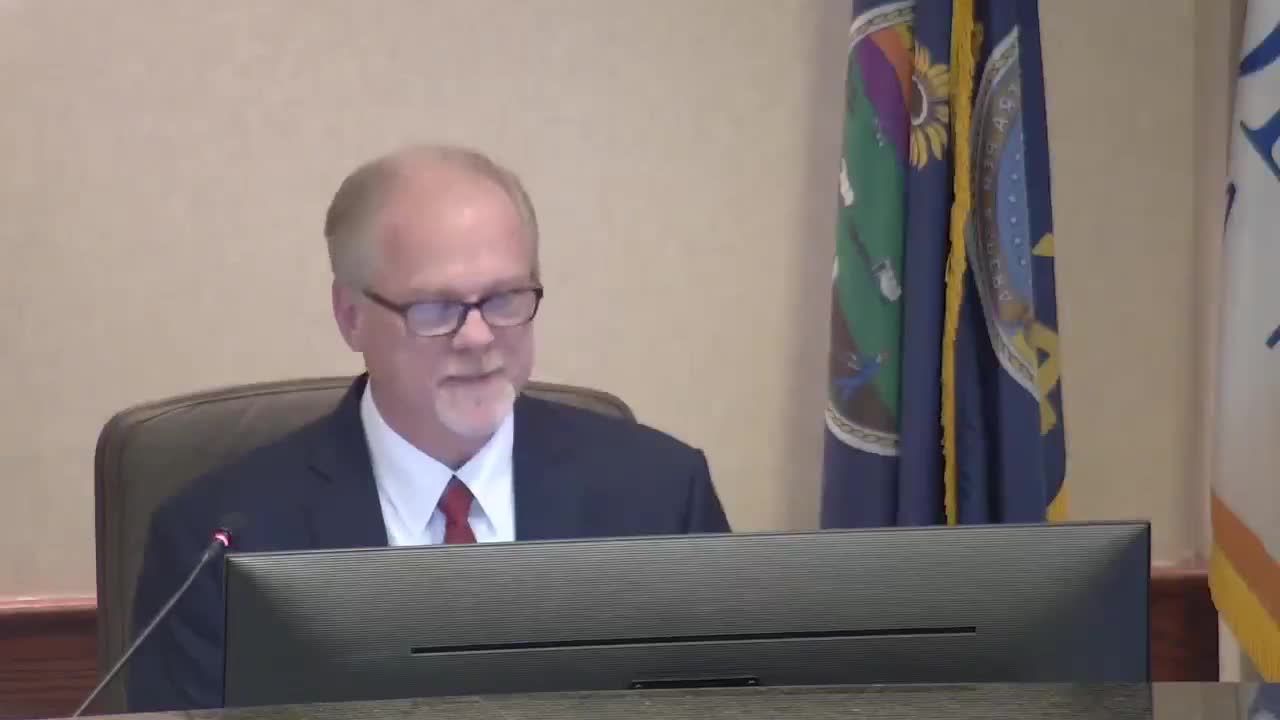
Johnson County Commissioners Michael Ashcraft (District 5) and Shirley Allen Brand (District 6) spoke to the Olathe City Council on June 3, 2025, outlining county work tied to the upcoming World Cup, transit planning, housing initiatives and other county projects that affect Olathe residents.
The presentation emphasized coordination for World Cup fan events and transportation. Commissioners described a planned transit corridor linking Kansas City International Airport with key event sites and convention centers; that corridor is intended to move international visitors into a regional “circular” transit network during events. County staff are coordinating routes and security planning with city and regional partners and expect to present more detailed operational plans to local governments in coming weeks.
Why it matters: county leaders said World Cup-related planning is accelerating investment and cooperation on transit and emergency planning that could have longer-term effects on regional mobility and small-business activity.
Commissioners also described the county’s recent work on microtransit and funding shifts since the COVID-era stimulus. Officials said Johnson County previously spent about $500,000 per year on microtransit and increased that to roughly $4 million annually using one-time federal stimulus funds. With those federal funds exhausted, the county plans to scale the program back to about $1 million per year and is developing a strategic plan to target core, higher-density service areas first. The commissioners said the strategy favors starting a core service — likely focused in northeast Johnson County — and expanding only with partner funding and demonstrated ridership.
The presentation noted that microtransit is costlier per rider than conventional fixed-route buses, and commissioners stressed that any permanent expansion will depend on economic justification and local partnerships.
County officials also briefed the council on several other initiatives: the County Assistance Road System (CARS) program funded by state fuel-tax dollars and local matching funds; broadband expansion work in unincorporated parts of Johnson County; consolidation of several fire districts intended to yield cost savings and enable future mill-levy reductions for some communities; and ongoing cleanup planning for the Sunflower Army Ammunition Plant property, which county leaders said will become parkland and help expand regional trail and recreation networks.
Airport and economic development updates included a new air-traffic-control tower under construction at New Century AirCenter and a planned office presence by Kansas State University for a pilot aviation program. Commissioners said the airport is now designated as a national airport and that new businesses under construction (including a food-processing employer) are expected to add jobs to the area.
On housing, commissioners described several early-stage efforts. They said the VanTrust family is assembling a private trust to support infrastructure and housing opportunities; county staff are not administering that trust. Commissioners said that while Olathe’s single-family values place many of its units in lower price bands compared with parts of Johnson County, affordability still presents a challenge and that the county and city should continue exploring options to expand opportunities for teachers, first responders and other local workers.
Commissioner remarks and council questions touched repeatedly on whether World Cup-driven transit investments would persist after the event. County presenters said some services will operate during the event and that continued service afterward will depend on city and business partners and on whether operating costs can be covered by local contributions or development-linked revenue. Commissioners repeatedly framed expansion decisions as economic and partnership questions rather than guaranteed long-term commitments.
The county representatives offered to return with more targeted briefings — including a budget-level presentation and a more detailed World Cup coordination briefing — and council members welcomed further updates.
Ending: County officials thanked the council for the opportunity to present and said they would provide slide materials and follow-up briefings to Olathe staff and council members.