Get Full Government Meeting Transcripts, Videos, & Alerts Forever!
Get email alerts on the City Budget topic
No spam. Unsubscribe anytime.
Jackson City budget workshop examines options to cover roughly $3.5 million capital shortfall
Summary
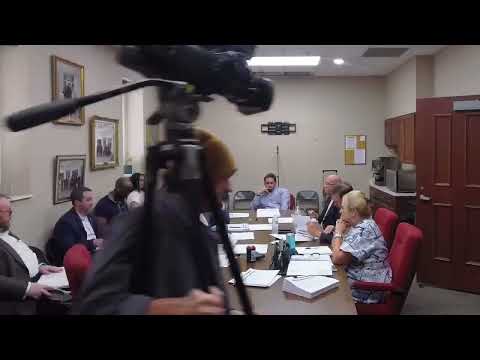
At a Jackson City Council budget workshop, staff outlined a roughly $3.5 million shortfall in the capital fund and presented choices — using fund balance, raising user fees or the city sticker, or increasing the property tax rate — while councilors asked for more detailed revenue and personnel history before acting.
Budget staff told the Jackson City Council at a budget workshop that the city’s general fund shows a modest surplus while the capital fund faces a multi‑million dollar shortfall, prompting discussion of fee increases, a property tax change or limited use of fund balance.
Budget staff said the general fund is about $399,000 in surplus after recent adjustments, including the late discovery of an additional $100,000 and the inclusion of part‑time and temporary positions. Staff also reported that once part‑time and temporary positions were included the personnel total rose by roughly $1.8 million.
Council members and staff focused on the capital fund gap, which staff described as roughly $3 million to $3.5 million under the current workshop column. Staff noted a roughly $2.8 million surplus in debt‑service where some revenue is already earmarked for financing and described bond program totals and identified capital purchases since the last adopted budget. The 2025 revised capital outlay number shown in the packet was $7.14 million; the 2026 “workshops” column under discussion showed $5.395 million.
Why it matters: the capital shortfall means the council must choose whether to transfer money from the city’s fund balance, cut capital projects, or raise recurring revenue. Each choice has tradeoffs: drawing down fund balance reduces reserves for future years; one‑time transfers do not solve ongoing revenue needs; and recurring revenue increases (fees or taxes) would be a policy choice with public implications.
Options discussed - Use fund balance for part of the gap. Several councilors said they would accept a limited drawdown now if staff and a forecasting committee commit to a multi‑year plan and monthly reporting so the council can avoid repeating the same shortfall next year. One councilor said she would not support a tax increase in 2027 if she were running for reelection and urged transparency to constituents. - Increase recurring user fees and service charges. Staff and councilors identified modest revenue opportunities from development review and permit fees, civic center and fairgrounds rentals, and parks and recreation registrations. Staff estimated modest increases might generate tens to a few hundred thousand dollars (examples discussed in the workshop included projected increments of roughly $100,000–$200,000 depending on fee adjustments and uptake). - Raise the city sticker fee. Staff reported the city currently collects about $1,386,000 from the $25 city sticker. Doubling the sticker to $50 was discussed as a mathematical example that would increase receipts, but councilors repeatedly cautioned about the household burden and political sensitivity of an immediate large jump. - Raise the property tax rate. Staff said a single penny of property tax raises about $234,677; council discussion centered on how many cents would be needed to cover the shortfall. Staff estimated roughly 15–16 cents (an approximate figure) would be required to fully cover a $3.5 million gap; councilors noted that even a few pennies materially affect average homeowner bills and urged careful public outreach.
Other budget detail and directions - Staff told the council that capital adjustments and recent purchases account for part of the shifting totals, and that a $5.2 million contract for street servicing appears in the bond-related planning materials. Councilors asked staff to provide a single, one‑page summary of revenues and a clearer breakout showing where grant and restricted funds sit so elected officials — and ultimately the public — can understand what is fungible and what is restricted. - Councilors directed staff to prepare clearer materials quickly. The stated timeline in the workshop was to present a proposed FY2026 budget for first reading at the next regular council meeting and to call a special meeting in mid‑June to finalize the budget so the city can meet state submission deadlines (staff emphasized the budget must be balanced and submitted by June 30).
Councilors pressed for more evidence before making recurring revenue decisions: multiple members asked for a three‑year personnel history (to show changes in part‑time and full‑time staffing), a compact balance sheet or summary revenue page, and a forecast committee led by staff (Nathan referenced) to produce ongoing monthly reports and a multi‑year forecast.
No final action was taken at the workshop; the meeting produced staff assignments and a working timetable for follow‑up materials. Councilors expressed a shared interest in avoiding repeated draws from fund balance, but disagreed about how large a fund‑balance draw would be acceptable this year if it was paired with a formal forecasting commitment.
Ending: Staff committed to produce a one‑page revenue summary, a history of personnel changes, and clearer breakout sheets for grants, capital and debt service. Councilors set a goal to have the FY2026 budget on the regular meeting agenda for first reading and to hold a special call in June to finalize the balanced budget for state filing.