Get Full Government Meeting Transcripts, Videos, & Alerts Forever!
Get email alerts on the Corrections Policy topic
No spam. Unsubscribe anytime.
Schenectady legislators press state to amend HALT Act after jail staff cite surge in assaults
Summary
After superintendent testimony that assaults in the county jail have risen sharply since the HALT Act took effect, the Schenectady County Committee on Codes, Judiciary and Consumer Affairs voted to send a resolution to the full legislature asking the state to consider amendments to the law.
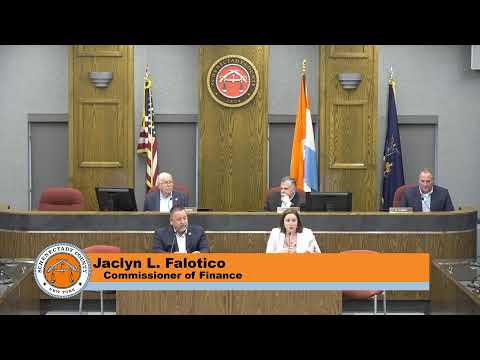
The Schenectady County Committee on Codes, Judiciary and Consumer Affairs voted June 10 to forward a local resolution asking the state legislature to amend the HALT Act, the law that restricts certain uses of segregation in New York correctional facilities.
The committee advanced CJCA 2 after Schenectady County Sheriff’s Superintendent Ron Walsh and Brian McDonald, state political and legislative director for AFSCME, described a rise in violence in county custody and urged changes that would give local jails additional, narrowly defined tools to respond to violent incidents while preserving the law’s rehabilitative goals.
The resolution asks the state legislature to consider narrow amendments that county officials say would allow a short, investigatory cooling-off period and limited administrative segregation for people who pose an immediate threat to others. “According to the most recent data that, we have veil, Schenectady County Correctional Facility has seen an increase of incarcerated individual on incarcerated individual assaults, of about a hundred and 79 percent … and has seen an increase in incarcerated individual on staff assaults of about 40% since the enactment of the act,” Superintendent Ron Walsh said in committee testimony. Walsh told the committee the jail faces repeated incidents in which individuals assault others and are then moved from tier to tier because the facility lacks authority under the current statute to impose short-term segregation pending investigation and due process.
Brian McDonald of AFSCME urged reexamination at the state level and said unions and corrections stakeholders have been meeting with lawmakers to seek pragmatic fixes. “Ignoring the problem is not a solution,” McDonald told the committee.
Not all members supported the draft resolution in its current form. One legislator told the committee they could not support the measure as written and urged a 6-month study involving law enforcement, HALT implementation officials, mental health professionals and formerly incarcerated people to review facility conditions, resource needs and legal safeguards before advancing legislative changes. That legislator said changes should not “dismantle protections without a comprehensive review,” and recommended a fact-finding tour of the county jail and a data-driven report back to the legislature.
Committee members who supported the resolution said they sought to preserve the HALT Act’s core reforms while adding narrowly tailored tools for county jails — for example, short investigatory confinement with guaranteed meaningful human contact, or administrative segregation in limited circumstances subject to reporting and review. Supporters said the goal is to protect both incarcerated people and staff without returning to prolonged solitary confinement.
The committee voted to report the resolution to the full legislative agenda for further consideration; the committee record shows a motion to report, a second and a voice vote. The resolution will next appear on the legislature’s agenda for a floor vote.
Background: The HALT Act, signed into law in 2021 and generally effective March 30, 2022, substantially limited the use of segregative practices in state and local facilities and expanded access to rehabilitative programming. County officials said compliance data from the New York State Commission of Correction shows an overall rise in reported violence in jails statewide and that the commission has recommended legislative and budgetary options to address safety and confinement needs.
The committee hearing included detailed operational descriptions of local housing units and the limits county jails face under the HALT Act when attempting to separate aggressors from victims while meeting minimum standards for out-of-cell time and programming.
The committee’s action forwards the county’s request to state lawmakers; the legislature’s next steps and any changes to state law were not decided at the meeting.