Get Full Government Meeting Transcripts, Videos, & Alerts Forever!
Get email alerts on the Opioid Settlement topic
No spam. Unsubscribe anytime.
Alleghany County staff recommend routing new opioid‑settlement payments to EMS and health department planning
Summary
An Appalachian Health representative updated Alleghany County commissioners on opioid‑settlement spending, recommended keeping sheriff funding in place, and proposed awarding about $122,700 to Alleghany EMS for post‑overdose response and recovery support; no formal vote was recorded on the memorandum of agreement at the meeting.
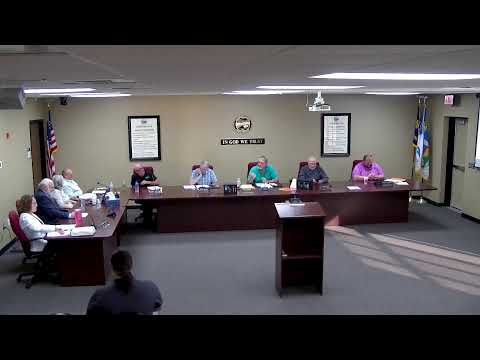
Jennifer Green, an Appalachian Health representative, updated the Alleghany County Board of Commissioners on the county’s share of state opioid‑settlement funds and recommended specific allocations for the coming year.
Green told the commissioners that the county will receive another payment this year and recommended that the county allow the sheriff’s office to continue using its previously awarded funds because the sheriff’s allocation "has not been spent down," while redirecting part of the new payment to the health department and Alleghany EMS. She said the county would receive about $157,362 this year, and proposed sending some matching grant funds back to the health department for strategic planning and related activities. Green recommended awarding the remaining difference — reported in her presentation as $122,702 — to Alleghany EMS to support post‑overdose response and recovery treatment support.
"We’re really just trying to set up a place where there's no wrong door for people," Green said, describing the goal of improved coordination among EMS, the sheriff’s office and the hospital so people with substance use disorder can be referred to appropriate services.
Green described a memorandum of agreement (MOA) format required by the state that enumerates strategies, funding amounts and intended uses; she said the MOA also includes a separate amount of $24,660 to the health department to continue coordination work. She said Appalachian Health has submitted the required financial and impact reports and has been helping bridge subcontractors to the state’s opioid settlement technical assistance team. Green also described a partnership with Appalachian State University to conduct a needs assessment with people who have lived experience of substance use disorder to better tailor services.
Commissioners asked no substantive follow‑up questions during the presentation; no motion or vote on the MOA or the recommendations was recorded in the transcript. Green invited commissioners to remain involved in planning and implementation.
The presentation noted that opioid‑settlement funding is distributed over time and that further payments or settlements (including separate pharmaceutical and retailer settlements) may provide additional dollars over several years. Green said some counties saw large, lump‑sum payments while others receive funds on a schedule that can extend over many years.
Why it matters: The county’s choices about how to allocate sustained opioid‑settlement funds determine which local providers can hire or expand services for overdose response, recovery support and strategic planning. Commissioners will likely need to act on the MOA or related budget items in a later meeting to authorize the spending Green described.
What happened next: Commissioners did not take a formal vote on the MOA during the meeting. Green’s presentation and the MOA format she described provide the staff recommendation and the elements the board will be asked to authorize in a future action.