Get Full Government Meeting Transcripts, Videos, & Alerts Forever!
Get email alerts on the Public Safety topic
No spam. Unsubscribe anytime.
Sampson County authorizes supervised inmate work for roadside cleanup and select county facilities
Summary
Board adopted a resolution under N.C. Gen. Stat. 162‑58 allowing eligible misdemeanor inmates to perform supervised roadside litter pickup and work at county facilities; sheriff to set rules and supervise and program requires time to implement.
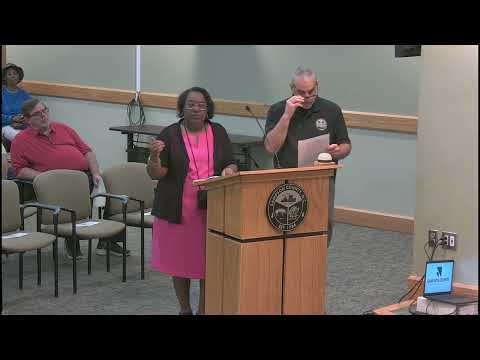
The Sampson County Board of Commissioners voted to adopt a resolution authorizing the sheriff to use eligible inmates in the county jail for supervised work on state roadways and select county facilities pursuant to North Carolina General Statute 162‑58.
Sheriff and county staff said the program would use only select, low‑risk misdemeanor inmates who meet statutory eligibility criteria and are not considered a public safety risk. The sheriff said inmates could earn reduced confinement time and that the North Carolina Department of Transportation would supply trash bags and collect filled bags from roadside work. County staff and the sheriff emphasized the program is not intended to clean private illegal dump sites; private property owners retain responsibility for trash on private land.
Operational details and supervision Presenters said roadside pickup would require armed officer supervision; light maintenance duties at county facilities (for example, grass cutting at the EMS building) could be performed with on‑site supervision and may not require an armed deputy. The sheriff said existing detention staff and overtime lines could cover supervision; he indicated the county had a van and could acquire minimal equipment (bench seats, a trailer and a porta‑john) to support transport and field work. The sheriff and staff cautioned it would take time to set rules and implement the program and that it would not begin immediately.
Vote and next steps Commissioners adopted the resolution and directed the sheriff to develop rules and implement the program under the sheriff’s authority. The sheriff will work with DOT and county departments to define SOPs, protective equipment, transport and recordkeeping necessary to qualify hours under the relevant state program.