Get Full Government Meeting Transcripts, Videos, & Alerts Forever!
Get email alerts on the Solar Ground Mounted topic
No spam. Unsubscribe anytime.
North Smithfield zoning board approves ground-mounted solar at 35 Norwood Road with conditions
Summary
The North Smithfield Zoning Board of Review approved a special-use permit and a dimensional variance allowing a ground-mounted solar array at 35 Norwood Road, granting 1.3% lot-coverage relief and attaching conditions including corrected engineering documentation, buffering and a solid fence.
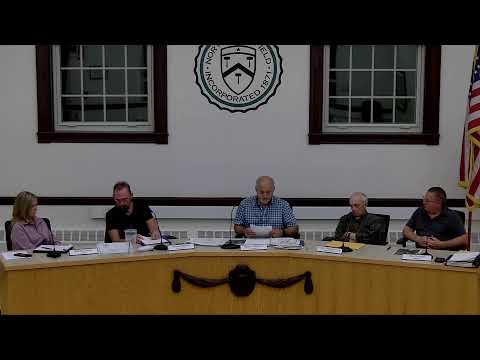
The North Smithfield Zoning Board of Review on May 27 approved a special-use permit and a dimensional variance for a ground-mounted solar array at 35 Norwood Road, allowing the property to exceed the town—s 20% maximum lot coverage limit by 1.3 percentage points.
Attorney Michael Resnick, representing the applicant and owner Manuela Garza, told the board the project is a residential accessory ground-mounted photovoltaic system intended to serve the house—s electrical load. "The proposed improvements are a 20 kilowatt DC ground mounted solar array," Resnick said during his presentation, adding the arrays would be screened with evergreen plantings and low-profile racking.
The board—s approval includes several conditions intended to address documentation and neighbor concerns. The board required either a letter from the original preparer authorizing the second engineer—s stamp or a new stamped plan from the engineer who restamped the drawing (Daniel R. Campbell), an amended zoning table on the site plan that clearly states the 1.3% relief requested, an updated P7A plan note correcting the module count to 32, and a requirement that the zoning official receive a certified plot plan before a building permit is issued to verify all panels are outside the 10-foot setback.
Why it matters: The decision allows the homeowner to install a larger ground-mounted solar array than the zoning table would otherwise permit while placing explicit documentation and screening conditions on the approval to address neighbors— safety and visual concerns.
Board and evidence: Resnick said the lot is about 0.459 acres (20,008 square feet) and that, with the house, deck, shed and the proposed panels, total lot coverage would reach 21.3% versus the 20% limit in the RU residential zone, yielding a 1.3% variance request. Engineer Daniel Campbell, who restamped the plan, testified about the drawings and that he reviewed the ordinance. Campbell identified himself as the registered engineer who placed a stamp on the submitted documents.
Neighbors and experts flagged inconsistencies in the paperwork and raised safety and aesthetic issues. Homeowner and neighbor comments included concerns about access to the panels and gaps in proposed plantings. "The ground mounted solar panels can pose a significant safety risk due to electrical wires that run behind and near the peers that were already installed prior to any approvals," said Kalei Garcia, a nearby homeowner, who asked for stronger safeguards to prevent children from accessing the equipment. Charles Theis, a solar industry professional who submitted an oppositional memorandum, pointed out inconsistencies between stamped sheets and module counts and questioned whether rooftop options were feasible and less impactful to neighbors.
Professional input and board response: Engineer Daniel Campbell acknowledged multiple stamps on the same drawing set and testified he restamped a revised drawing after panels were removed from the plan. The board expressed concern about the duplicate stamps and unclear notes; it made approval contingent on corrected, stamped documentation. Civil engineer and local solar developer Ashley Tice identified herself to the board and asked about professional-stamp scope and credentials.
The board also required that the applicant install a solid 6-foot vinyl fence on the north/northeast side of the arrays and match existing buffering along the rear-right (north-northeast) corner of the lot. The approval further directed that the applicant supply an updated submission that lists the aggregate kilowatt capacity for the final panel count before permit issuance.
Vote and outcome: The motion to approve (ZBR 25-3) passed on a roll-call vote with five affirmative votes. The board recorded the requirement that the zoning official verify compliance with the conditions prior to permit issuance and that any building-permit issuance verify compliance with setbacks and maximum array height under the ordinance.
What happens next: The zoning official will review corrected plans and the requested certification/letter from the original preparer or a new stamped plan before issuing permits. If documentation or as-built certification shows noncompliance with the setback or height rules, the permit may be delayed or additional relief sought.
Ending: The board recorded conditions designed to resolve the neighbors— documentation and safety concerns while allowing the homeowner to install a residential ground-mounted solar array that exceeds the town—s lot-coverage limit by 1.3%.