Get Full Government Meeting Transcripts, Videos, & Alerts Forever!
Get email alerts on the Emergency Communications topic
No spam. Unsubscribe anytime.
Council criticizes emergency communications after City Hall lockdown; DPW and emergency management promise fixes
Summary
Council President Perez and committee members said City Hall staff and visitors were left without timely information during a May 15 lockdown; city officials acknowledged a PA system failure in part of the complex and pledged after-action work and improved alerts.
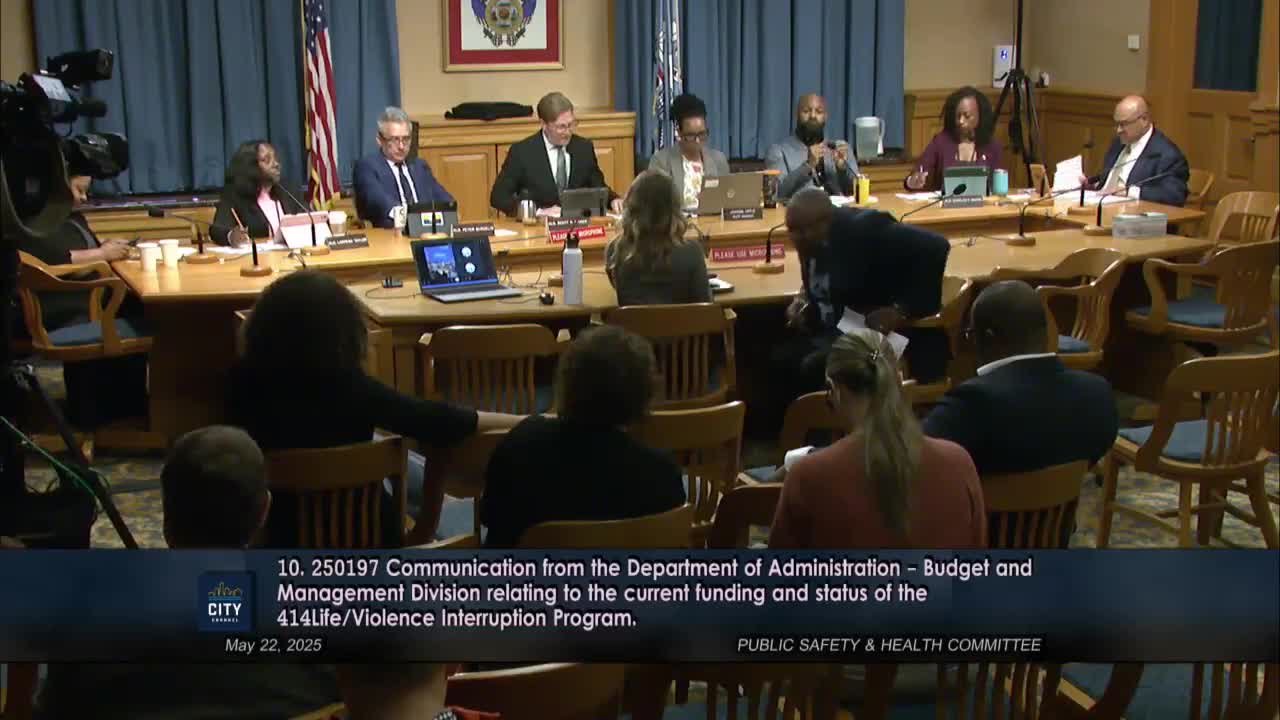
Milwaukee Common Council President José Perez told the Public Safety & Health Committee on May 22 that the city's response to a May 15 City Hall security incident left employees and visitors uncertain and exposed communication failures that must be fixed.
"This could have been a tragedy because it wasn't," Perez told the committee, summarizing staff accounts that no formal notification reached many building occupants for 20 to 30 minutes after emergency responders arrived.
City emergency-management and public-works officials described a fragmented response. Ryan Zollicoffer, the city's emergency management director, said a 911 call prompted on-site police response and that the city operator and building managers followed procedures as details developed. Joe Koschke, commissioner of the Department of Public Works, told the committee that the PA system in the ZMB (Municipal) building did not function during the incident: "The speakers were not working at that time," he said, explaining that DPW called contractors and would increase the frequency of testing.
Officials said an initial 911 call came from a Water Works employee who believed a loud disturbance in a stairwell were gunshots; police teams, including rapid-response units, arrived within minutes and cleared the building. Committee members said they learned of the situation informally or through colleagues, not from official PA, text or e-notify messages.
Committee members pressed for clarity about who is responsible for choosing the communication channel during an evolving incident and for an after-action report with timestamps. Alderman Michael Councilor (committee members used their roles and positions in discussion) asked for a timeline of events, who issued the email that some members reported receiving at about 3:23 p.m., and why parts of the complex did not receive the PA announcement.
Zollicoffer and Koschke said an after-action review of timing, messaging and systems was underway and that DPW and emergency management planned to run more live drills, expand testing of public-address and mass-notification tools and clarify which offices send which messages during complex incidents. Amber Daniels, the mayor's council liaison, said the mayor's office would participate in those reviews and ensure follow-up communications.
The committee held the communication for further updates. Members suggested a temporary working group or standing review that would include the city clerk's office and other tenant departments to standardize alarm and lockdown protocols, clarify roles and establish regular exercises and public-notification templates.