Get Full Government Meeting Transcripts, Videos, & Alerts Forever!
Get email alerts on the Permitting Reform topic
No spam. Unsubscribe anytime.
Prince William development services outlines permitting reforms aimed at faster, more predictable reviews
Summary
Prince William County Development Services described a multi-pronged effort to speed permitting, reduce uncertainty and improve customer experience by expanding virtual appointments, adding clearer e-portal process maps and prioritizing two Chamber of Commerce recommendations: site-plan and building-plan review reforms.
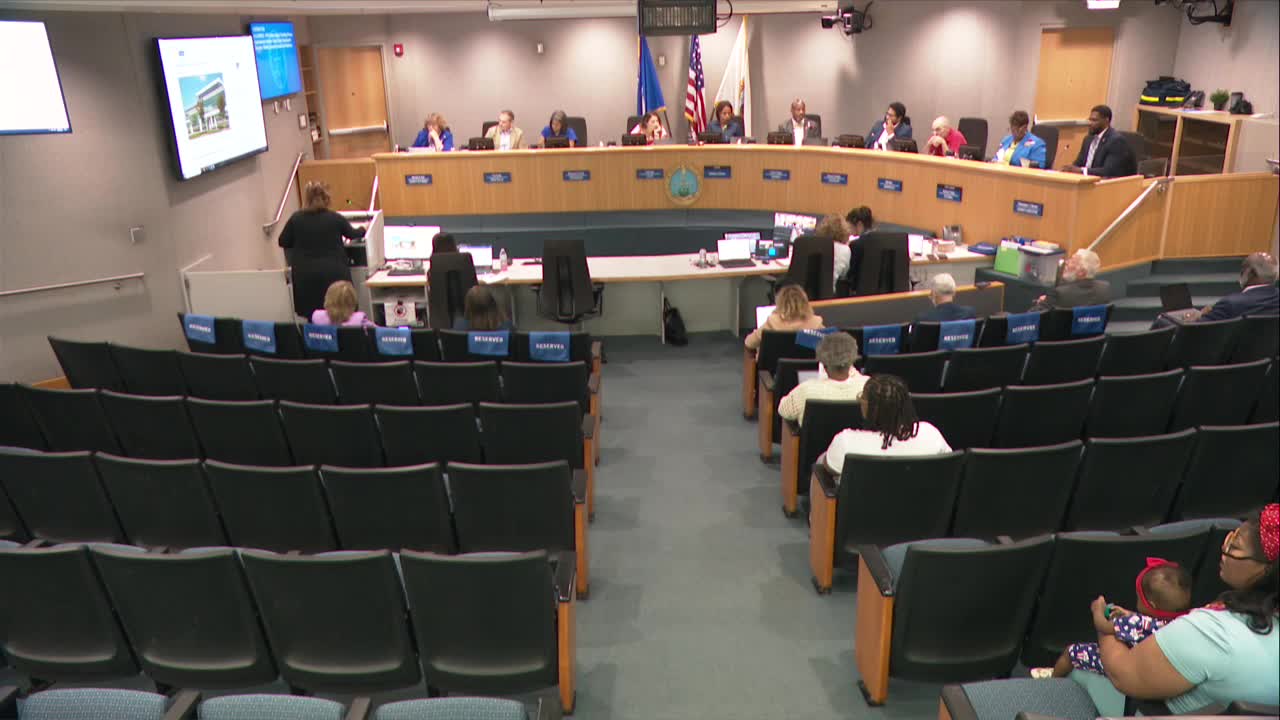
Mandy Spina, Director of Development Services, briefed the Board of Supervisors on an ongoing permitting improvement initiative she said is focused on reducing time and cost, increasing predictability and improving customer experience for homeowners, business owners and developers.
Spina said the county has initiated or completed 11 process improvements since September 2024 and highlighted three specific projects: (1) a virtual-appointment pilot in the Fire Marshal’s Office that will move to full implementation in June; (2) e-portal application improvements that will add a mandatory checkbox linking applicants to interactive process maps and stated review times; and (3) a multi-phase set of recommendations received from the Prince William Chamber of Commerce, which produced 36 permitting recommendations and identified two priority projects for staff to pursue: building plan review and the site plan process.
On review times, Spina said the county follows DCSM timeframes for site-plan reviews: a first review target of 27 days and a second review target of 17 days; she said expedited reviews would cut those times roughly in half. For building-plan reviews, she said typical first-review targets range from about 10 to 20 days depending on complexity, with second-review targets from five to 10 days for some projects. Spina said staff has implemented internal flags for projects that reach a third-review cycle so agencies can convene and address outstanding comments.
The building-plan review improvement effort formally kicked off May 14 with the building official and six industry members. The team will examine three areas: restoring some form of expedited plan review (virtual, hybrid or in-person), revising third-party plan-review policies and considering the possibility of waiving plan review for low-risk commercial projects (a model the county has used on the residential side and for SolarAPP Plus).
On the Chamber recommendations, Spina said staff categorized 36 suggested changes into initiation, discovery and implementation phases; the commercial development committee prioritized two major projects (building-plan review and site-plan process changes). Staff has studied peers such as Loudoun County for conditional site-plan approvals that allow parallel processing of some reviews and convened a six-hour process-mapping session in January with review agencies and directors led by the Transformation Management Office.
Spina said the e-portal improvements will include clearer next-step language and links to contacts for other agencies holding reviews, plus stated review-time expectations so applicants understand what to expect and how to escalate or ask for help.
Supervisors praised the collaboration and asked how the county would keep end users and contractors informed when responsibility for an action shifts between agencies or to the state. Spina said the site-plan process maps will include agencies such as VDOT and Prince William Water with contact links, and staff will coordinate with those external agencies before publishing the maps.
Spina and supervisors also discussed tradeoffs of waiving plan review for residential work and possibly for some low-risk commercial projects: staff said the building official would have final discretion on what is eligible and emphasized inspection and enforcement would follow any waiver.