Get Full Government Meeting Transcripts, Videos, & Alerts Forever!
Get email alerts on the Homelessness topic
No spam. Unsubscribe anytime.
Long Beach outlines post‑Grants Pass strategy: intensified outreach, targeted enforcement and $11 million riverbed plan
Summary
City officials reported thousands of outreach contacts and several hundred shelter placements since the U.S. Supreme Court's Grants Pass v. Johnson decision, while emphasizing a service-first approach paired with targeted enforcement in four priority park areas and a planned $11 million state-funded LA River encampment program.
Long Beach city officials on Tuesday described a multi-pronged response to the U.S. Supreme Court decision commonly called Grants Pass v. Johnson, saying ongoing outreach and new enforcement discretion have together helped move people into shelter and housing while keeping public spaces accessible.
Mayor Rex Richardson said the city had seen “a very visible impact on street homelessness” since the ruling and credited an interdepartmental approach that couples outreach, shelter offers and selective enforcement.
City staff told the council that, from the time the city mobilized its expanded response after the decision through February 2025, Homeless Services field teams received 3,954 outreach requests and provided services to 2,717 people. Of those, 1,422 enrolled in emergency shelter or transitional housing programs and 416 moved into permanent housing, officials said. Public works and parks crews conducted nearly 2,500 cleanups and removed about 830 tons of refuse.
The administration stressed that the Supreme Court decision changed the legal calculus but did not mandate enforcement. “The ruling changes what is legally permissible,” Deputy City Manager Teresa Chandler said, “but it does not change our core approach. Long Beach remains committed to balancing public safety with compassionate, service-led strategies that prioritize long-term solutions to homelessness.”
Why it matters: the city says a mix of outreach, motel and shelter placements, and the option of enforcement when public health or safety is at risk can reduce chronic encampments while preserving pathways to housing. City staff and council members also warned that regional shortages of affordable housing and state funding uncertainty limit how much the city can do on its own.
What the plan looks like
- Priority focus areas: staff identified four priority locations for intensified engagement and cleanup — Billie Jean King Library/Lincoln Park; Veterans Park; Gumbiner Park; and Jenny Rivera Memorial Park/NAACP Park. Those sites were chosen for public-access impacts, proximity to sensitive uses and history of persistent encampments.
- Outreach-first model: teams use repeated contact, trust-building and tailored shelter offers before enforcement. Paul Duncan of the Homeless Services Bureau described intensified field engagement and partnerships that turned state and county resources into interim placements for many people living in priority encampments.
- Targeted enforcement: Long Beach Police Deputy Chief Mike Solomita said officers now have discretion to enforce the city’s anti‑camping ordinance when outreach and offers have failed or when criminal activity or imminent safety risks are present. Between June 2024 and February 2025, officers issued 346 citations for camping or loitering after hours citywide, with 161 in priority areas and 185 elsewhere, Solomita said.
- LA River effort: staff said the city will use an $11,000,000 state grant for the LA River Encampment Resolution Program to provide intensified outreach, motel lease placements and connections to permanent housing. The city characterized the riverbed project as a multi-year effort; staff said they expect to treat it as a series of segments and estimated it could take roughly two years to work through the most-impacted stretches.
- Shelter and Homekey updates: staff described upgrades to an existing Homekey site at 1725 Long Beach Boulevard and said a youth shelter and navigation center would open this summer, with a second Homekey site at 5950 Long Beach Boulevard planned for the fall.
Limits and concerns
Officials and council members repeatedly said staffing and shelter capacity remain constraints. The city said its shelter system is “consistently at or near capacity” and that regional affordable‑housing shortages and uncertain state funding — staff identified the state’s Housing and Assistance Program (HAP) as being zeroed out in a draft budget at the time of the presentation — hamper long-term progress.
Council members also raised rising vehicle homelessness and gaps in enforcement tools for people living in cars and RVs. Councilmember Suely Saro and others asked staff to return with options to strengthen enforcement and legal authority for sleeping‑in‑vehicles rules; Councilmember Meghan Duggan asked staff to return with proposals to update vehicle‑parking rules for people living in vehicles and the council directed staff to develop options for updating those regulations.
Public comment and council direction
Residents who spoke during public comment described personal struggles with homelessness and gaps in shelter and care access. Tess Dunhoff and others urged the city to improve service coordination, reporting and transportation to services. Councilmembers thanked staff for the update and pressed for clearer pathways, more shelter capacity and technical fixes to enforcement where appropriate.
Council action
The council received and filed the report and directed staff to return with options for addressing people living in vehicles, including potential ordinance updates and enforcement approaches; a schedule for that follow-up was discussed by councilmembers and staff during the meeting.
What’s next
City staff said they will continue focused outreach in priority locations, expand motel and non‑congregate options, refine enforcement protocols, and launch the state-funded LA River encampment program. Staff also said they will present a separate report on vehicle‑dwelling rules and potential ordinance changes after further legal and operational analysis.
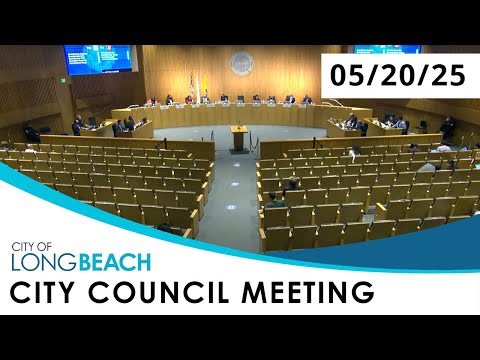
Sources: Long Beach City Manager’s office; Homeless Services Bureau; Long Beach Police Department; public comments recorded at Long Beach City Council meeting, May 20, 2025.