Get Full Government Meeting Transcripts, Videos, & Alerts Forever!
Get email alerts on the Government Operations topic
No spam. Unsubscribe anytime.
County attorney outlines overhaul of appointments records and process after audit finds 50+ inconsistent boards
Summary
DeKalb County's law department and clerk's office reported to commissioners on a months-long effort to rebuild appointment records, standardize agenda items and reduce confusion across more than 50 boards and commissions.
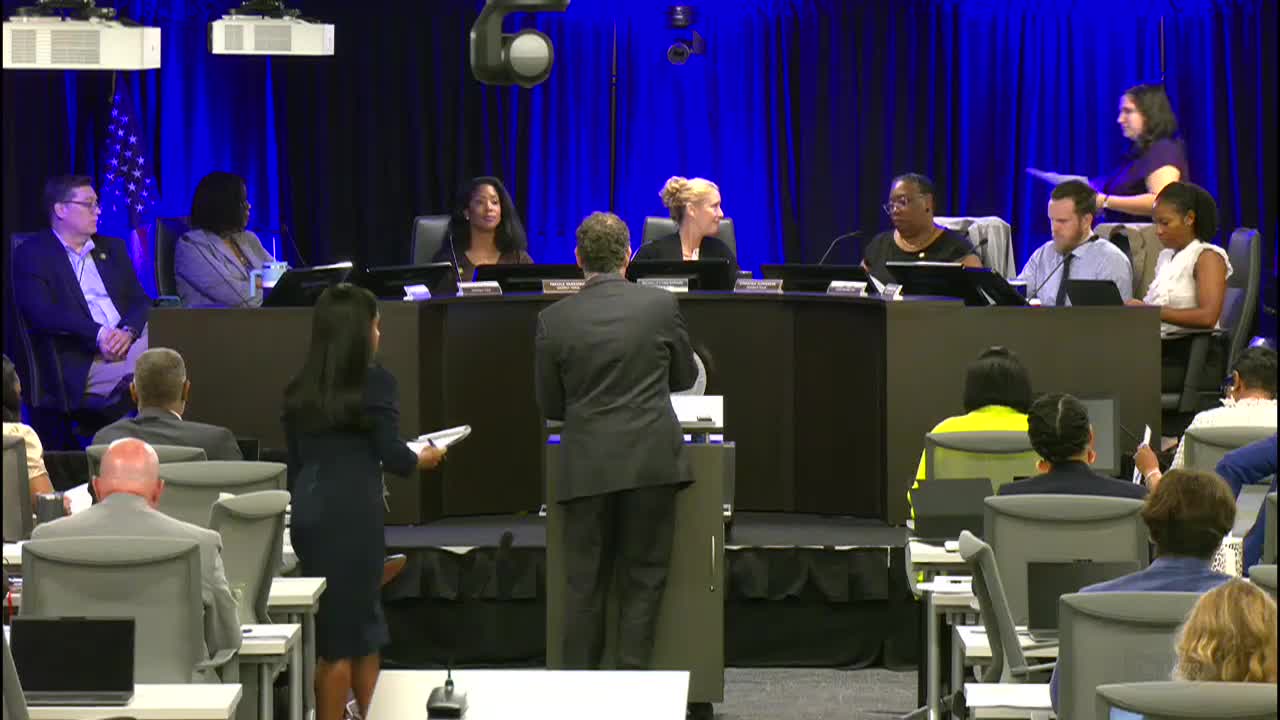
The DeKalb County law department told commissioners Tuesday it has been rebuilding appointment records and working with central staff and the clerk's office to standardize how boards and commissions are documented and placed on meeting agendas.
Matthew Welch, representing the law department, told the Committee of the Whole that county records were incomplete and inconsistent: some boards had membership lists that the clerk did not possess, other boards maintained lists that did not match county files, and some positions that legally required board confirmation had not been brought to the Board of Commissioners.
"County records simply weren't always provided to the clerks, and so county records were incomplete," Welch said, summarizing the first stages of a corrective program. The stakeholder group hired a consultant, Welch said, but ultimately the clerks and law department brought the work in-house to cross-check membership, terms, appointing authorities and bylaws.
Welch described a time-consuming process: more than 50 boards and commissions exist under various enabling laws, each with distinctive term lengths, methods of appointment and, in some cases, staggered or delegated appointments by outside jurisdictions. As an example, he cited the Metropolitan Atlanta Rapid Transit Authority board (MARTA), noting the MARTA statute had been amended multiple times and appointing authorities differed across jurisdictions and over time.
To reduce future errors, Welch said the clerk's office will be the primary point of contact for boards, will collect and maintain membership records and will require appointment agenda items to list the board's purpose, the post number and the name of the incumbent being replaced. The law department said it will review CEO-initiated 13(a) appointments before they go to the agenda and will check qualifications, appointing authority and term limits.
Commissioners pressed for quick access to the resulting records. Commissioner Nicole Messia requested a list of appointing authorities and enabling legislation for boards; Welch said the project would deliver forms and an SOP and that information would be made available so commissioners could see "when did I last appoint" and who currently serves. Commissioner Terry asked for the subset of boards for which commissioners must make appointments; Welch said he would provide that list first.
Why it matters: Several county boards handle land use, licensing and bonded authorities; errors in appointment or in board composition can lead to legal challenges and delay projects. Commissioners said they welcomed forms and an outward-facing directory so residents can see current board membership and pending vacancies.
Welch said the work is iterative and will be rolled out in phases, with priority on appointments that appear most frequently on agendas; he also said the law department will flag any boards whose bylaw or enabling authority conflicts with state law and propose corrections.
The law department committed to providing an SOP, forms for frequent appointments and a timeline for completion; commissioners asked for interim lists categorized by appointing authority so they can address outstanding vacancies without waiting for the entire audit to finish.