Get Full Government Meeting Transcripts, Videos, & Alerts Forever!
Get email alerts on the Airport Through The Fence topic
No spam. Unsubscribe anytime.
FAA warns Lock Haven of noncompliance over "through‑the‑fence" airport access; gives city 60 days for corrective plan
Summary
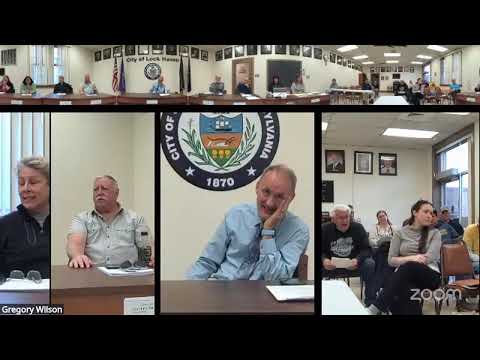
City officials and airport tenants debated a May 14 FAA letter saying Lock Haven may be out of compliance with federal grant assurances for residential and commercial "through‑the‑fence" access to William T. Piper Memorial Airport and asking for a corrective action plan within 60 days.
Lock Haven city officials were told in a May 14 letter from the Federal Aviation Administration that the city may be out of compliance with federal grant assurances for "through‑the‑fence" (TTF) access at William T. Piper Memorial Airport and must provide a corrective action plan within 60 days.
The FAA letter, read into the public record at the council meeting, said the city — as airport sponsor — appears to lack written access agreements required by federal law and FAA guidance. The letter outlined that, to comply, any residential or commercial property with TTF access must have a written agreement requiring payment of access charges comparable to fees charged to on‑airport tenants, maintenance of infrastructure paid by the property owner, and prohibitions on aircraft refueling and other uses on the adjacent property.
City staff summarized the FAA's findings during the meeting and read key passages. The staff member told the council and public: "Please be advised that the city of Lock Haven, as sponsor LHE, is in potential noncompliance with the terms of permanent federal requirements as noted below," and said the FAA had requested a corrective action plan within 60 days.
The letter traces the issue back to October 2023, when the FAA first raised concerns, and notes that while the city sent draft commercial and residential agreements to the FAA in July 2024 for review, no final written TTF agreements currently exist. The FAA also told the city it appears TTF operators are not paying any access fees, which could violate grant assurances including those related to comparable fees, rental structure, and airport revenues.
Several airport tenants and property owners addressed the council during public comment, saying they have rarely used the airport but want to preserve property value and are willing to pay a reasonable fee. One tenant said his business used the airport sparingly and offered to pay about $200 per month; another cited a $2,880‑per‑year figure. Council members and tenants discussed existing on‑airport fees cited in the FAA letter — an example in the FAA guidance compares a $100‑per‑month fee for a single‑engine aircraft to any TTF fee — and noted the city's current tie‑down and hangar fees (the meeting cited tie‑down and hangar figures including a $10‑a‑day tie‑down and $240 per month for T‑hangars).
City officials said the FAA letter warned that failing to bring TTF arrangements into compliance could jeopardize future FAA grant funding for the airport and could leave the city financially responsible for airport operating deficits if TTF operators receive airfield benefits without paying comparable fees.
Mayor Long told tenants bluntly that the city must decide whether property owners want to sign the FAA‑approved lease or forgo access: "We have 60 days to do this. You gotta take it or leave it," the mayor said when explaining the timeline and the consequences described in the FAA letter. City staff said the draft lease and related documents were returned to the FAA for final approval and that the city is awaiting the FAA's final language.
Tenants pressed for accommodations, citing the museum and long‑standing use; council and staff said some accommodations may be possible for nonprofit users but that overall the FAA has set the baseline requirements.
The council did not take a formal vote on the FAA letter at the meeting; city staff said the required next step is to submit a corrective action plan to the FAA within the 60‑day period or to take steps to terminate TTF access (for example by installing physical barriers). Council members said they had submitted comments to the FAA via staff and that those comments had been forwarded to the FAA for consideration.
The discussion included questions about gate specifications, gate operation in winter, liability and insurance provisions in FAA lease templates, and whether the city could offer reduced rates to longtime tenants. City staff and the mayor reiterated the city's limited options given the FAA's directives and emphasized the need to resolve the compliance issue to protect future airport funding.
The meeting record shows an extended public discussion with multiple property owners and tenants and repeated staff explanations that the FAA's requirements set the terms for the corrective action.
The council directed staff to continue communication with the FAA and to convey tenant comments; the FAA's 60‑day request for a corrective action plan remains the immediate external deadline.