Get Full Government Meeting Transcripts, Videos, & Alerts Forever!
Get email alerts on the Legislative Session End Negotiations topic
No spam. Unsubscribe anytime.
Minnesota leaders say work continues as regular session winds down; disputes remain on health coverage, paid leave and mine layoffs
Summary
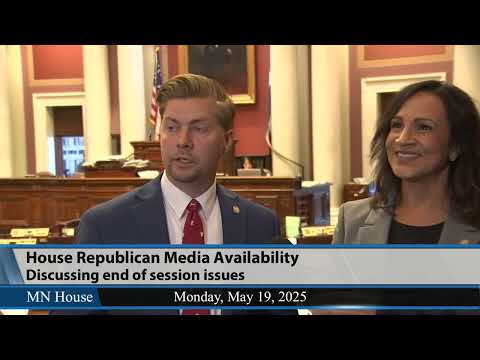
With only hours left in the regular 2025 legislative session, House leaders told reporters that conference committees were working to resolve outstanding differences on several high-profile items, while saying most work could be finished quickly and some issues would likely require a brief special session called by the governor.
With only hours left in the regular 2025 legislative session, House leaders told reporters on April 24 that conference committees were working to resolve outstanding differences on several high-profile items, while saying most work could be finished quickly and some issues would likely require a brief special session called by the governor.
Speaker Dainn, speaker of the Minnesota House of Representatives, told reporters the chamber was “down to just the last few hours of regular session,” and said conference committees were “working hard…trying to find agreements as we move forward.” She said the House planned to take up a Human Services policy conference committee report and possibly a pensions bill later in the day.
The disputes center on a handful of politically sensitive items. Speaker Dainn described a contested proposal to expand MinnesotaCare to certain undocumented residents as unaffordable in its current estimates, saying the projected enrollment had climbed “from 5,700 expected people to join to start” to “over 20,000” between Jan. 1 and April 24 — a change she described as making the program unaffordable for Minnesota taxpayers. She said leaders had agreed on “global targets” with the governor and other leaders but that details still needed to be worked out in committees.
Leader Niska, who spoke alongside Dainn, highlighted an unrelated but urgent bill to extend unemployment benefits for minors affected by two mine shutdowns in northern Minnesota. “We think it’s really important that the workers at those 2 mines that have been shut down just have the security of having a clean extension of their unemployment insurance benefits,” Leader Niska said, describing the measure as a Democrat-authored bill by Representative Johnson that House Republicans planned to move as a standalone item. He said Democrats had agreed to suspend rules later in the day so the House could vote and send the measure to the Senate.
On paid family medical leave, Speaker Dainn said the parties had not agreed to broad changes in the global deal; she described only a “small decrease in the tax on all Minnesota businesses” as part of earlier adjustments and said there were “bipartisan desire[s] to make additional changes” in future legislative action if the body chooses to do so. She reiterated her intention not to back away from the global agreement reached by the three legislative leaders and the governor.
House leaders also defended their handling of the session schedule. Dainn said she and other Republican members had been present for work on day one and blamed a 23-day Democratic absence earlier in the session for compressing the calendar. She said most conference committee meetings were public and available to watch online, and that the timing and length of any special session would be determined by the governor.
Other topics mentioned as unresolved or still in committee included education finance, the tax bill (which the House historically holds until other finance bills are wrapped), and various budget cuts that Speaker Dainn said amounted to more than $5 billion between biennia and had reduced a structural imbalance by “almost 45%” according to her characterization.
No formal votes or final outcomes were recorded in the briefing transcript. Leaders said conference committees were continuing work and that some measures could be completed and passed on the House floor that day while others would require further negotiation or a special session.
The remaining work will be carried out in public conference committee meetings and, if necessary, in a governor-called special session to finish items not completed before the regular session adjourns.