
Grand Island committee to pilot one-stop community calendar with DECA student
Get AI-powered insights, summaries, and transcripts
Subscribe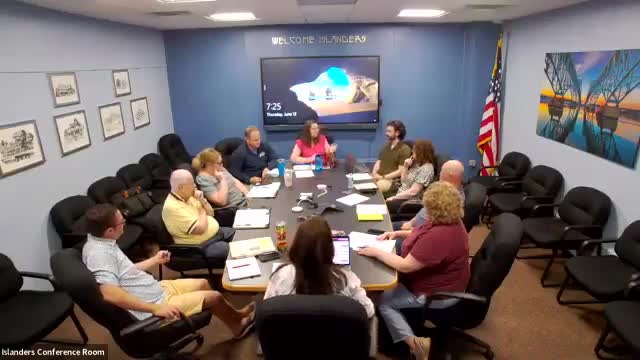
Summary
The Grand Island Economic Development Advisory Board agreed to scope a “one-stop” community calendar and to ask a DECA student to research options; the board will send a preliminary scope to the town board liaison and invite the DECA advisor and student to the July meeting.
The Grand Island Economic Development Advisory Board on Tuesday agreed to pursue a one-stop community calendar and to ask the Grand Island High School DECA program to assign a student to research technical options and produce a scope of work.
The board’s co-chair Sarah Vesio said the calendar would serve both residents and visitors. “So far, I’ve heard that we want to include that it is we’re looking to achieve a one-stop shop community calendar to market and support all of the Grand Island happenings to residents and visitors,” Vesio said during the meeting.
Board members said several existing calendars — the school district calendar, the town calendar and the Chamber calendar — currently contain overlapping event listings and that the committee’s goal is to investigate ways to aggregate them into a layered, searchable platform. Kristen Cascio, an attorney and longtime board member, noted the committee already has seed money: “We are one of the few boards that actually gets a budget item from the town every year. So we have, like, $10,035 allocated this year,” she said, adding the board has used the line item for matching funds on earlier projects.
Members agreed to prepare a short, shareable preliminary scope — bullets describing desired outcomes and constraints — and to ask Jose, the town liaison, to bring that summary to the town board for awareness or approval before the committee commits further. The group asked that the scope be sent to Cheryl Chamberlain, the DECA advisor, ahead of the July meeting and that Chamberlain and the student be invited to attend if the student is secured.
The board discussed how the DECA program structures student projects and timelines. Meeting notes reference DECA packet details, including an example allocation of student hours (one item in the packet lists 58 hours and another lists 27 hours), and members said the final student deliverable typically includes a written scope, key metrics and a final presentation. Members also raised supervision and access questions — whether the student would use school computers, town computers, or need some other supervision arrangement — and agreed those logistics should be clarified with Chamberlain and the school before July.
The board assigned follow-up tasks: draft a preliminary scope and timeline for the DECA project, check with Jose about town-board notification and approval requirements, and invite Chamberlain and the student to the July meeting if the student is available. Justin Karcher, one of the newer members, volunteered to help pull materials and links on calendar platforms for the group’s next steps.
The committee emphasized the project is exploratory: the student’s assignment is limited to research, mapping current systems and recommending integration options — not to implement or operate a town-run calendar without further approvals. Vesio said the calendar research could feed later work on branding and marketing for the island.
Members said they will share the draft scope with the committee and with town staff before July. The board did not set a final deadline for completion; members said they expect to rely on the DECA project timeline and then evaluate next steps based on what the student can deliver.