Get Full Government Meeting Transcripts, Videos, & Alerts Forever!
Get email alerts on the Civil Rights Ordinance topic
No spam. Unsubscribe anytime.
Council committee considers ordinance to standardize human-rights language; staff and commissioners urge clearer complaint access
Summary
The committee reviewed a redline ordinance to make sexual orientation, gender identity and veteran status definitions consistent across city code. Staff emphasized the change is largely definitional and technical; compliance officers urged easier public access to complaint forms and intake.
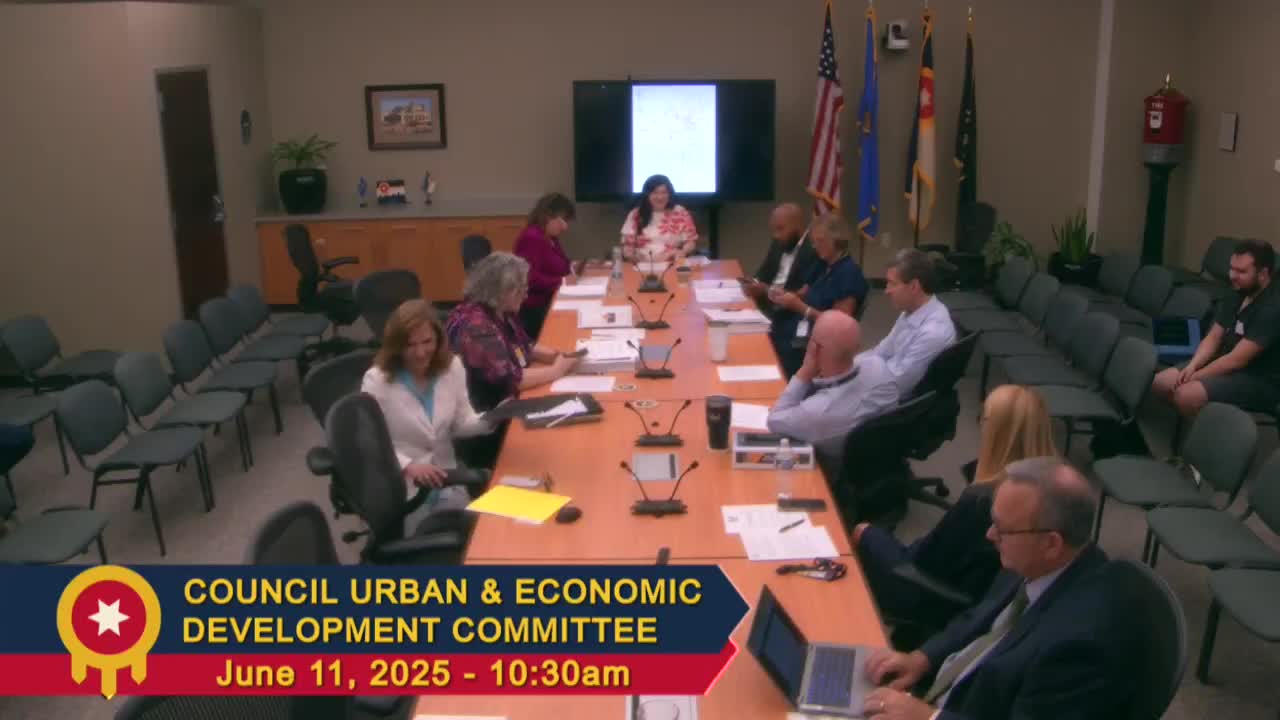
The Urban Economic Development Committee on June 11 reviewed an ordinance staff said is intended to make protections against discrimination consistent across Tulsa’s municipal code, including clearer definitions for sexual orientation, gender identity and a newly added veteran-status category.
Jack (city legal counsel) summarized the changes as largely definitional: moving definitions previously included only in housing sections to the top-level definitions so they apply across code sections and adding a definition for veteran status. “All this really does is it takes the definitions of sexual orientation and gender identity from the housing section and moves them up to the top,” Jack said.
Why it matters: Sponsors and Human Rights Commission members said consistency helps residents understand protections and that the change would not compel private businesses to act against sincerely held religious beliefs. Counsel noted the ordinance includes language that it should not conflict with federal or state law.
Enforcement and access: LaKendra Carter, the city’s compliance officer in the Department of Resilience and Equity, briefed the committee on how discrimination complaints are handled. She said the city’s process is intentionally conciliatory and often resolves after an initial conversation with city staff, but acknowledged the public lacked easy access to complaint forms in past years. “A lot of our community members kind of lost sight of, well, where is this work being handled,” Carter said. She said the city has expanded intake options (including phone intake through 311) and can mail forms when needed, though formal filing still requires the city-clerk-stamped complaint for legal intake.
Human Rights Commission members and advocates urged pairing the statutory cleanup with improvements to complaint access and public outreach. Josh Starks, who chairs the commission’s veterans work, said veterans and other residents find the filing process burdensome and cannot be expected to navigate paperwork when facing housing or employment crises.
Legal context: Committee members discussed two U.S. Supreme Court rulings. Counsel and others cited Bostock v. Clayton County (2020) as interpreting federal employment anti-discrimination law to include sexual orientation and gender identity; the committee also referenced 303 Creative (a case addressing compelled speech) as limiting government compulsion in certain expressive services. Counsel said the ordinance’s language about not conflicting with state or federal law responds to those legal boundaries.
Next steps: Several councilors asked for more time to refine language and asked staff to return the ordinance to the committee for further review before a full council vote. The committee agreed to return the ordinance to the Urban Economic Development Committee for additional amendments and discussion; no final vote was taken on June 11.
Context and limitations: The draft is primarily a code cleanup and uniformity exercise, not a change in the city’s enforcement model, staff said. Specific details about complaint volume were limited in committee discussion; city staff and commission members said low complaint counts in city records likely understate community experience because of past access barriers.