Get Full Government Meeting Transcripts, Videos, & Alerts Forever!
Get email alerts on the Tenant Habitability Appeal topic
No spam. Unsubscribe anytime.
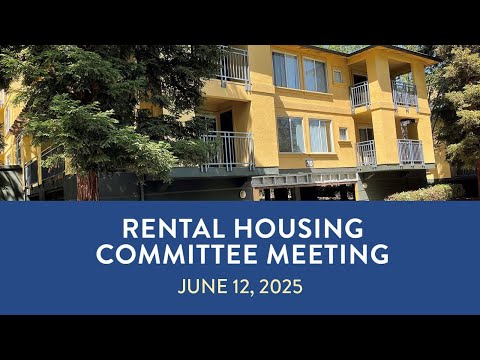
Rental Housing Committee affirms hearing officer's rent-reduction awards in Colony Apartments appeal
Summary
On June 12 the Mountain View Rental Housing Committee upheld a hearing officer's decision awarding downward rent adjustments to former tenants of Colony Apartments for mold, plumbing, electrical and water-heater problems, voting 3-1 to accept the tentative appeal decision.
The Mountain View Rental Housing Committee on June 12 affirmed a hearing officer's decision awarding downward rent adjustments to former tenants of 1984 Colony Apartments, rejecting the landlord's appeal and accepting the tentative appeal decision by vote of 3 to 1.
Staff recommended the committee avoid a new de novo hearing and decide based on the hearing officer's record; the committee accepted that recommendation and affirmed the hearing officer's findings and awards.
The hearing officer had found multiple habitability failures and reductions in housing services: mold and moisture in bedrooms tied to weatherproofing and windows; defective bathroom caulking and recurring sewer backups that impeded bathtub and toilet drainage; insufficient and potentially hazardous electrical circuitry; and excessive noise from a water heater. The hearing officer combined related conditions where appropriate and calculated room-based rent reductions for defined periods.
In the hearing officer's decision, petitioners were awarded (as summarized in the record): a 2.5% rent reduction for mold and caulking-related conditions (late August 2023 through Jan. 4, 2025); a 7% reduction for sewer/plumbing problems (May 13, 2023 through Nov. 5, 2023); an 8.5% reduction for insufficient electrical circuitry (Aug. 3, 2023 through Jan. 4, 2025); and a 17% reduction for a three-week period related to water-heater noise (April 26, 2023 through May 16, 2023). The hearing officer declined to award a reduction for a broken wall heater, finding the petitioners had not proved notice/opportunity to correct that condition.
Landlord counsel Rachel, representing Speicher Companies, asked the committee to reverse or substantially reduce the award, arguing the petitions lacked adequate notice of several issues and that the record did not support the scale or duration of the awards. Rachel argued for procedural protections requiring specific notice of each alleged condition and said the landlord had taken prompt steps to remediate when notified.
Tenant representative Shandy Brooks Fox testified that maintenance responses were inadequate, that professionals were not sent until after the petition was filed, and that photographs, medical records and email exchanges submitted to the city documented repeated problems. "Everything that missus Chube is saying is incorrect," Fox said in rebuttal to the landlord's claims, and she described health impacts on her family tied to the unit's conditions.
Staff and the tentative decision concluded the record showed petitioners provided notice of the issues and that respondents had opportunities to respond at the prehearing conference and hearing; staff also noted the city's inspection report documented mold and electrical concerns. The tentative decision found the hearing officer did not err in combining related conditions, in applying a consistent methodology to compute reductions, or in limiting awards to the periods when conditions existed.
Committee members debated several issues in deliberations, including whether some electrical deficiencies reflected a nonconforming but legal ("conforming") wiring installation versus a current hazard. Member Balch urged remand on the electrical question to clarify whether the unit's wiring was merely outdated but code-conforming or whether it was currently unsafe; that secondary motion did not carry and the committee ultimately voted to affirm the tentative decision. Vice Chair Cox moved to accept the tentative appeal decision in full; the motion passed 3 to 1 (Balch voted no).
The committee noted a potential fiscal impact from further litigation and observed that one purpose of the appeal review is to render decisions that are legally defensible.
The committee's action concludes the local administrative appeal; parties retain whatever judicial remedies the law allows.
A roll-call vote on the appeal recorded Balch (no), Keating (yes), Vice Chair Cox (yes) and Chair Ma (yes).