Get Full Government Meeting Transcripts, Videos, & Alerts Forever!
Get email alerts on the Trail Infrastructure topic
No spam. Unsubscribe anytime.
Volunteers preassemble boardwalk sections; committee debates storage and delivery logistics
Summary
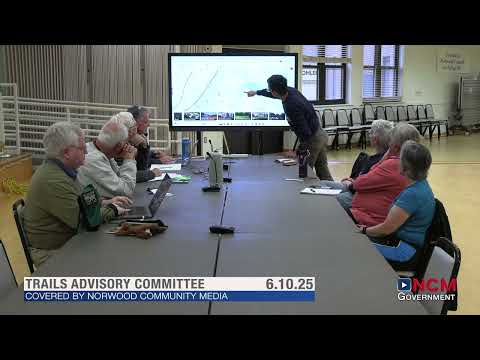
Committee members described a recent volunteer effort to prefabricate boardwalk sections in a barn, then disassemble and store them for later field assembly. They discussed delivery options, storage at town facilities, and the trade-offs of predrilling versus on-site assembly.
Norwood — Volunteers assisting a regional partner have been prefabricating boardwalk sections indoors and moving labeled pieces to storage for later installation on trail boardwalks and small footbridges, committee members said at their June meeting.
The group described a project where volunteers built 20-foot 2x12 sections in a workshop, labeled and numbered every piece, then disassembled the build for transport. Committee members explained that preassembly in a controlled setting allowed cleaner cuts and faster final assembly on site, but it also requires careful labeling and increases the number of handling steps.
Logistics and storage: members discussed options for temporary storage and power access. Suggestions included town bays on Winter Street and farm barns; committee members said town staff are cautious about storing public materials on private property. The group also described how one team floated material across the river on a small raft pulled behind a canoe to reach a remote worksite.
Why it matters: preassembly can speed up on‑trail installation and reduce time spent with noisy power tools at sensitive sites, but it raises handling and reassembly risks — for example, screw holes and swelling when lumber is exposed to the elements. Members said they favored pre-cut components but questioned the value of predrilling every hole before final assembly.
Funding and scheduling: members said the Community Preservation Act (CPA) funding used for trail projects does not have the same fiscal-year spending deadline as operating funds, giving the committee more time to schedule purchases and deliveries. They discussed vendor-delivery options and the practicality of vendors dropping materials near the assembly barn versus direct delivery to the final site.
Ending: committee members said the experience provided useful lessons for future bridge builds — labeled, pre-cut parts and a defined delivery and storage plan reduce labor on site — and they continue to refine plans for the next set of crossings.