Get Full Government Meeting Transcripts, Videos, & Alerts Forever!
Get email alerts on the Environment Wetlands topic
No spam. Unsubscribe anytime.
State-required surveys delay three water-crossing permits after threatened plant found
Summary
Norwood trails volunteers and staff said state environmental reviewers require targeted surveys after the presence of a threatened wetland plant was documented along proposed crossing sites. Committee members said two consultant bids are under review and CPA grant funds will cover outside consulting.
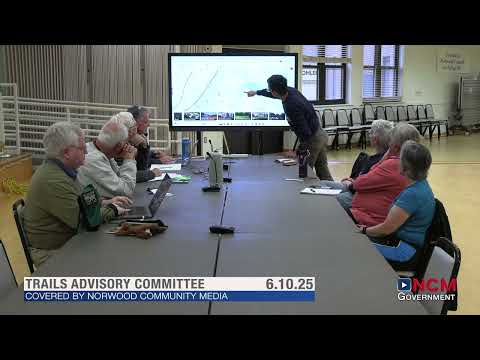
Norwood — Members of the Norwood Trails Advisory Committee said this week that three of the water-crossing permits they planned to bring to the Conservation Commission have been delayed after state reviewers identified habitat for a threatened plant species.
The committee’s volunteers and staff said the discovery — identified in the permitting files as habitat for a Longs Bulrush (a threatened wetland species) along parts of the Neponset River corridor — triggered a requirement for field surveys by qualified biologists before the state can clear the crossings for permitting.
That requirement matters because the crossings are part of a multi-site project to install water crossings and footbridges on Town-owned trails. Committee members said they received two consultant bids and expect to select a firm in the coming days. “It is a requirement that came back from the state when we filed the permit request,” a committee member said. “Yes, you're working in this area, and yes, you have to go out and do the surveys.”
Why it matters: the surveys add cost and schedule risk. Committee members had not budgeted for outside biological work when drafting the permit package; they said Community Preservation Act (CPA) grant funds already set aside for consulting will be used to pay the work. One consultant told the committee they could start and finish the required survey work in July, weather dependent; another offered June or July openings.
What the committee discussed: members described the permitting steps they expect. After a consultant completes field surveys, the results go back to the state, which will review the report and then the Conservation Commission will resume permit consideration. Committee members said the state must “check the box” that the survey has been completed before local permitting can move forward.
Committee members pressed for vendor availability and delivery logistics because some crossings are accessible only by boat at typical water levels; they also discussed contingency plans if the state requires additional mitigation or monitoring. “It can be expensive, but it is what it is,” a committee member said about the consultant work.
Next steps: the committee expects to pick a consultant by the end of the week and submit the survey scope; the selected consultant will file results with the state and permit review will resume afterward.
Ending: Volunteers said they are trying to keep momentum while accepting the extra step required by state reviewers; no final Conservation Commission action was taken at the June 10 meeting itself.