Get Full Government Meeting Transcripts, Videos, & Alerts Forever!
Get email alerts on the Ocean Conservation topic
No spam. Unsubscribe anytime.
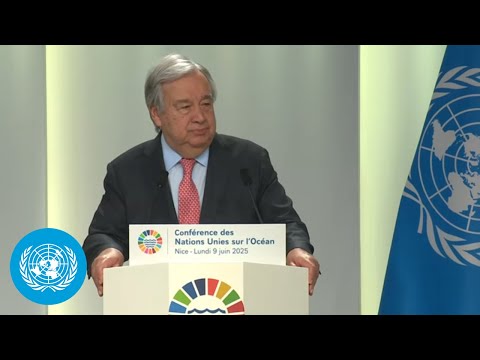
UN delegate urges swift ratification of high-seas biodiversity agreement and stronger ocean protections
Summary
At the UN Ocean Conference, a delegate called on nations to ratify the new high-seas biodiversity agreement, meet a target to conserve at least 30% of marine areas by 2030, pursue a legally binding treaty on plastic pollution this year, and align national plans with global ocean and climate goals.
A delegate speaking at the United Nations Ocean Conference urged nations to ratify the Agreement on the Conservation and Sustainable Use of Marine Biological Diversity of Areas Beyond National Jurisdiction and to conserve at least 30% of marine and coastal areas by 2030.
The delegate said nations should also conclude an ambitious, legally binding treaty on plastic pollution this year and called for stronger action on shipping emissions and fisheries agreements. "I urge all delegations to ratify it," the delegate said of the high-seas biodiversity agreement, and added, "the deep sea cannot become the Wild West."
The speech noted recent multilateral progress since the last UN Ocean Conference in Lisbon, including the adoption of the high-seas biodiversity agreement. The delegate said those developments demonstrate that "multilateralism works, but only if we match words with action" and urged countries to translate commitments into national plans aligned with global targets. The delegate emphasized using science, innovation, and equitable access to technology, and stressed that fishers, Indigenous peoples and local users should be empowered in ocean management.
On financing, the delegate warned that Sustainable Development Goal 14, on life below water, remains among the least funded SDGs. They urged increased public finance, greater support from development banks and bold models to unlock private capital, saying "Small island developing states need support to build resilience and thrive in the blue economy." The delegate called for bold pledges and investment to restore local fisheries and strengthen ocean-based food systems.
The address also touched on related international processes: the delegate said it is essential to conclude the fisheries agreement being negotiated at the World Trade Organization and referenced a commitment by the International Maritime Organization to reach net-zero greenhouse gas emissions from international shipping by 2050. The delegate likewise expressed support for ongoing work by the International Seabed Authority on seabed-mining governance, and warned against unregulated exploitation.
The delegate closed by saying restoration of marine abundance is possible within a generation if nations act, and wished conference participants "a successful conference."