Get Full Government Meeting Transcripts, Videos, & Alerts Forever!
Get email alerts on the Emergency Medical Services topic
No spam. Unsubscribe anytime.
Universal City council approves mid‑term increase to Schertz EMS funding amid rising costs
Summary
After a lengthy presentation from Schertz EMS leadership, the Universal City Council voted to accept a mid‑agreement increase to its per‑capita contribution to the Schertz interlocal EMS agreement to address rising personnel, equipment and reimbursement shortfalls.
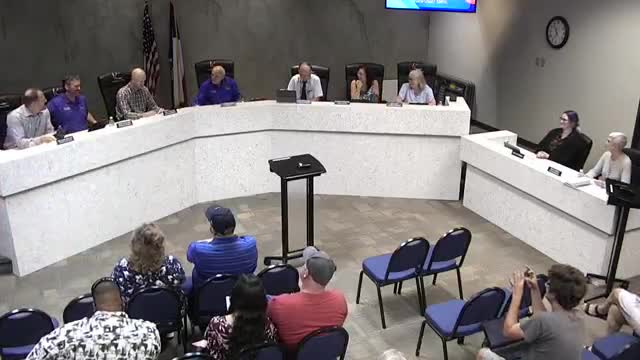
Universal City — The Universal City Council voted Tuesday to accept a mid‑agreement increase to its payments under the interlocal agreement with Schertz EMS after a detailed presentation by Schertz EMS leadership that outlined rising call volume, shrinking reimbursements and sharply higher equipment and personnel costs.
Jason Mabbit, chief of Schertz EMS, told the council the service is facing sustained growth in 911 calls and mounting budget pressure driven by equipment inflation, higher pay across the region and recent changes to state reimbursement rules. "So on average, it's about $1,600 to go by EMS. Expensive," Mabbit said, describing current transport billing and the program's revenue mix.
Mabbit said Schertz EMS operates a broad Northeast San Antonio service area that includes Universal City and several neighboring jurisdictions, runs a mix of 12‑ and 24‑hour ambulance crews, and relies on a per‑capita participant contribution structure plus transport fees. He showed the council two multi‑year options Schertz had proposed to return the service to a cash‑positive position: a steeper 35% increase for fiscal 2026 followed by smaller increases in later years, or a phased 20%/20%/5% plan. The council instead approved a motion to accept a 25% increase for fiscal 2026 and directed staff to incorporate that figure into Universal City's budget planning.
Why it matters: Schertz EMS told the council it finished the most recent fiscal year with negative cash flow after a series of structural pressures. Mabbit described shrinking Medicaid supplemental reimbursements, the effect of the state and federal "No Surprise" rules on balance billing, and a recent compensation study that left Schertz EMS behind market pay until the city enacted corrections. Those factors, together with a near‑doubling of ambulance prices for new chassis and equipment, prompted Schertz to propose a mid‑term adjustment to the interlocal agreement that funds the shared ambulance service.
Details from the presentation: Schertz EMS reported a service area population used to compute per‑capita charges of roughly 143,480 for the set of participant cities (schertz's slides itemized individual shares) and said the current per‑capita fee charged the partner municipalities is $17.52 per person for the current fiscal year. The agency said nearly 65% of its revenue comes from transport fees and about 33% from participant contributions; personnel comprises roughly 80% of expenses after depreciation. Mabbit also showed long‑term call‑volume growth that accelerated after the COVID period and noted the system is buying ambulances with cash — one recent 2025 chassis invoice cited a price in the mid‑$300,000s and an outfitted ambulance cost estimate shown to the council was approximately $546,495.
Council discussion and concerns: Council members asked about response times, cost drivers and options other than raising participant fees. Mabbit said average response times inside Universal City are about five minutes, with some units posted in Universal City to support that performance. Several council members said they were reluctant to see a decline in service and raised questions about oversight, alternative contracting with private vendors and whether the per‑capita formula remains the best way to allocate cost among partnering jurisdictions. One council member proposed that partner entities consider an advisory or oversight panel to review budget changes and longer‑range planning rather than waiting for a crisis.
Action taken: After discussion, a motion to accept a 25% increase to Universal City's share of the Schertz EMS agreement for fiscal year 2026 was moved and seconded; the motion passed. Council gave staff direction to include the increase in the city's budget and to pursue further discussion with Schertz and other partner jurisdictions about the agreement's design and a longer‑term model.
Context and next steps: Schertz EMS told the council it intends to hire consultants to review operations, the per‑capita model, and longer‑term staffing and fleet plans. The council's decision will be incorporated into Universal City's upcoming budget calendar; staff noted the city has a four‑hour budget work session scheduled July 8 and can schedule follow‑ups as needed. Schertz said it will return to partner cities with proposed longer‑term agreement language and fee structures before the next multi‑year contract renewal window.