Get Full Government Meeting Transcripts, Videos, & Alerts Forever!
Get email alerts on the Public Safety Nightlife topic
No spam. Unsubscribe anytime.
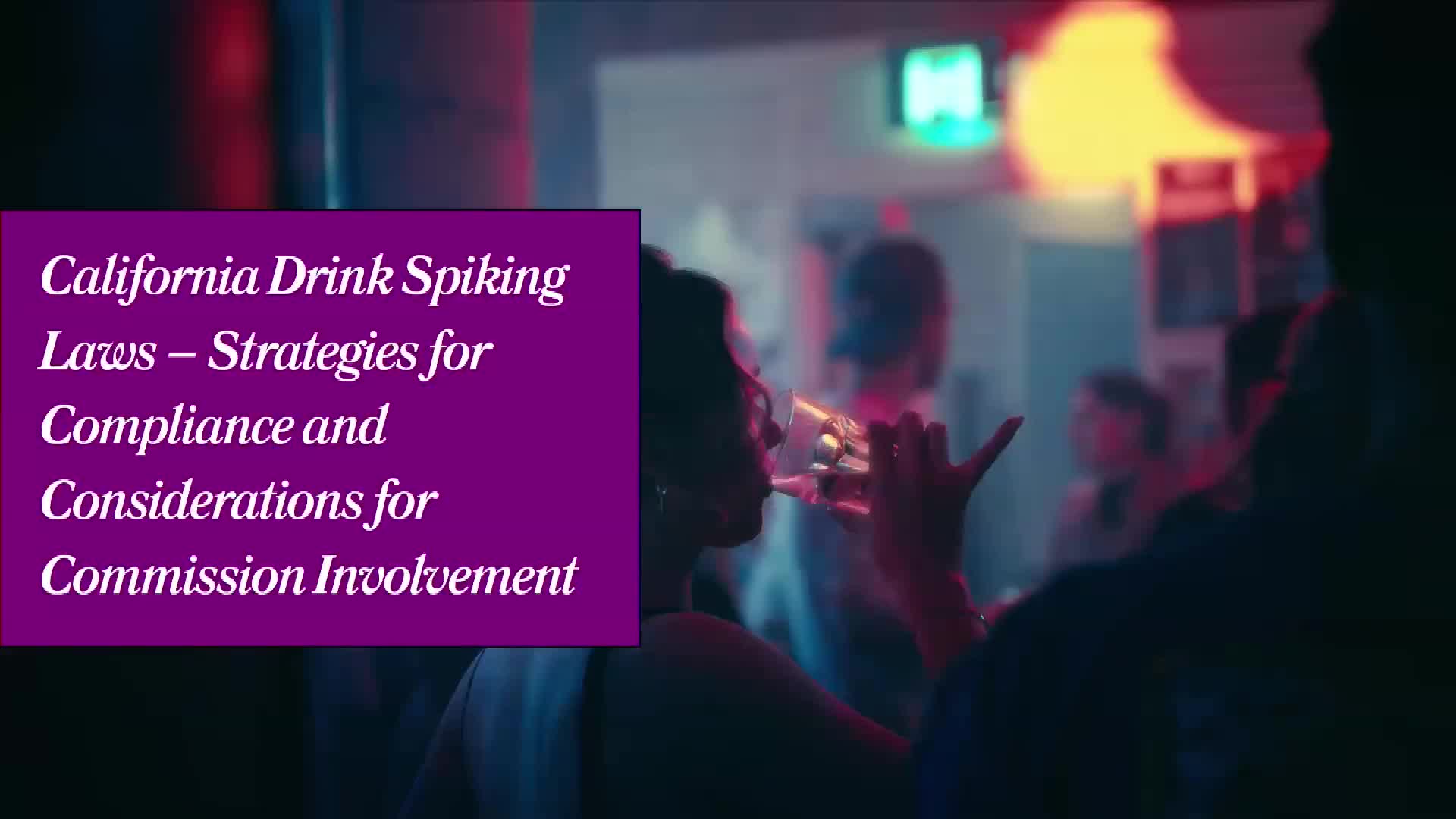
Experts warn California's drink'spiking rules risk false confidence; Night's Watch urges training and broader prevention
Summary
Presenters told the San Francisco Entertainment Commission that recently enacted state requirements for drink'testing and drink covers mandate unreliable tools, shift responsibility onto victims and should be paired with staff training, victim resources and public education campaigns to be effective.
The San Francisco Entertainment Commission on Tuesday heard that California'mandated drink'testing kits and signage could give venues a false sense of protection unless paired with training and broader prevention measures.
Jocelyn Kane, who identified herself as a former executive director of the commission, introduced Elizabeth, program director of Night's Watch, which advocates to prevent sexual and gender'based violence in nightlife settings. Elizabeth walked commissioners through three state laws that affect holders of type 48 alcohol licenses: an existing requirement to carry a drug'testing device that detects at least one controlled substance, a requirement to post specified signage, and a soon'to'be'effective rule requiring drink lids or coverings.
Elizabeth told the commission that the Department of Alcoholic Beverage Control enforces the statutes but does not endorse specific testing devices, and she warned that many commercially available strip tests have limits of detection higher than a typical dose of GHB or ketamine and can give false negatives. She also said common drink ingredients and coloring can produce false positives and that nightclub conditions'—dark, noisy and rushed circumstances'—make correct use and interpretation of test strips unreliable. Elizabeth recommended pairing required tools with training, trauma'informed response procedures, venue checklists (for example, a drug'facilitated assault fact sheet and a venue response checklist), a local resource list for victims, and a public education campaign that emphasizes bystander intervention and perpetrator messaging rather than wording such as "Don't Get Roofied."
Commissioners and others at the meeting raised related concerns. A law enforcement speaker described the difference between presumptive field tests and laboratory confirmatory testing and encouraged witnesses and staff to preserve drink evidence when possible. Several commissioners and the presenters agreed that the statutes, while well'intentioned, appear reactive and risk placing responsibility on patrons; presenters urged San Francisco to adopt proactive, training'forward measures that go beyond minimal statutory compliance.
Night's Watch offered to work with the commission, SFPD and local operators to develop training and venue procedures that would accompany the statutorily required kits, and presenters said legislative authors are open to follow'up information. Commissioners did not take formal action but directed staff to continue conversations with Night's Watch and other stakeholders.
Why this matters: The statewide laws apply to many licensed establishments and create a baseline of compliance, but presenters and at least one commissioner said that without training, victim resources and operational guidance the rules risk encouraging a box'checking approach rather than reducing incidents of drug'facilitated assault. The commission discussed next steps for local outreach and collaboration with law enforcement and hospitality operators.