Get Full Government Meeting Transcripts, Videos, & Alerts Forever!
Get email alerts on the Code Enforcement Maintenance topic
No spam. Unsubscribe anytime.
Councilors warn proposed cuts to code enforcement and mowing could worsen blight; ask mayor’s office for alternatives
Summary
Council members pressed the mayor’s office and finance staff about proposed reductions affecting code inspections, mowing cycles and graffiti abatement, saying cuts risk transferring enforcement burdens to neighbors and slow permitting and upkeep.
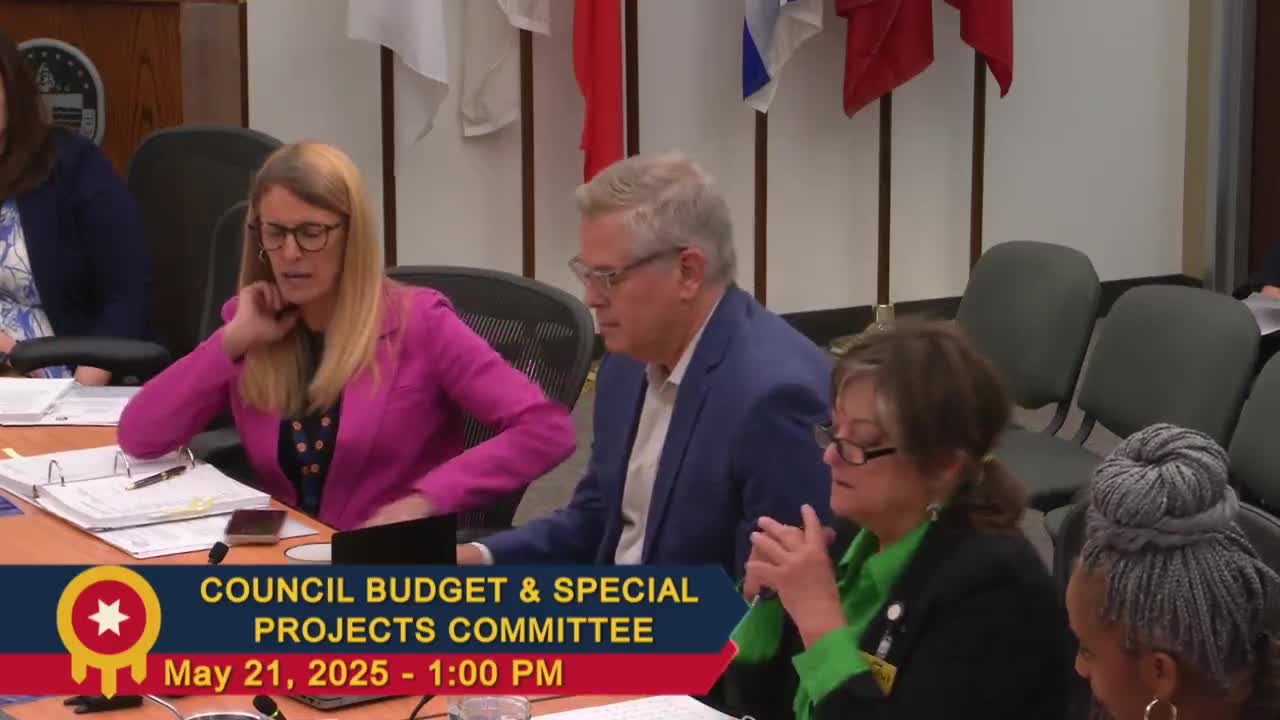
Several councilors told the mayor’s office and finance staff they are concerned that proposed FY26 reductions affecting code enforcement, mowing cycles and related maintenance would deepen blight and hamper development.
Councilors said a recently reported loss of a code‑inspector position would slow nuisance‑abatement responses and increase neighborhood complaints. Brent (code enforcement lead, referenced in the meeting) and other council members discussed additional duties being placed on the code office — Route 66 related maintenance, mobile‑vendor oversight and other emerging priorities — and urged staffing levels that match the workload.
Councilors discussed lawn‑mowing cycles and the number of crews assigned to municipal mowing. One councilor described the mowing reduction as a one‑time service that nevertheless generates recurring complaints when not done; another asked that mowing cycles be considered differently from ongoing personnel expenses because it is a cyclical, seasonally driven service.
Graffiti abatement was also flagged as an escalating problem downtown and elsewhere. Councilors said simple paint‑over strategies can create a “clean slate” that invites repeated tagging; they asked staff to explore alternatives, enforcement and intergovernmental cooperation and to bring back cost estimates.
Ending: Councilors asked the mayor’s office and finance staff to revisit these elements and produce options that would preserve essential municipal upkeep services — including consideration of targeted restorations — and to provide prioritized lists so the council can weigh tradeoffs against reserve and other budget priorities.