Get Full Government Meeting Transcripts, Videos, & Alerts Forever!
Get email alerts on the Police Staffing Budget topic
No spam. Unsubscribe anytime.
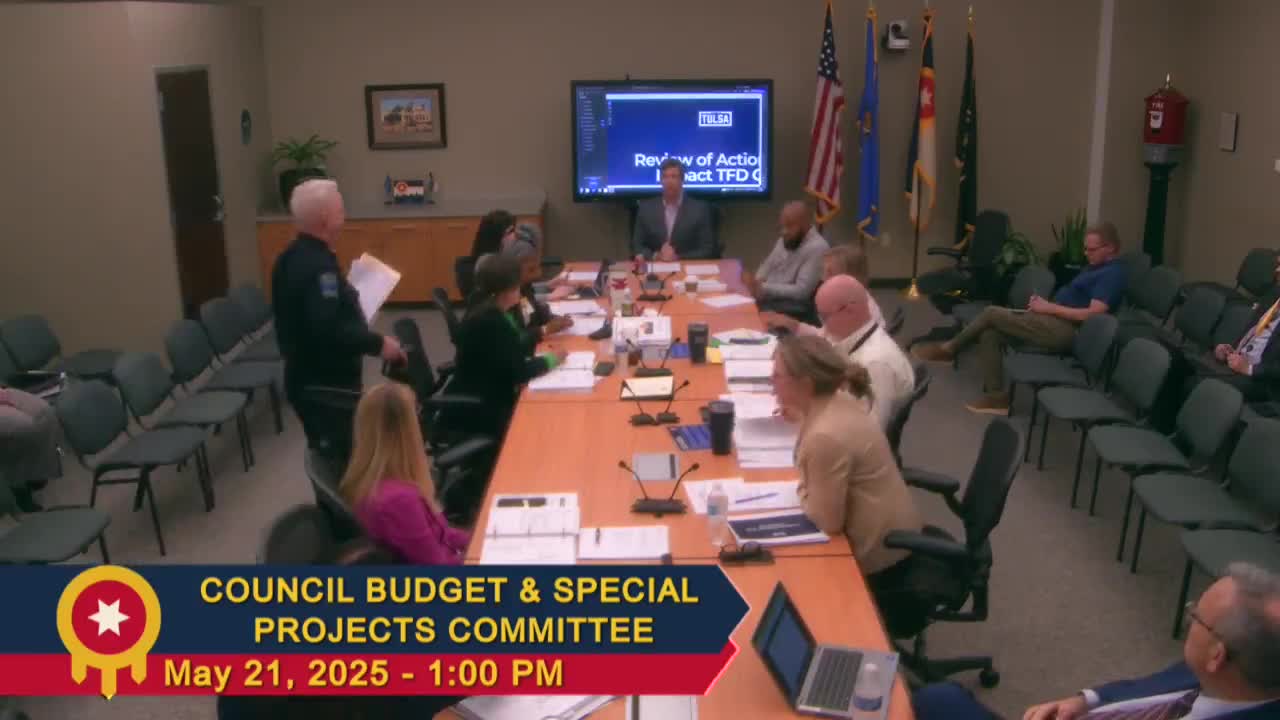
Tulsa Police outline FY26 priorities as staffing shortfalls and overtime drive budget questions
Summary
Police leaders told councilors crime reduction, fentanyl interdiction and domestic‑violence prevention are top FY26 priorities while the department faces a shortfall of roughly 36 officers, an anticipated $940,000 overtime increase and internal reclassifications and program changes that affect staffing.
Police leadership briefed councilors on priorities included in the proposed FY26 budget and described staffing and program changes the department says are intended to address crime, narcotics and domestic violence.
The police presentation listed public-safety objectives in priority order: violent-crime reduction, targeted reduction of drug trafficking (in particular fentanyl recoveries), and lowering domestic-violence‑related homicides. The department said it has seen record fentanyl recoveries in recent cases and cited an instance of a large seizure; the chief said fentanyl quantities recovered can represent large numbers of potentially lethal doses.
Officials said the department is short roughly 36 sworn officers compared with a staffing model that would place about 943 officers in a city of Tulsa’s size; current field‑assignable officers are under 800. The department expects a fall academy that could start with 25–30 recruits — the first such academy size since the pandemic — and said roughly 30 people are currently in training or field training.
On overtime and compensation, the department said FY26 reflects an increase of about $940,000 in projected overtime spending to align anticipated expenses with actual use. Most overtime accrues at the officer level (the department reported that lieutenants and officers account for the bulk of overtime, while captains and higher ranks are generally exempt). The two largest overtime categories reported were callback/staffing to minimum levels and an “other” category covering unanticipated overtime (extended arrests, large events, SOT activations, weather incidents), together accounting for over half of overtime hours.
Program and staffing changes described to councilors included: reclassifying a real‑time information/technology coordinator position to handle camera installation and maintenance (reducing an analyst position to hire a hands‑on technician); consolidating victim services advocate roles previously paid by expiring grants and reassigning supervisory duties; and eliminating 15 vacant positions from a planned 15‑person warrant‑clearing unit after negotiations with the county and jail-management plans did not materialize.
On downtown public-safety coverage the department said the impact units that operate within the IDL remain staffed and that operational adjustments have added about eight dedicated bodies 24/7 through patrol redeployments. The department said a storefront downtown presence (Fourth and Main) remains in place intermittently but is not staffed full time.
Councilors raised questions about reclassifications, vacancy savings, the fate of prior appropriations for a warrant‑clearing unit and the composition of the “other” overtime category. Police officials said dollars budgeted last year for positions that were never filled reverted to the general fund, and that some recovered funding has been shifted into smaller investments such as virtual-report specialists and other operational needs.
Ending: Police and finance staff said they will return with additional detail on overtime categories and specific program reassignments if councilors request it.