Get Full Government Meeting Transcripts, Videos, & Alerts Forever!
Get email alerts on the Capacity Study Minority Business topic
No spam. Unsubscribe anytime.
Miller3 presents capacity-study draft to Shelby County task force; firm says draft due back to Regional 1 before public release
Summary
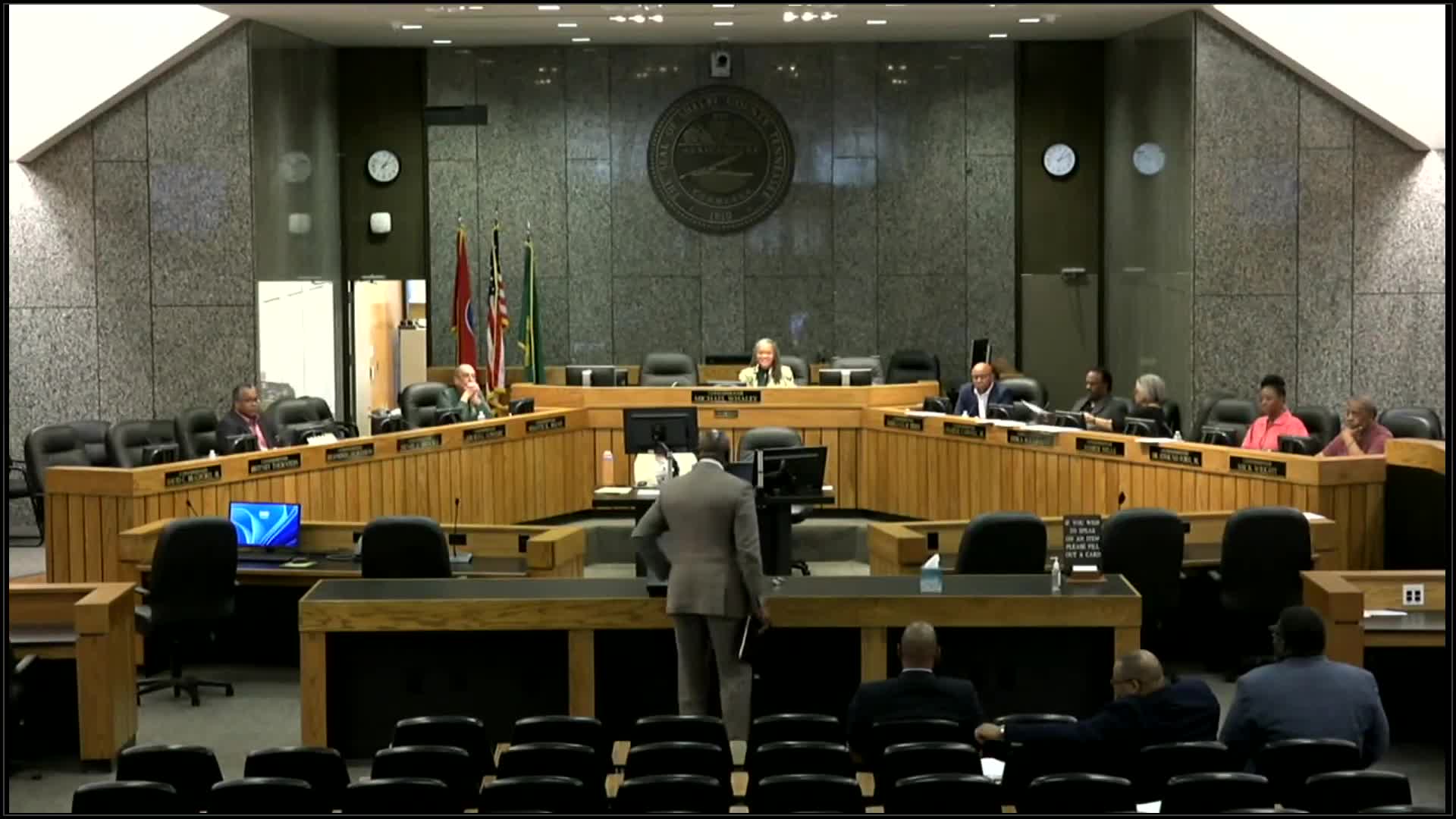
Miller3 consultants told the Shelby County Regional 1 task force they have drafted a capacity study that surveyed thousands of local businesses, with a focus on minority- and women-owned firms, and that a final report will follow client review.
Miller3 consultants told the Shelby County Black Caucus Regional 1 Black Economic Inclusion Task Force that their capacity study for the planned Regional 1 campus surveyed thousands of local businesses, with a particular focus on minority- and women-owned firms, and that the consultant team will incorporate client feedback into a final report expected in the coming weeks.
Chip Wilwin of the EOC and Miller3 representatives summarized a December–February outreach that compiled more than 21,000 business records and identified more than 11,000 minority- and women-owned businesses in the data universe. Miller3 said the survey and data-cleaning process resulted in a focused set of about 500 minority firms whose capacities were assessed for possible participation in the Regional 1 project.
A Miller3 presenter described the study’s five major tasks as project management, data collection, marketplace analysis, capacity analysis and final reporting. The consultant said survey questions gathered firm attributes that inform capacity assessments, including annual gross receipts, years in business, employee counts, largest recent contract values, bonding and insurance capacity, and lines of credit. The presenter said thresholds for gross receipts were arranged in bands from under $1 million to over $500 million to understand who could scale to larger packages.
"Capacity studies are forward looking," the consultant said, explaining the difference between a capacity study and a disparity study. The capacity study, the presenter said, gauges readiness and identifies supports firms may need to compete; a disparity study, by contrast, examines past utilization to measure whether prior spending practices were equitable.
Committee members asked how smaller firms could be positioned to compete for larger packages. Ansley Clark, speaking from a construction perspective, described matching identified firms with bonding companies and prescribing multi-year, firm-specific steps (for example, bonding or technical assistance) to scale capacity before major construction begins.
Miller3 said it submitted a first draft of the report in March and is awaiting feedback from Regional 1 Health (ROH) before releasing any non-final results to the task force. The firm said it will follow ROH’s direction on the timing of releasing draft materials; task force members requested a copy of the draft when client permission for distribution is granted.
No formal decisions were recorded at the meeting. Committee members said they want the capacity study results to be paired with a disparity study and to be used to develop concrete strategies (such as breaking contracts into smaller packages and providing technical or bonding support) to increase minority firm participation on the campus project.
Less-critical details in the discussion included an explanation that the consultant’s outreach covered Tennessee, Arkansas and Mississippi and that the capacity study’s survey period ran from December 2024 through February 2025.
Miller3 representatives and task force members agreed to continue coordinating on next steps, and Miller3 said it remains available to refine the final report after client feedback is incorporated.