Get Full Government Meeting Transcripts, Videos, & Alerts Forever!
Get email alerts on the Mental Health topic
No spam. Unsubscribe anytime.
Austin proclaims May 2025 Mental Health Awareness Month; AFSP and NAMI call for more access and anti‑stigma efforts
Summary
At a May 22 ceremony the City of Austin proclaimed May 2025 as Mental Health Awareness Month. Representatives from the American Foundation for Suicide Prevention and the National Alliance on Mental Illness described continued stigma and provider shortages and called for expanded access to care.
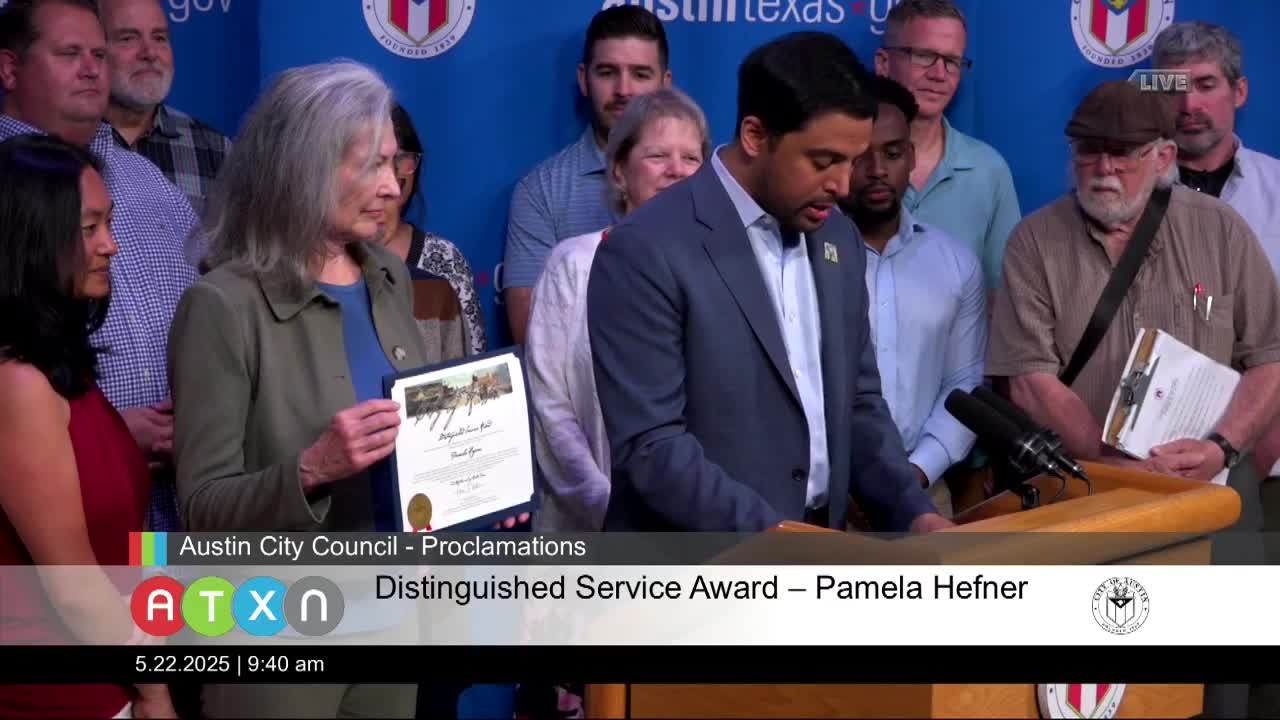
Council members read a proclamation on May 22, 2025, declaring May 2025 as Mental Health Awareness Month in Austin and recognized local chapters of the American Foundation for Suicide Prevention (AFSP) and the National Alliance on Mental Illness (NAMI) for their advocacy work.
Carson Domi, chair of the State Policy Council for AFSP, said AFSP raises about $35,000,000 annually for suicide‑prevention research and described the group’s role in advocacy. “We see [recognition] as a great stride of still fighting the stigma that remains around mental health,” Domi said, urging continued policy and community action.
Fifteen‑year‑old Ayan Molavita, who identified themself as vice chair of Students Engaged in Advancing Texas, described personal experiences with obsessive‑compulsive disorder and clinical depression and urged policymakers to expand access to care for children and teens. “No more areas with no access to mental health care,” Ayan told the council, citing federal figures — as recited in the meeting — that many Texas communities lack enough mental‑health professionals.
Council members referenced statewide gaps in provider availability and the need for community‑based services, early intervention and stronger partnerships with organizations such as NAMI Central Texas and AFSP Central Texas. The proclamation text cited an estimate that more than 3,500,000 adults in Texas have a mental health condition and said stigma and lack of access prevent many from getting help.
No ordinance or funding action was taken at the meeting; city leaders framed the proclamation as recognition and an endorsement of continued advocacy and local partnership efforts.