Michigan officials suspend payments to Tyler as Mitten campaign-finance site struggles
Loading...
Summary
Michigan Department of State and vendor Tyler Technologies told a House committee the new Michigan Transparency Network (Mitten) has search, bulk-upload and data-migration problems. The department said it has paused further payments to Tyler until critical fixes are implemented and set a July 25 filing target for major improvements.
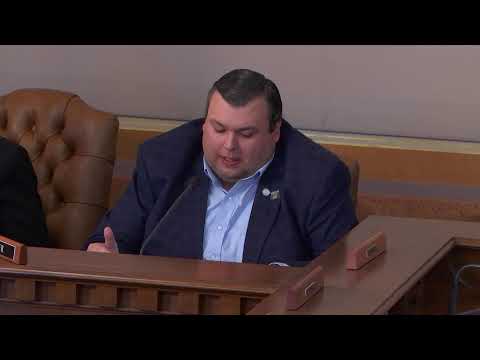
The Michigan Department of State and vendor Tyler Technologies told the Michigan House General Government Subcommittee on May 20 that the newly launched Michigan Transparency Network, known as Mitten, is not meeting usability or performance expectations and that the department has paused additional vendor payments until key problems are fixed.
Tina Anderson, chief of staff for the Michigan Department of State, told lawmakers, “On behalf of Secretary Benson, I'm here to apologize for these difficult experiences.” Anderson said the contract for the Mitten platform allocates $9,000,000 over five years and that the state has spent just over $3,000,000 to date, including about $2,300,000 on initial implementation. She said the department has suspended payment on additional invoices to Tyler “until critical issues have been resolved, and the system's basic functionality is working as intended.”
Why it matters: Michigan law and implementing rules require timely campaign-finance and personal-financial disclosures, and the state phased out an older system (MERT) when Mitten launched. Committee members warned that failures limit public access to filings and asked whether fines, ballot access or other statutory processes could be affected if filings are blocked or unclear.
Officials described the problem as a complex data-migration and search-performance issue tied to decades of legacy records. Liz Thomas, president of Tyler Technologies’ Digital Solutions Division, said the migration involved about 24,000,000 legacy records and that differences between the test environment and production exposed untested search permutations. Thomas said Tyler deployed short-term fixes within days — including limiting free-text searches to a one-year window to prevent timeouts — and is working on longer-term fixes that split and re-index concatenated fields.
The department and Tyler detailed a phased rollout and partial successes as well as failures. Anderson said the Mitten lobby module launched in December 2024 and accepted 2,674 filings for the 01/31/2025 filing; the campaign-finance module accepted 986 filings for the 04/25/2025 filing; and the personal-financial-disclosure (PFD) module launched in April ahead of the 05/15/2025 deadline. Committee members, however, reported continued search failures, bulk-upload problems for high-volume filers and intermittent filing barriers.
The department listed a set of near-term priorities it expects to complete before the next major filing deadline on July 25, including restoring full search functionality, improving bulk upload and import/export operations, and adding a summary filing page similar to the older MERT summary. Anderson said the department has launched a public status page at Michigan.gov/mitninfo listing known issues, recent fixes and FAQs and that it will update that page at least weekly.
Committee members pressed procurement and oversight questions. Several members noted the RFP in July 2022 produced only one qualified bidder (Michigan Interactive, a Tyler subsidiary) after a second bid failed mandatory technical and security minimums. Anderson said the state followed DTMB procurement procedures and that the administration prioritized completing the work during the secretary’s term, which influenced timeline choices. Daniels from DTMB and department staff said go/no-go readiness meetings included BOE (Bureau of Elections), DTMB and Tyler leadership.
Lawmakers also raised security and litigation concerns about Tyler. Abby Diaz, Tyler’s chief administrative officer, said a March 23, 2024 cybersecurity incident referenced by committee members did not affect Mitten or the state of Michigan and was limited to three external clients; she described the reporting about multiple lawsuits as inaccurate and said the company is providing extra resources at no additional cost to the state.
Committee directions and follow-up: Anderson said the department and Tyler are working daily and overnight on fixes and that senior department leaders brief Secretary Jocelyn Benson regularly. The department suspended additional contract payments pending resolution of critical issues, committed to demonstrations and testing before the July filing window, and asked users to report problems via the Mitten info site. The committee chair said the Secretary of State’s office should return for a status update on June 24.
What remains unclear: Committee members asked for further documentation on procurement evaluations, change logs and the contract deliverables; Anderson and Tyler agreed to provide additional reports and said DTMB maintains quality-assurance records. The precise count of outstanding defects fluctuated during testimony — the department’s public issue tracker listed more items than were cited by individual lawmakers — and lawmakers requested access to vendor reports required under the contract.
Looking ahead: The department set an operational target for major fixes by the July 25 candidate filing deadline, continued to accept filings through Mitten for multiple modules, and said it will not remit additional vendor payments until it deems core functionality restored.