Get Full Government Meeting Transcripts, Videos, & Alerts Forever!
Get email alerts on the State Budget topic
No spam. Unsubscribe anytime.
Minnesota leaders say budget deal signed but MinnesotaCare for undocumented immigrants remains central sticking point
Summary
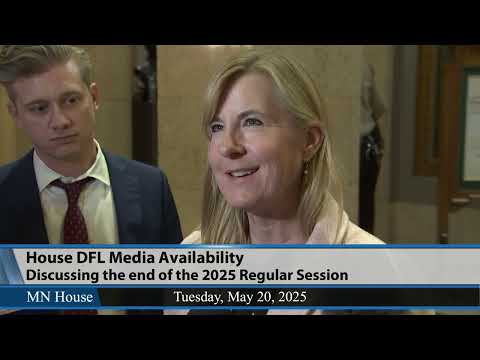
Legislative leaders say they have a signed budget agreement but remain divided over a Republican demand to extend MinnesotaCare to undocumented immigrants; leaders set a 5 p.m. Wednesday deadline for unfinished conference work and said a special session is increasingly likely later in the week.
Legislative leaders said they have signed a budget agreement but remain at odds over a Republican demand to extend MinnesotaCare to undocumented immigrants, a provision they described as the linchpin of recent negotiations.
The disagreement means lawmakers expect more negotiating after the scheduled end of the regular session: leaders set a deadline that groups finish outstanding conference work by 5 p.m. Wednesday, and said a special session to complete the budget is increasingly likely later in the week.
“That was unfortunately the linchpin for Republicans in the budget deal,” the Legislative leader said, adding that Republicans “made it very clear that they weren't leaving the session without it, and we couldn't have a budget completed for the state of Minnesota without agreeing to that concession for them.” The leader said Democrats will keep working to “peel that provision out” and to convince Republicans to “look at people as people and not, people as whether they're documented or undocumented.”
The leader described a signed budget agreement among party leaders but warned the signed deal still contains the contested MinnesotaCare provision. “We have a budget agreement. All of the leaders have signed it. I expect that all of the leaders will live up to the budget agreement,” the Legislative leader said. “And, worst case, that's what we'll enact.”
Leaders outlined a compressed schedule to finish unresolved items. The leader said staff and committees will meet tomorrow beginning at 1 p.m. and running through 6 p.m., with additional meetings added later if needed, and that leaders committed to be available over the Memorial Day weekend if necessary. Asked when a special session might begin if needed, the leader said it could start as early as Thursday but added, “It would be more realistic to think it'd be Friday.”
Lawmakers also discussed policy areas tied to the budget talks. The leader said the environment bill was “really, really close to finishing” but that permitting language remains a sticking point: “There's some good bipartisan permitting reform language. There's also some, really republican permitting reform language. And we can do some good bipartisan permitting reform language, but we're not going to be doing a one-sided republican, reform package.”
A proposed Office of Inspector General (OIG) allocation did not survive budget negotiations, the leader said, noting the OIG proposal had been removed because funds were not available. “We don't have the $9,000,000 for it. So ultimately, the senate dropped it from budget negotiations when we it was clear we didn't have the money for it,” the Legislative leader said.
The leader described recent cooperative work on some bills — citing the state government finance bill and higher education — while expressing frustration that the session also included partisan moments. When asked who was included in the deadline, the leader said the deadline reflected a commitment by “governor, senate leader, and 2 house leaders.”
The leader emphasized that Democrats will continue to oppose removing MinnesotaCare for people currently enrolled, saying, “People in Minnesota deserve a budget. There's a lot of people on MinnesotaCare, and they all deserve to have MinnesotaCare funded. So, our caucus is not going to be standing in the way of funding state government.”
Leaders said they will meet with health policy negotiators and other conference committees in the coming days to try to finalize unresolved provisions. If leaders cannot secure the changes they seek through negotiation, they said, a special session would be used to finish the work.
Details: the leader said taxes were not yet negotiated because “the senate didn't pass a bill, and we didn't pass a bill,” meaning talks on taxes were effectively starting from scratch. The leader also described the session as “bumpy” at times but said there have been moments of bipartisan progress.