
Bloomfield Hills officials cite enrollment decline, state budget uncertainty and grant-funded water-filtration work
Get AI-powered insights, summaries, and transcripts
Sign Up Free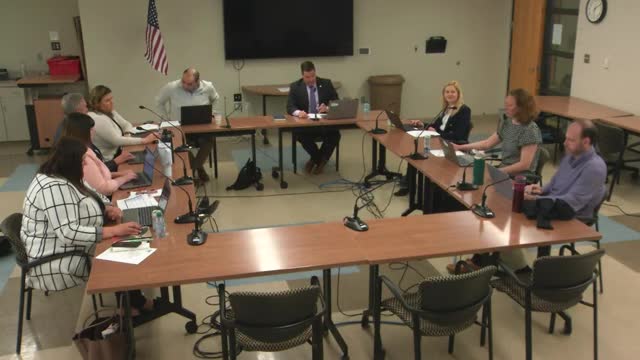
Summary
Finance committee members updated the board on enrollment projections, risk to state funding, preschool tuition changes, bus purchases and a state grant to meet new drinking-water filtration requirements.
Trustees received a finance and operations update that covered enrollment projections, legislative budget risk, contract and purchasing items on the consent agenda, and a state grant to fund new filtration systems at drinking fountains.
Superintendent West and finance staff reported that district enrollment remains in decline and that the district used its usual cohort-based projection methodology; spring-to-fall counts showed a modest pickup of about 27 FTEs since last year's projection. Staff said the projection method has been accurate historically but that reliability decreases the farther it extends (10-year projections less reliable than 1-3 year forecasts).
On state budget matters, staff said the May revenue consensus showed the School Aid Fund up roughly $90 million while the general fund faces a roughly $300 million reduction in revenue. Superintendent West warned this creates more uncertainty for next year's budgeting than in recent years and said district budget assumptions will be more likely to change after July 1. He told the board the district had successfully advocated to remove proposed language that would have reduced a tuition-related funding stream (a potential $500,000 impact) after direct outreach to a state senator.
The finance committee review included several items that appear on the consent agenda: a quote for installation work tied to a filter-first grant (staff described the grant award as "a little over almost $290,000" and said staff received a contractor quote of about $189,000 for the initial work), bus replacements, nonresident tuition set at $13,650 for the coming year and preschool hour and rate changes that increase hours to match GSRP while keeping the hourly rate the same (which yields a net tuition increase for some preschool offerings).
Trustees asked clarifying questions about the filter-first grant: whether it tests for lead, testing frequency and whether ongoing maintenance would become an unfunded mandate when grant dollars expire. Staff said the legislation requires filtration systems on drinking fountains, annual filter changes and periodic testing (annual and biannual testing were discussed) and that the grant provided funding to meet the new statutory requirements but that the work will become an ongoing local cost once grant funding ends.
The board also received an update that bargaining with teachers and administrative groups is ongoing and that international academy negotiations continue outside the board's purview.
No action beyond consent-agenda approvals was taken in the finance update itself; trustees directed staff to continue monitoring Lansing developments and to bring budget assumptions and amendment-ready materials as the state process unfolds.