Get Full Government Meeting Transcripts, Videos, & Alerts Forever!
Get email alerts on the Parks Master Plan topic
No spam. Unsubscribe anytime.
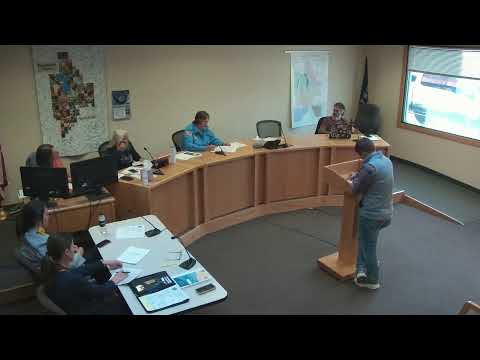
Broadwater County board reviews draft parks master plan, requests edits and schedules final review
Summary
At a Broadwater County Parks and Recreation Board meeting, members reviewed a draft parks master plan covering Centerville and Canton Lane concepts, trails, fields, parking, ADA access and funding options; staff was directed to make edits and return the plan for a final review before recommending it to county commissioners.
Members of the Broadwater County Parks and Recreation Board reviewed a draft parks master plan and directed staff to incorporate edits, add a trails appendix and return the revised document for a final review before recommending the plan to the county commissioners.
The plan discussion focused on two concept areas (Centerville and Canton Lane), sports-field surfaces (synthetic turf vs. natural grass), water-rights and irrigation questions for potential golf-course expansion, trail connections and ADA accessibility, site safety near an existing trap/gun club, parking and likely cost ranges, and potential funding tools including grant and special-tax options.
Board members said the draft is suitable for planning purposes but should not commit the county to specific outcomes. Kevin, the presenter, told the board he would make the requested edits and circulate a revised draft for one last review; he said, “I think these are pretty simple edits. I think I could get them sent out by the end of the week.” The board also agreed to schedule a final discussion and then forward the plan with a recommendation to the county commissioners.
Key details from the discussion include: Centerville was presented as the site favored for a multiuse sports complex and family-focused amenities such as a dog park, multiuse fields, courts and parking. Canton Lane was treated as a separate concept with its own set of future considerations, including a possible short-course or additional fields. Board members repeatedly emphasized that concept-level preferences should remain flexible so future circumstances (for example, a golf-course expansion) would not “tie the county’s hands.”
On sports surfaces, the presenter summarized tradeoffs between synthetic turf and natural grass: turf can be attractive where heavy play and frequent rain would otherwise degrade grass, but turf is more expensive. Board members cited local examples — Kindred Field in Helena (recently converted to turf) — and university guidance to show cost and maintenance differences. No final decision on surface type was made; the draft will retain both options as planning information.
Water availability and rights were a point of uncertainty. Board members said water rights along Centerville Lane appear to be disputed; some attendees reported that irrigation water rights reach to the dirt road that borders the golf course while others said they did not. Board members asked staff to research ditch-district shares and verify whether existing wells or irrigation shares could support expanded turf or irrigated landscapes. The transcript records that a well was drilled at Connersfield “two summers ago” and that the county installed a pump; participants discussed whether the Run and Gun Club has independent water and sewer infrastructure.
Safety and adjacency concerns were raised about siting ball fields near an active trap/gun shooting range and next to golf holes. Board members noted prior conflicts where shooting ranges and school or ball-field uses created public perception and safety concerns, and they discussed mitigations such as fencing, nets and siting decisions to avoid direct adjacency. They also referenced golf balls and foul balls as hazards where ball fields border golf holes.
Trails and connectivity surfaced as a central planning issue. The board requested that the county’s draft trails plan be linked to the parks master plan (suggested as an appendix) so future implementers can see how proposed paths connect to the county trails goals. Members stressed that paths must be coordinated across documents to preserve interconnectivity (for example, connections to the fairgrounds and the route across the Missouri River).
Accessibility and surfacing options were discussed in the context of cost and ADA compliance. Board members asked the presenter to add explicit mentions of ADA requirements in the materials comparing concrete, asphalt and gravel trail sections and to flag surfaces that may be ADA-challenging. They discussed hybrid parking approaches (paved ADA stalls plus gravel general parking) as a cost-control option.
Board members also reviewed ancillary items included in the draft: winter recreation potential (groomed cross-country routes), storage and maintenance facilities for multiuse developments, dog-park design details (curved corners to reduce dog-to-dog cornering), playground surfacing, restroom siting and security (lighting and visibility), and sustainability ideas such as bioswales and native, low-water planting.
On programmatic needs and operating costs, the board discussed the difficulty of funding and operating an aquatic/rec center. Members pointed to examples where pools and rec centers run deficits or require outside funding (one regional example cited DoD funding for a Great Falls rec center). No commitment to build a rec center was made; the draft retains it as a long-term concept with high cost implications.
The draft includes a cost-estimate table and a funding-options table. Board members asked staff to keep the tables and to include tax and grant options as “back pocket” possibilities for long-term implementation while noting that new taxes are politically sensitive. Staff will refine the cost estimates and funding language before the next review.
Procedural next steps and scheduling: the board directed the presenter to circulate the revised draft after making edits and to send it to members for a final review. The board moved to change its next meeting date from June 16 to June 23 to ensure quorum; a motion was made and seconded and the change was approved with no roll-call vote recorded. The board plans one last review of the draft before formally recommending it to the county commissioners for consideration.
Votes at a glance: - Motion to move the board’s next meeting to June 23: motion made and seconded; outcome recorded as approved (mover and seconder not specified in the record).
Ending The presenter will circulate the revised draft after incorporating the board’s edits (staff estimated the edits could be sent by the end of the week), and the Parks and Recreation Board will perform a last review at the rescheduled meeting before forwarding the plan with a recommendation to the county commissioners.