Get Full Government Meeting Transcripts, Videos, & Alerts Forever!
Get email alerts on the Veterans Services topic
No spam. Unsubscribe anytime.
Revere council adopts veteran property tax work-off ordinance after rejecting NGB-22 amendment
Summary
The City Council voted to adopt an ordinance establishing a veteran property tax work-off abatement consistent with Massachusetts General Laws; an amendment to add NGB-22 as required documentation failed on roll call before the ordinance passed on final reading.
The Revere City Council approved an ordinance establishing rules and regulations for a veteran property tax work-off abatement program on May 19 after extended debate over who qualifies under state law.
Claire (city staff) explained the city's obligation under the Massachusetts statute the administration used to draft the ordinance. “When the city adopts a law by the state…we are bound to the provisions of this general law,” she told the council, reading language from Mass. Gen. Laws ch. 59, § 5N that defines eligible veterans and the required active-service criteria.
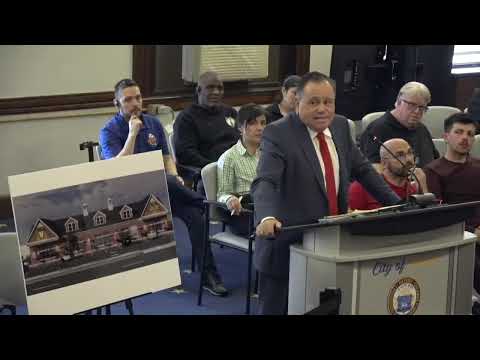
Andrew Hynesley, who identified himself as a service-connected disabled veteran and Revere resident, urged the council to expand local relief to match neighboring communities that grant full exemptions to some 100% disabled veterans. “I respectfully ask the council to review and consider amending the city's policy and grant full property tax exemption for 100% disabled veterans,” Hynesley said during public comment.
Councilor Novoszewski moved an amendment to the proposed ordinance to add the NGB-22 form to the list of acceptable documentation for applicants; proponents of the amendment argued it would help some National Guard members document service-related disability or long service. Councilor Novoszewski said the NGB-22 is necessary for some Guard members who did not receive a DD-214 but who served 20 years or more or were injured in the Guard.
City staff and the city solicitor cautioned the council that the state-adopted statute and federal definitions constrain local discretion. City staff noted that recent federal guidance and past statutes define which reserve or National Guard service qualifies for veteran-status benefits and that the municipal ordinance had to mirror those statutory definitions. City Solicitor Paul Capizzi said adopting a local rule clearly contrary to state or federal law would create legal risk.
Roll-call votes recorded the amendment’s defeat and then the ordinance’s approval. On the amendment to add the NGB-22 as required documentation, the council voted (recorded roll call): Argencio — No; Cogliandro — No; Giannino — No; Greeno Sawaya — No; Haas — No; Kelly — Yes; McKenna — Yes; Novoszewski — Yes; (Zambuto absent); Silvestri — No. The amendment failed.
On the final reading and engrossment of the ordinance establishing the veteran property tax work-off abatement program, the council recorded yes votes from the following members in roll call: Argencio, Cogliandro, Giannino, Greeno Sawaya, Hass, Hermeo, Kelly, McKenna, Novoszewski and Council President Silvestri (Zambuto absent). The ordinance was engrossed and ordained that night.
Why it matters: The new ordinance implements the municipal option created under state law to permit veterans to reduce property-tax liability by performing approved work for the city. The discussion highlighted the limits of local authority when state and federal statutes define eligibility and documentation.
Next steps: City staff will implement the work-off program under the statutory definitions cited; the council and staff indicated they can revisit eligibility or administrative details only if state law or local capacity allow changes in the future.