Get Full Government Meeting Transcripts, Videos, & Alerts Forever!
Get email alerts on the Small Business Economic Development topic
No spam. Unsubscribe anytime.
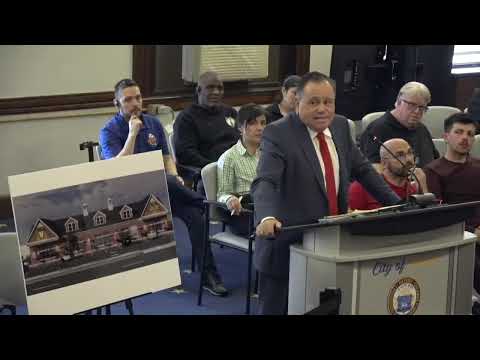
Revere discusses zoning change to permit food trucks in select districts; licensing safeguards and locations debated
Summary
Councilors and entrepreneurs debated proposed amendments to Title 17 (zoning) and Title 5 (licensing) to allow food trucks in designated districts and on private property; the council referred the package to zoning for map and site details.
Tom Skrowski introduced paired proposals to amend Title 17 (zoning) and Title 5 (licensing) to permit food trucks in specific districts, including the RC2 (residential-commercial), PDD1 (Suffolk Downs), HB and TED districts. Skrowski described the two items as a package that migrates existing food-truck rules into the zoning ordinance to provide clearer guidance for owners and city departments.
Why it matters: The city’s existing zoning is silent on food trucks, which has created uncertainty for entrepreneurs and for departments that handle licensing and public-space decisions. The proposal aims to create a clear local pathway for food trucks while leaving the licensing commission discretion to address neighborhood impacts.
Multiple food-truck owners and operators spoke in favor. Valentina Moreno (22 Cambridge St.) and Emiliano Moreno (660 Ocean Ave.) said broader access would support small-business growth and sustain multiple family incomes. “This is a policy change for entrepreneurs in Revere,” Valentina Moreno said. Operators described past pilot programs and said quieter generators and site adjustments helped address prior noise complaints.
Clarence Rillo, identified as a policy writer and analyst, told the council that putting food-truck siting into zoning would reduce confusion for new and existing operators and make interdepartmental decision-making more consistent. “If we had something solidified, when you all agree on where they should or should not go, it really makes a lot of sense moving forward for it to be in our zoning,” Rillo said.
Councilors pressed for safeguards. Councilor Genzino asked how brick-and-mortar restaurants would be protected; Skrowski said the licensing commission would retain case-by-case discretion and that licenses are renewed annually so competition concerns could be raised at renewal. Councilor McKenna emphasized placement safety after past instances where trucks blocked traffic; Skrowski and others said placement rules and licensing are intended to prevent unsafe siting.
Potential siting options discussed included privately owned parking lots (Target, Stop & Shop, Northgate) and the former Sozio lot; Councilor Calvio encouraged exploring a public-private partnership at the Sozio site. During public comment, a resident asked whether asbestos at the Sozio property had been remediated; staff said the matter would need to be checked before any use there.
The council discussed notification and enforcement: applicants must run a legal notice and notify abutters, and the licensing commission has a disciplinary process and can hold hearings on complaints. The council also discussed maps showing the four districts proposed for allowance; Councilor Novoszewski requested a map for the zoning referral so members can see exact streets and blocks under each district designation.
Outcome: The council referred the zoning and licensing ordinance amendments (Title 17 and Title 5) to the zoning committee for further mapping, site-specific discussion and potential conditions. No final licensing or zoning changes were adopted at the meeting.