Audit subcommittee picks five topics for Office of the Legislative Auditor background papers
Loading...
Summary
The Legislative Audit Commission evaluation subcommittee voted by acclamation on Oct. 6 to ask the Office of the Legislative Auditor to prepare background papers on five additional program-evaluation topics, including nonemergency medical transportation, the DHS Office of Inspector General, LCCMR oversight, road worksite safety and the "waiver reimagine" process.
The Legislative Audit Commission evaluation subcommittee voted by acclamation on Oct. 6 to ask the Office of the Legislative Auditor (OLA) to prepare background papers on five additional topics for possible program evaluations.
The subcommittee selected a combined topic covering nonemergency medical transportation and emergency medical services compliance (items 11 and 84, combined), the Department of Human Services Office of Inspector General (item 70), oversight of the Legislative-Citizen Commission on Minnesota Resources (LCCMR) (item 23), road worksite safety (item 90) and the "waiver reimagine" implementation process (item 89). OLA staff said they will prepare background papers on those subjects and bring the resulting set of topics back to the subcommittee in approximately five to six weeks; the subcommittee plans to recommend a smaller set of evaluations to the full Legislative Audit Commission in the spring.
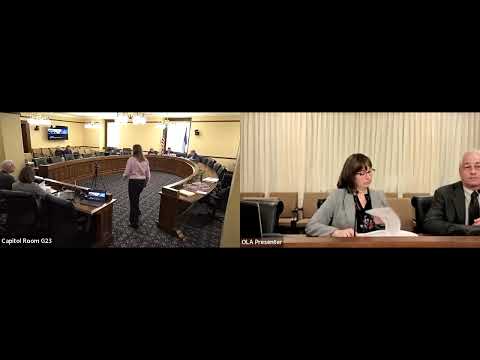
The meeting began with the chair noting attendance and quorums. "Everyone's present. We have a quorum," a committee member said as roll was taken. Jody Munson Rodriguez, deputy legislative auditor for OLA's program evaluation division, described the office's plan and timeline: OLA will prepare background papers on the newly nominated topics and return them for the subcommittee to narrow to four recommendations for the full commission.
Members discussed several candidate topics before making the selections. Representative Quam and others argued nonemergency medical transportation and recent changes to emergency medical services governance merited study; OLA manager David Kershner said the two areas are "two rather different topics" but acknowledged both are important and that compliance is a common evaluation focus. Judy Randall, the legislative auditor, noted that federal law requires the state agency responsible for overseeing medical assistance to have program-integrity oversight and that Minnesota fulfills that requirement through the DHS Office of Inspector General.
Other discussion touched on whether it was too soon to re-evaluate certain recently changed programs, the scope of possible reviews, and which office within OLA (program evaluation, financial audit, or special review) would be best suited to particular topics. OLA staff told the committee that some items are more appropriate for a financial audit or special review and that timelines and staff availability would constrain how quickly a full program evaluation could be produced.
Senator Rest formally nominated the set of items discussed; Representative Quam then moved to accept the list by acclamation. The chair called for voice votes; members responded and the motion carried by acclamation. The committee did not take a roll-call vote, and numeric tallies were not specified in the record.
The subcommittee and OLA agreed the next step is for OLA to write the background papers and return in about five to six weeks with materials to help the subcommittee decide which four topics to forward to the full Legislative Audit Commission. OLA reiterated it will reach out to schedule the follow-up meeting.
Members and staff kept the discussion within the procedural bounds the subcommittee set: these instructions to OLA are for background papers only, not for immediate assignment of full program-evaluation teams or final audit engagements.