Get Full Government Meeting Transcripts, Videos, & Alerts Forever!
Get email alerts on the Epa Duluth Lab topic
No spam. Unsubscribe anytime.
EPA scientists ask Duluth council to press federal leaders to keep Great Lakes research lab open
Summary
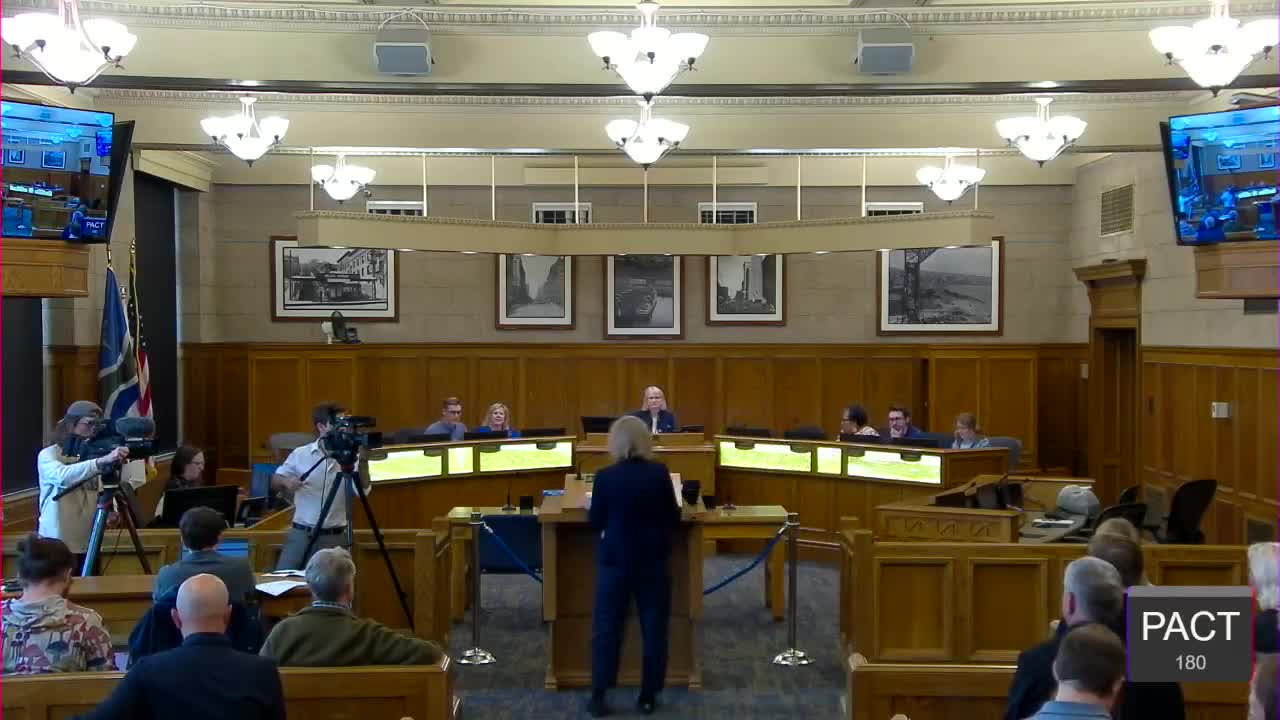
Employees and former trainees of the EPA Great Lakes Toxicology and Ecology Division in Duluth urged the Duluth City Council during public comment to push EPA leadership and members of Congress to prevent layoffs and preserve the Duluth research laboratory.
Nicole Cantelo, president of the American Federation of Government Employees Local 704, told the Duluth City Council during public comment that the Office of Research and Development at EPA is undergoing a reorganization that threatens the future of the Great Lakes Toxicology and Ecology Division in Duluth and could lead to mass layoffs.
“EPA has provided these scientists a cruel and confusing path forward,” Cantelo said, describing offers for voluntary resignations and a smaller number of open positions than scientists affected. She said AFGE Local 704 represents about 1,000 EPA employees in the Great Lakes and asked the council to send the council’s previously passed Duluth Lab resolution to EPA Administrator Lee Zeldin and to urge residents to contact federal representatives, including U.S. Rep. Pete Stauber.
Dr. Carly Malone, who identified herself as a scientist at the Duluth lab, said the facility is uniquely sited on Lake Superior and is “a world recognized leader in ecotoxicology.” She described the lab’s work on high-throughput and computational methods that reduce animal testing and accelerate chemical-risk assessments, and she listed ongoing local projects that include studies of PFAS near the Duluth Air National Guard base and collaboration with the Western Lake Superior Sanitary District on wastewater impacts.
Tom Hollenhorst, identified as a landscape ecologist with the EPA Duluth lab, told the council the lab maintains long-term datasets and conducts nearshore and watershed studies. “We’re in the middle of doing long term studies to assess the safety of consuming some of the fish from the Saint Louis River Estuary,” Hollenhorst said, calling the estuary both highly productive and affected by contamination that has limited fish consumption.
Dr. Alexander Cole, who said he trained at the Duluth lab and now works there as a biologist, described the lab’s role in mentoring students and early-career scientists and said many researchers return to Duluth after training elsewhere. “Losing the Duluth lab would be like losing a home,” Cole said.
Council members thanked the speakers and acknowledged the requests. Councilors discussed the importance of the lab’s research to local recreation, public health and the regional economy and noted that decisions about reorganization and layoffs rest with EPA leadership and Congress.
No formal council action on the request was recorded during the meeting; speakers asked the council to transmit the earlier resolution and to contact federal officials on the lab’s behalf.