Get Full Government Meeting Transcripts, Videos, & Alerts Forever!
Get email alerts on the Budget topic
No spam. Unsubscribe anytime.
Gardiner council reviews budget; wastewater costs, TIF spending and proposed planning coordinator draw debate
Summary
At its May 21 meeting the Gardiner City Council reviewed the proposed FY2026 budget, focusing on wastewater fund increases that could require a 4% sewer rate hike, allocations from multiple TIF districts for capital projects and a contested proposal to create a planning coordinator position estimated at about $99,000.
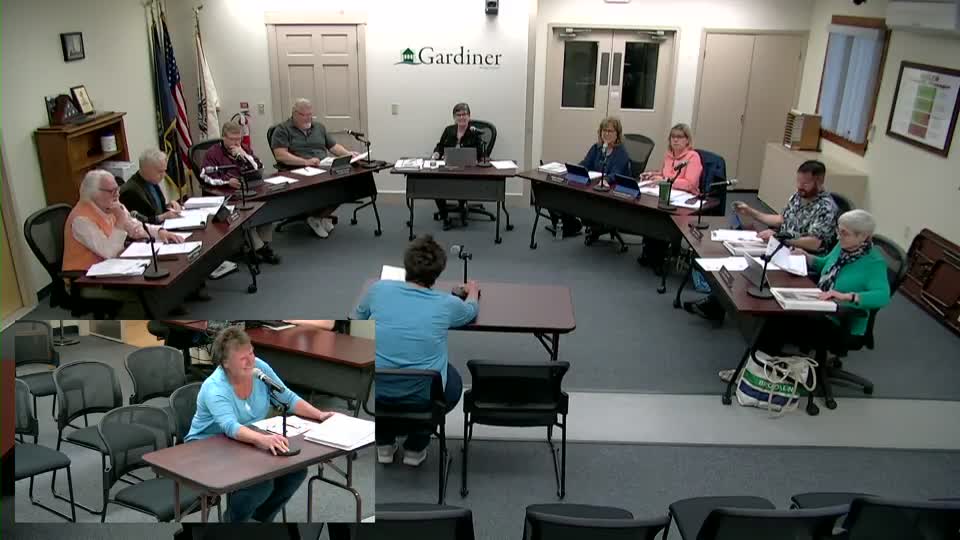
Gardiner 99999City Council reviewed the proposed FY2026 municipal budget on May 21, with Finance Director Denise Brown and department staff outlining increases in the wastewater fund, changes to Tax Increment Financing (TIF) balances and a proposal to create a planning coordinator position to support economic development.
The discussion centered on whether to absorb rising costs through rates and reserves or to add staff and use TIF resources. Brown told the council the wastewater operating budget is roughly $2.115 million and that, at current rates, Gardner999999999999999999999999999999's share would fall short by about $61,000, requiring an estimated 4% rate increase to cover the shortfall.
The proposed wastewater changes reflect several cost drivers: contractual wage steps (salaries up about $15,635), a roughly $25,000 increase in electricity costs, a $15,000 increase for sludge disposal, higher licensing and lab costs, and a planned five-year lease purchase for a sewer-inspection camera estimated at $125,000. Brown said health-insurance costs in the fund are down compared with the prior year because of coverage-category shifts among employees.
Why it matters: wastewater costs affect sewer customers directly; TIF allocations shape where the city can fund street, drainage and economic development work without increasing the general fund levy.
Councilors and staff also reviewed proposed TIF spending across several districts. City Manager Baugh Peabody summarized the Libby Hill TIF, noting an anticipated beginning fund balance of about $224,000 and placeholders in the budget for a comprehensive plan and detention-pond maintenance. The council heard that the Harrison Avenue project could total about $2 million, with a mitigation component just under $600,000; the mitigation work would require a 25% city match (about $150,000) if the city pursues a MEMA mitigation grant. Downtown TIF placeholders include a $400,000 line for an arcade parking-lot capital improvement and an $85,000 match for Dearborn Park. Peabody said the city typically transfers credit-enhancement payments back to the general fund and that some debt tied to TIF projects will end in the early 2030s.
Revenue assumptions were also discussed. Brown said state revenue-sharing estimates have dropped (she cited a new figure near $48,000–$49,000) while solar revenue is expected to rise by about $46,000. The proposed general-fund use of fund balance increases from $500,000 to $600,000 to help limit tax-rate pressure. Brown said the finance team had prepared pocket packets for councilors with updated TIF numbers and annotations for review.
The council spent considerable time on a personnel proposal to reconfigure clerical and planning support: move an existing employee into a planning coordinator role while retaining an administrative assistant, an arrangement the city estimates would add about $99,000 to the salary/wage lines in the FY2026 budget. Proponents, including Peabody and members of the council who cited the body999999999's adopted economic development priorities, argued the change would free the economic development director to focus on outreach and bringing business to the city rather than on administration. Opponents raised concern about adding a full-time payroll line amid federal- and state-level uncertainty and potential revenue reductions.
No final personnel action was taken. Instead the council directed staff to return with (1) detailed job descriptions for the proposed planning coordinator and the administrative assistant, (2) a part-time/contracting cost alternative, (3) a 9999Plan B9 scenario modeling lower revenue or higher costs (including a scenario that would remove roughly $100,000 from the proposed budget), and (4) data on property-tax delinquencies and foreclosures. Kathy Cutler, tax collector, said she would provide the past three years of tax-collection metrics and the number of impending-foreclosure notices and completed foreclosures.
Councilors also asked about using TIF Tier 3 funds to support an economic-development staff position; Peabody said TIF language typically allows some TIF support for economic development and that staff would identify options and amounts.
Councilors asked for additional information about specific line items (for example, the formula for sludge charges and the professional-services amounts) and asked staff to post explanatory materials and to provide the requested job descriptions and fiscal scenarios at upcoming meetings.
The council scheduled follow-up budget work for early June, with proposed meeting dates on June 4, June 11 and the regular June 18 meeting to complete first- and second-reading deadlines on budget-related ordinances.
Ending: The council closed the public portion of the budget discussion with assignments to staff; no budget votes were taken on May 21. The council then moved to an executive session later in the meeting on a separate real-estate matter.